


A polishing machine looks simple. A motor spins a mop, the operator holds the work against it, and the surface gets shiny. In practice the gap between an average result and a genuinely uniform mirror finish comes down to a handful of variables that are easy to get wrong: surface speed, compound choice, contact pressure, and the order in which the stages are run. This guide covers how to use a polishing machine safely and repeatably, whether the machine is a bench buffer, a handheld rotary, or a floor standing production unit.
Knowing Which Polishing Machine Is in Front of Us
The term covers several quite different machines, and choosing the wrong one for the job explains most disappointing first attempts. It is worth being specific about which is actually on the bench.
Bench Buffers, Rotary Polishers, and Dual Action Machines
Three machine types cover most work. A bench buffer holds the mop and the operator brings the part to it, which suits small components and gives excellent control. A rotary polisher is handheld and drives the pad in a single direction, cutting fast but generating heat and requiring skill. A dual action polisher adds an orbital wobble to the rotation, which makes it far more forgiving and much less likely to burn a coated surface. As a default, the dual action suits anything coated or thin, the bench buffer suits small solid components, and the rotary belongs in experienced hands.
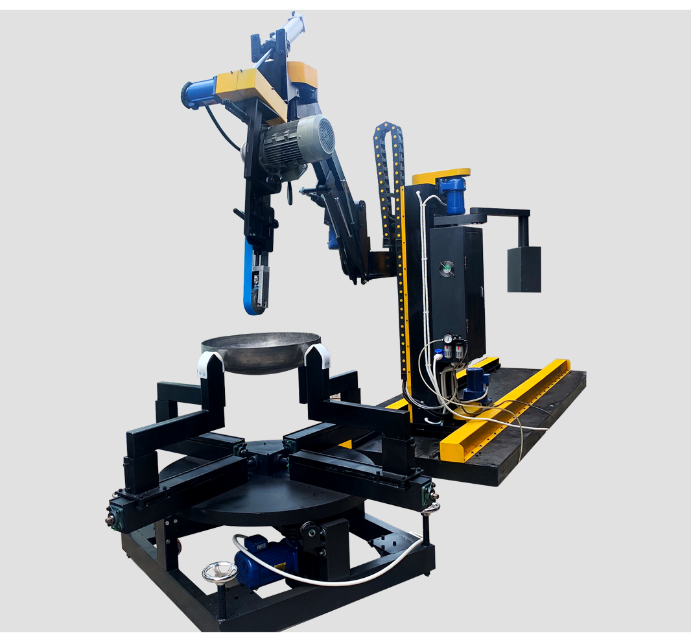
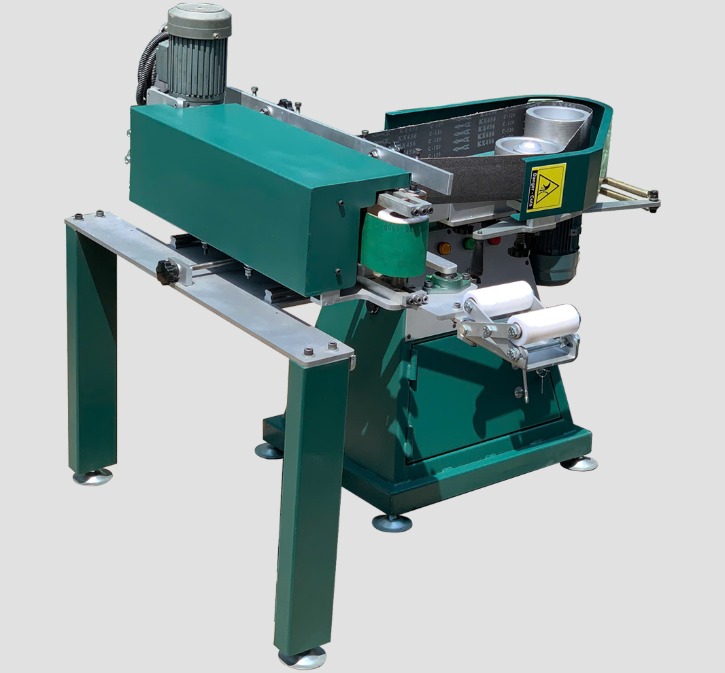
Production Machines for Repeating Parts
Once the same part is polished hundreds of times, the handheld approach becomes the bottleneck. Production machines fix the workpiece and traverse the polishing head, or feed the part past a fixed head at a controlled rate.
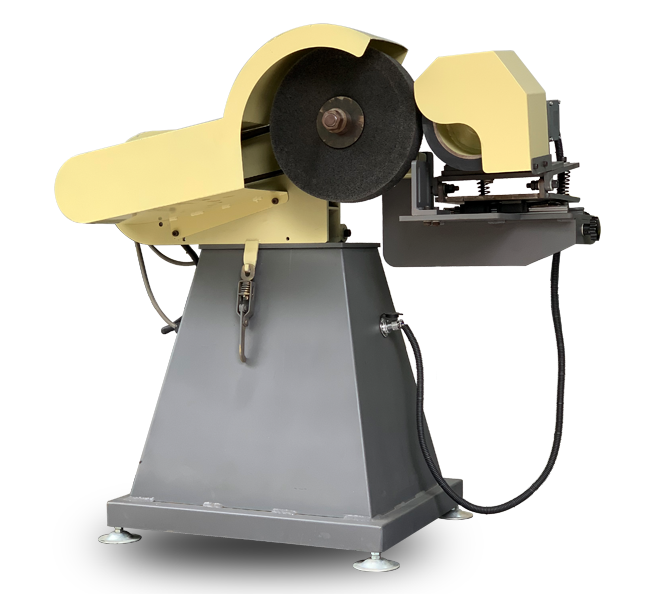
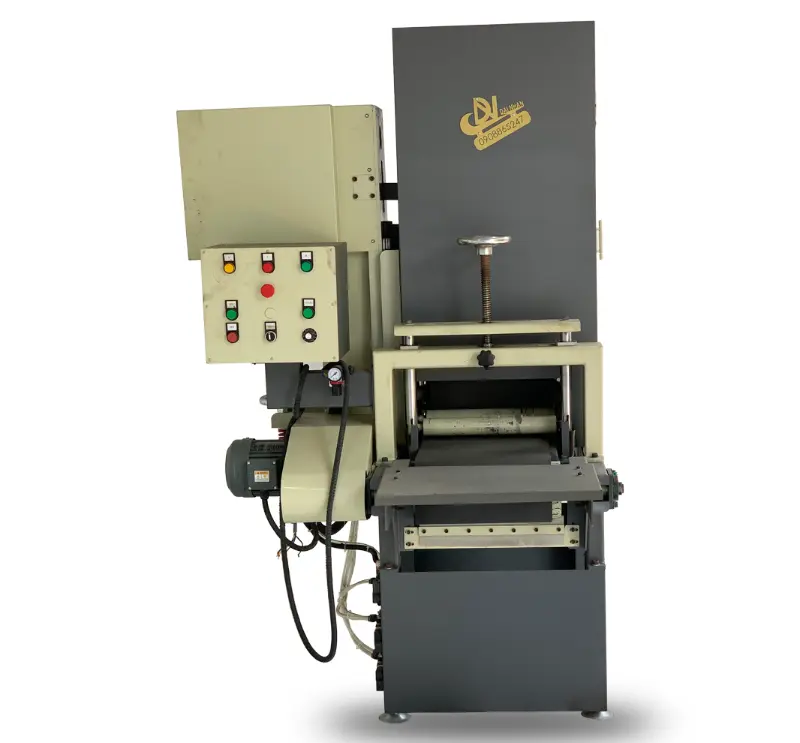
Round Pipe Polishing Machine
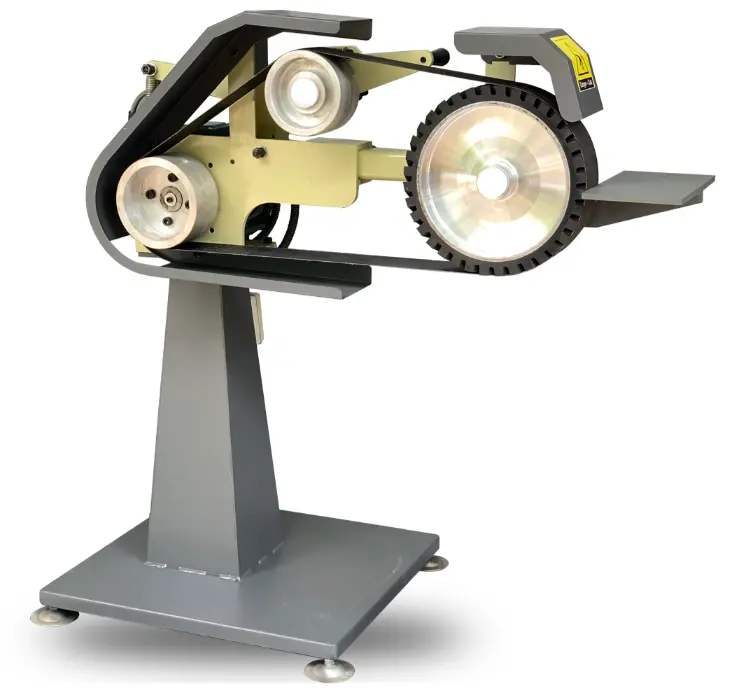
Round and square section stock runs through dedicated pipe polishing machines where the work rotates while heads index across the surface. The principle is identical to hand work, but the machine holds the pressure and speed constant, which is precisely what a human operator cannot do for eight hours.
Setting Up Safely Before the Motor Runs
Polishing throws compound, lint, and metal particles, and a mop that grabs a part can send it across a workshop. Two minutes of preparation prevents the injuries this machine is known for.
Personal Protection and Machine Guarding
Wear sealed safety glasses or a face shield rated to the relevant standard, since the OSHA requirements for eye and face protection treat buffing and polishing as flying particle hazards, plus a dust mask for compound residue and fitted clothing with sleeves secured.
Never wear gloves on a bench buffer, because a glove that catches will pull a hand into the wheel where a bare hand would slip free. Check that guards are in place and that the emergency stop is reachable from the normal working position before switching on.
Mounting and Inspecting the Mop or Pad
Fit the mop squarely on the spindle and tighten the retaining nut in the direction that the rotation will keep it tight. Inspect for loose stitching, torn sections, or a mop that has gone hard and glazed with old compound. Spin the machine up with the work clear and watch for wobble, because an out of balance mop will chatter across the surface and leave a visible pattern. Keep separate mops for each compound grade and label them, since carrying coarse compound into a finishing mop will undo the entire sequence.
How to Use a Polishing Machine Through the Stages
The process runs in stages, and each one exists to remove the marks left by the stage before it. Once that is clear, it becomes obvious why skipping one never saves time.
Cutting, Colouring, and Finishing
Cutting comes first. It uses a sisal or spiral sewn mop with a coarse compound to remove fine scratches left by the last abrasive step. Colouring follows with a softer stitched mop and a medium compound to refine the surface and start building reflectivity. Finishing uses a loose leaf mop with a fine rouge to produce the final gloss. Clean the part between stages, because a single grain of coarse compound carried forward will scratch the whole face.
Speed, Pressure, and Movement
Surface speed matters more than motor rpm. Most metals polish well between 1500 and 2000 metres per minute at the mop surface, which means a large diameter mop needs a lower spindle speed than a small one. Apply the work to the lower quarter of the wheel so any grab throws the part downward and away.
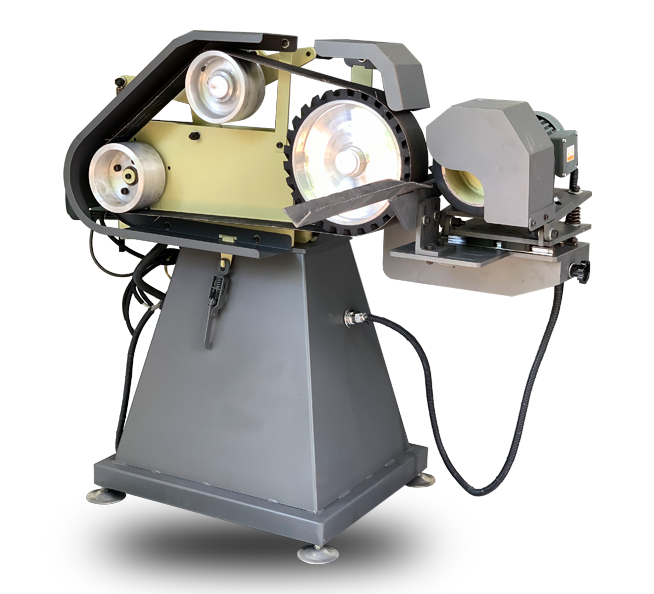
Round Tube Polishing Machine
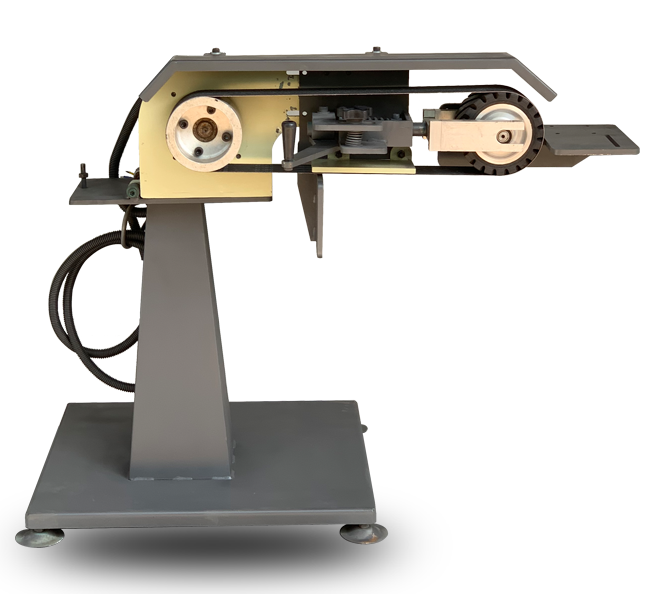
Use light, steady pressure and keep the part moving, because dwelling in one place builds heat, glazes the compound, and leaves a burnished patch that resists the next stage. The same fundamentals apply in how to use a belt sander step by step, where constant motion is equally the difference between flat and wavy.
Matching Compound and Mop to the Material
The same machine and the same technique will give completely different results on stainless and on aluminium. The variable is the pairing of compound and mop, and it is the easiest thing on the bench to get wrong.
Steel, Stainless, Aluminium, and Brass
Each material wants a different compound. Stainless steel needs a hard cutting compound and generally a sisal mop for the first stage, then a green chrome compound for colouring. Aluminium is soft and loads a mop quickly, so it wants a greaseless or tripoli compound and frequent raking of the mop face. Brass and copper polish easily but tarnish fast, so they need sealing straight after. Mild steel sits between the two and takes a standard emery then tripoli sequence. Getting this pairing wrong wastes both compound and time.
Consumable Consistency and Where It Comes From
Operators compensate for inconsistent consumables without realising it, which quietly destroys repeatability. Mop density, stitch spacing, and cloth quality all vary between suppliers, and so does compound grain size. Buying through specialist buffing wheel manufacturers who publish their specifications removes most of that drift. It is a small change that shows up immediately in reject rates, particularly on visible architectural components where every panel has to match its neighbour.
Troubleshooting the Finish
Swirl marks usually mean a contaminated mop or a compound that is too coarse for the stage. Hazing points to insufficient time at the colouring stage, so the fine mop is polishing scratches it was never meant to remove. Dark burnt patches mean too much pressure, too long in one place, or a mop that has glazed over. Rake the mop with a wheel rake to expose fresh cloth, drop the pressure, and go back one stage rather than trying to fix the problem with more finishing compound.
It is worth saying plainly that most polishing failures are actually preparation failures. If the surface was left with 120 grit scratches, no compound will remove them, and the finishing stages will simply make them glossy. Go back to the abrasive stages and work through the grits properly. For anyone new to the abrasive side of the process, our explanation of what is a belt grinder sets out how contact wheels and belt grades control the scratch pattern that polishing then has to work with.
Scaling Up to Production Polishing
Hand polishing has a ceiling, and it usually announces itself through inconsistency rather than through speed. Recognising that point early costs far less than pushing past it.
Signs the Manual Process Has Reached Its Limit
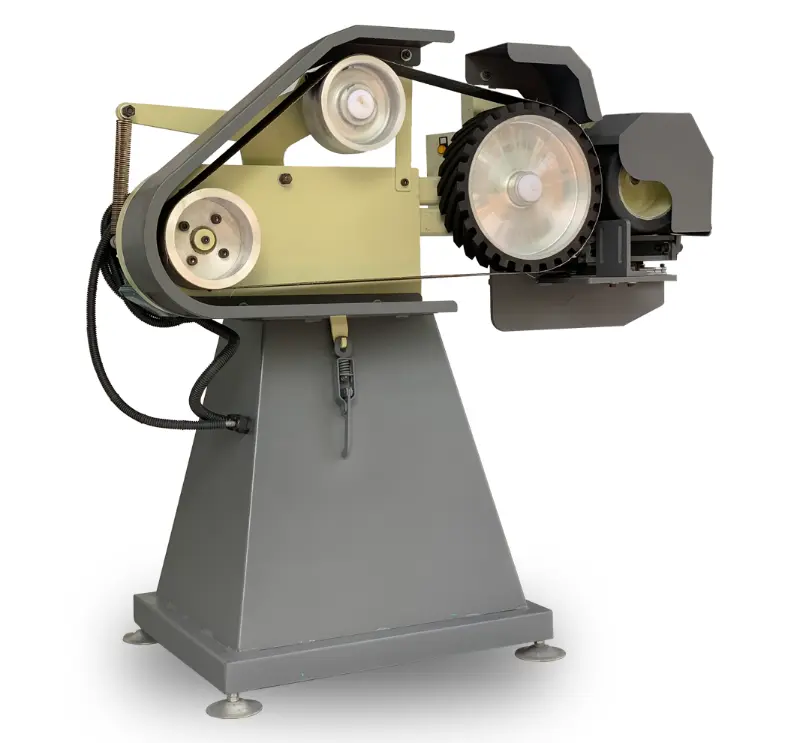
Three signals usually appear together: cycle times start varying between operators, rework climbs on visible surfaces, and consumable cost per part becomes unpredictable. At that point the answer is fixturing and mechanised pressure rather than hiring more polishers. Combination machines that pair abrasive and polishing stations reduce handling, and an industrial belt disc sander covers the preparation stages at a rate that a bench setup cannot approach.
Choosing Equipment and a Supplier
Specify the machine around the part, not the catalogue. Length, diameter, wall thickness, and target surface finish all drive the configuration. For round stock, a specialist pipe polishing machine manufacturer will size the head count and feed rate to the finish grade, and for square and rectangular section a tube polishing machine manufacturer handles the corner geometry that round machines cannot. Dealing with the builder rather than a reseller keeps spares, tooling, and technical support on one line, which is the argument set out in choosing a belt sander supplier for high volume work.
Conclusion
Learning how to use a polishing machine well is less about the machine and more about discipline. Match the machine type to the job, guard it and dress for it, keep a dedicated mop for every compound, respect the cut, colour, and finish sequence, and keep the work moving under light pressure. When the finish disappoints, look backward through the process rather than reaching for a finer compound, because the fault is almost always upstream.
If polishing has become a production process rather than a finishing touch, Dai Nhan Machinery designs and builds polishing and grinding systems around the parts our customers actually run. Explore the range on our machines, or send us your part drawings and target finish and our engineers will propose a configuration with a realistic cycle time.


BOLA BAG's BLOG YOU MAY ALSO BE INTERESTED IN
How to Make a Wheel Polishing Machine: Design, Build, and Safety Fundamentals
Versatility in Metalworking: The Power of an Industrial Belt and Disc Sander
How Is Square Tubing Made? Inside the Roll Forming, Welding, and Finishing Process