


Hand a belt sander to someone who has only used a small orbital sander and the first thing they notice is the pull. Switch it on against a board and it tries to drive forward on its own, throwing dust behind it and taking wood off faster than any hand tool could. That power is the whole point. So what is a belt sander used for? It is used wherever a lot of material has to come off quickly and evenly: flattening rough boards, stripping old paint, shaping edges and curves, cleaning up steel. It is the wrong tool for fine finishing and for anything delicate. This guide explains what the machine does, the jobs it suits, the three main types and where it stops being the right choice.
What a Belt Sander Is and How It Works
A belt sander is a motor that drives a continuous loop of abrasive belt around two or more rollers. Between the rollers, a flat plate holds the belt against the work. Because the belt moves in one direction at speed, every grain cuts in a straight line rather than the small circles of an orbital sander. That is why it removes material so fast and why it leaves straight scratches that have to be finished with a finer tool afterwards.
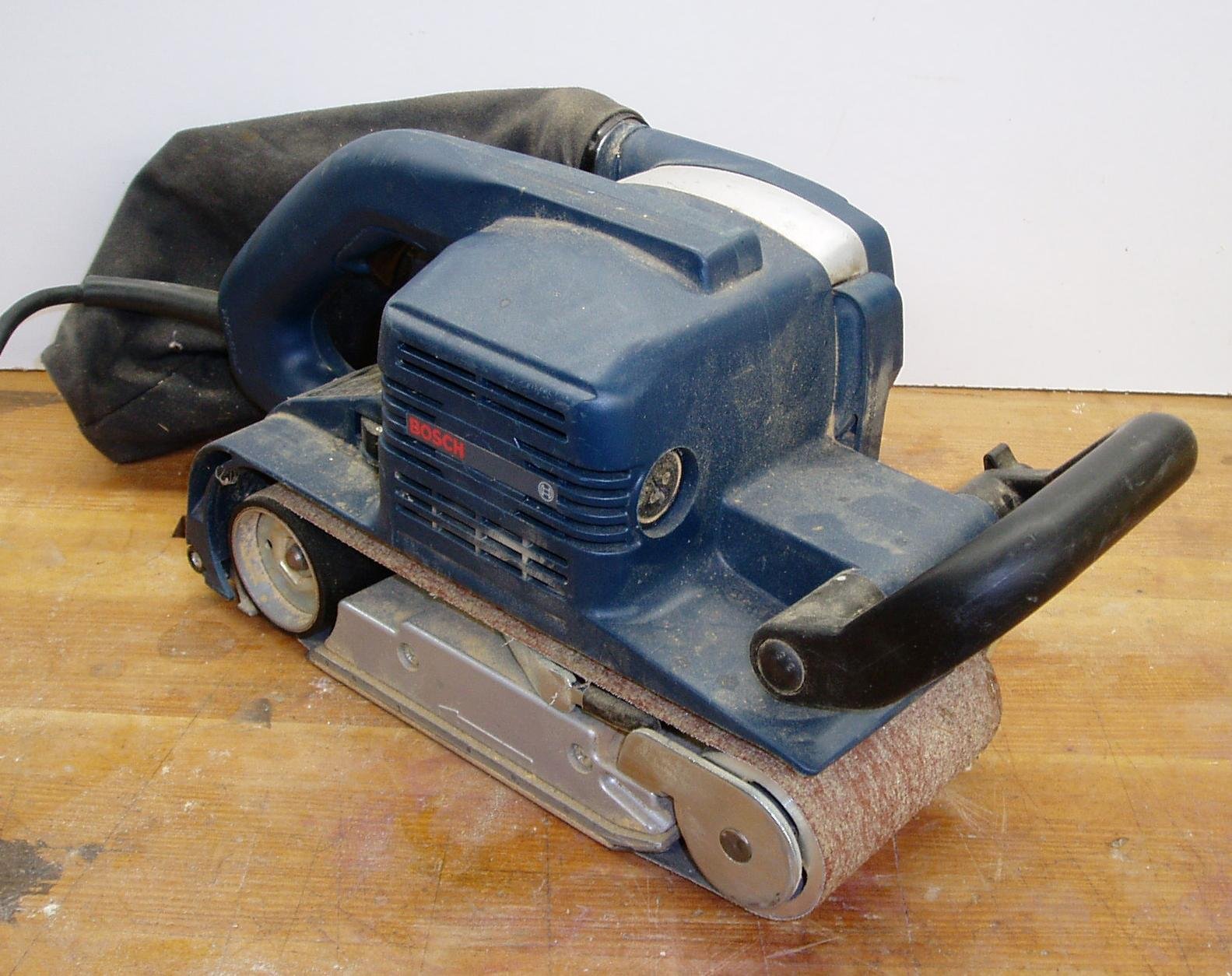
Belt Sander
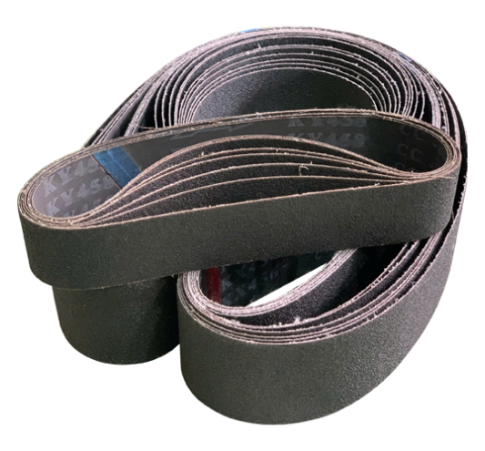
he size of the belt tells you the size of the job. Small handheld sanders run belts around 3 by 21 inches, bench machines take longer loops, and factory machines run belts several metres long over wide rollers. A longer belt spreads the heat over more abrasive, which is one reason big machines run cooler and wear belts more slowly.
What Is a Belt Sander Used For in a Workshop
Most belt sander work falls into five jobs. Each one plays to the same strength: fast, even removal over a flat or gently curved surface.
Flattening Rough Boards and Glued Up Panels
When boards come off the saw with ridges, or a tabletop glued from several boards has joints that do not line up, a belt sander with a coarse belt levels the whole surface in minutes. Sanding at a slight angle across the grain first, then along it, brings everything flat.
Stripping Old Paint and Varnish
On doors, floors, beams and outdoor furniture, a belt sander takes off thick old finish faster than chemical strippers and with less mess than a scraper. The belt clogs quickly with softened paint, so it needs cleaning often, and old paint should be tested for lead before sanding.
Shaping Edges and Rounding Corners
A belt sander can shape wood as well as smooth it. Sanding to a pencil line, rounding a sharp corner or easing a chamfer along an edge are all quick with a bench sander or a handheld one mounted upside down in a stand.
Fitting a New Board Into an Old Floor or Deck
A replacement board is almost never exactly the same thickness as its neighbours. A belt sander brings it down flush so the repair disappears under the finish.
Cleaning Up and Shaping Metal
With the right belt, a belt sander removes rust and mill scale from steel, smooths welds, deburrs cut edges and shapes small metal parts. Bench and industrial machines handle this far better than handheld ones. The short answer to can you use a belt sander on metal is yes, provided the dust bag is empty of wood dust and the belt is made for steel.
The Three Types of Belt Sander and Who Uses Each
Handheld Sanders for Site Work and Large Surfaces
The tool goes to the work. Floors, doors, decks and tabletops are the classic jobs. Handheld sanders are the least precise, because the operator’s hands control the pressure and angle.
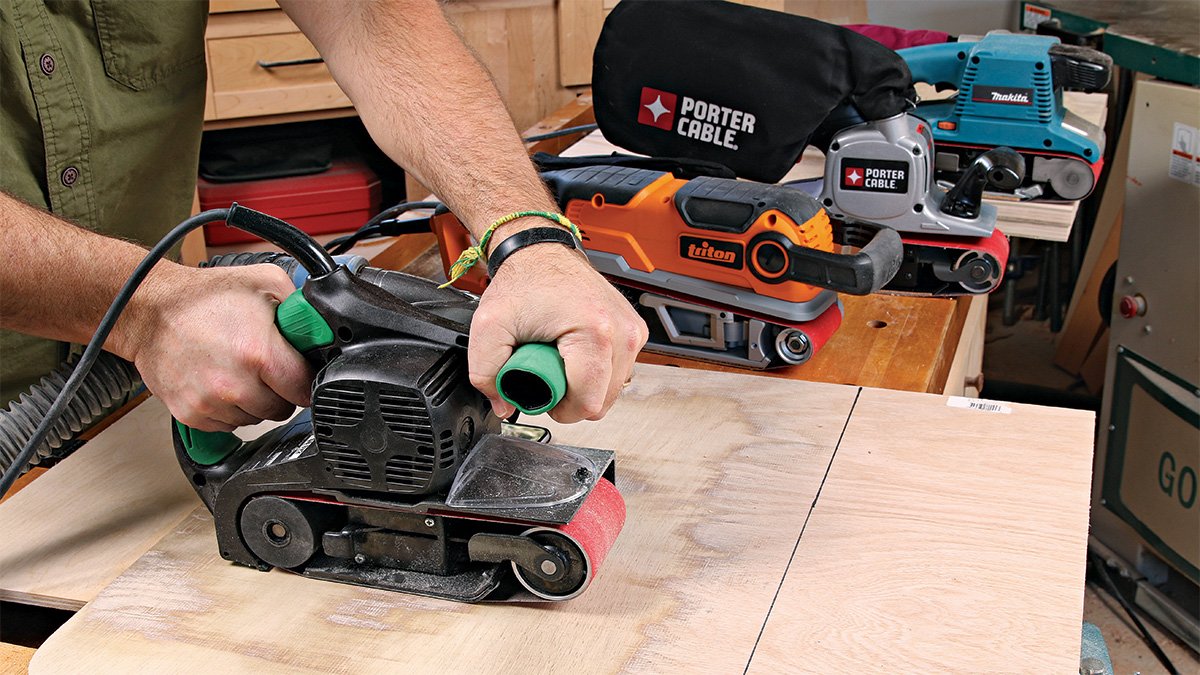
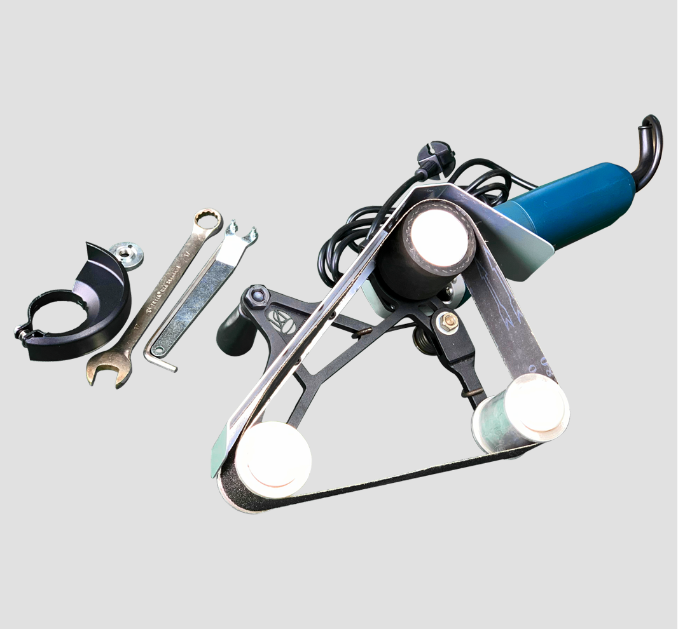
Handheld Belt Sanders
Most handheld models run belts of 3 by 18, 3 by 21 or 4 by 24 inches, and the wider the belt, the heavier the machine and the flatter it holds itself on a big surface.
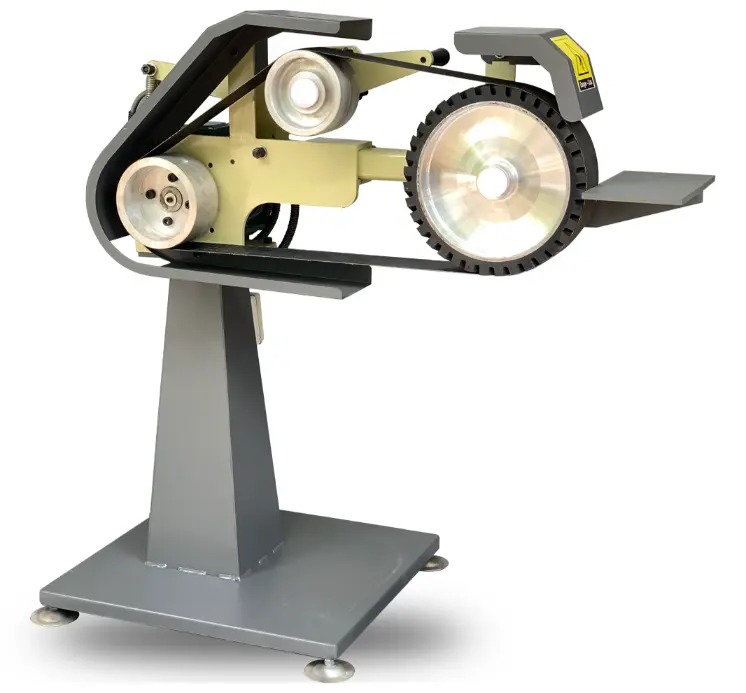
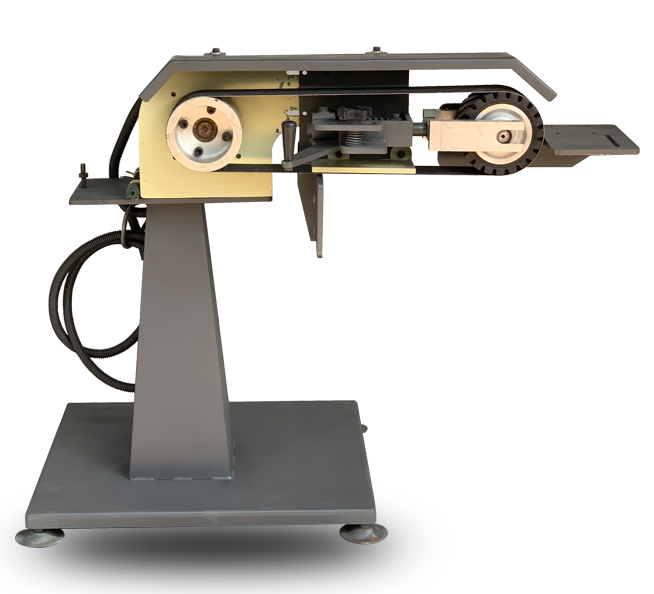
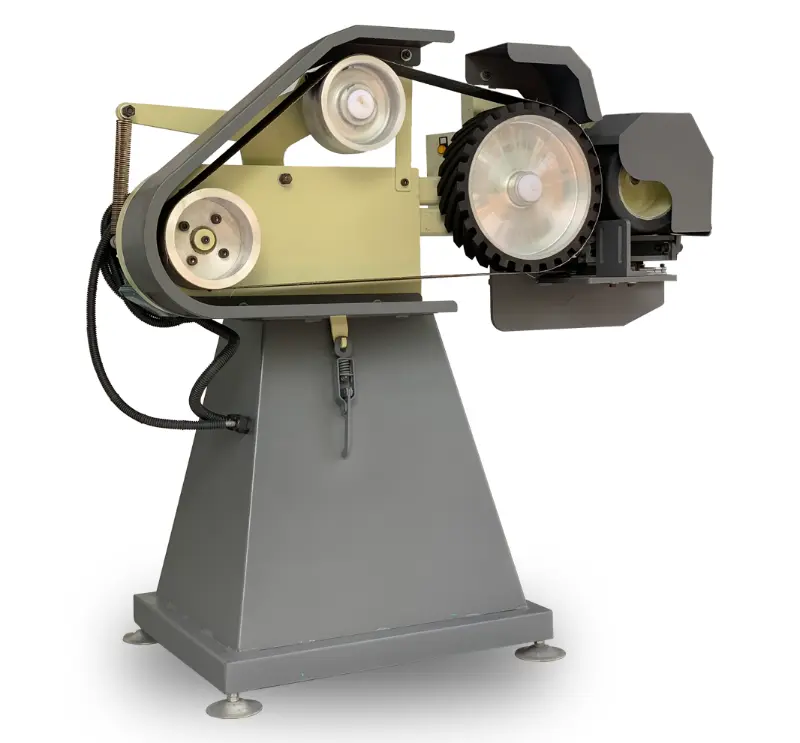
Bench Sanders for Shaping Small Parts
The work goes to the tool. A bench belt sander, often combined with a disc sander, is fixed to a table with a rest that holds the part square. It suits shaping, fitting and cleaning up small pieces of wood, plastic and metal. Because the part moves rather than the tool, a bench sander is also the safer choice for anything too small to clamp, and the adjustable table lets you sand the same angle on every piece.
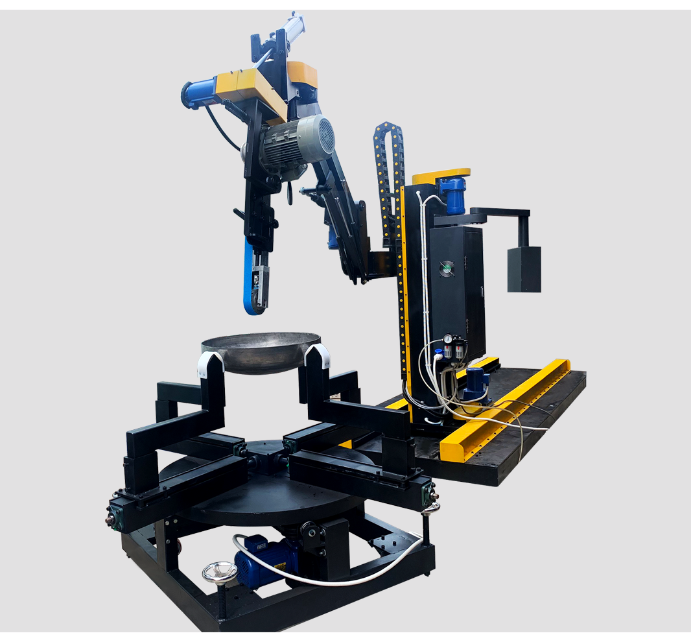
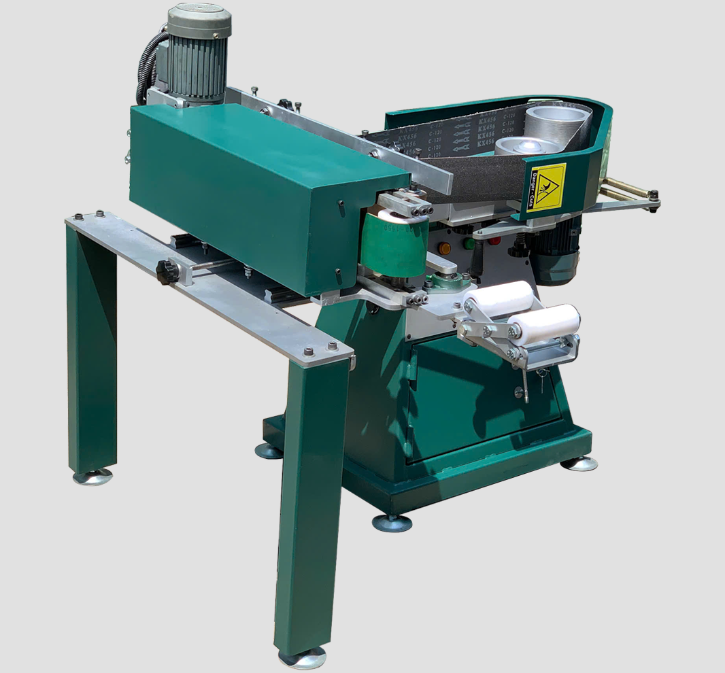
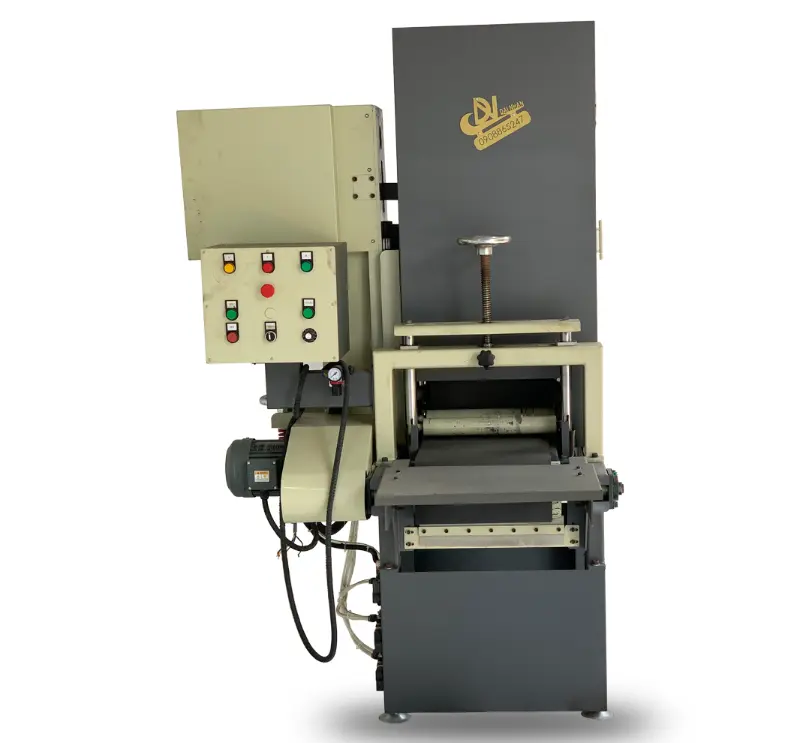
Industrial Belt Sanders and Grinders for Production
Factories use fixed machines with powerful motors, long belts and guides or conveyors that hold every part the same way. A wide belt sander flattens whole panels in one pass; an industrial belt sander for metal grinds welds, tubes and plates all shift with the same result on every piece.
What a Belt Sander Is Not Used For
The same speed that makes a belt sander useful makes it dangerous to a finish. It is not the tool for the final sanding before stain or paint, because its straight scratches show through; an orbital sander or hand sanding does that job. It is not for veneered boards, where a second of pressure can sand through the thin top layer. It is not for inside corners, tight curves or carved detail, where the flat plate cannot reach. And it is not for sanding across a delicate edge, which it will round over before you notice. When in doubt, start with a finer belt than you think you need and lighter pressure than feels natural. A belt sander can always take more off; nothing puts it back.
Conclusion
What is a belt sander used for? Fast, even removal of material: flattening rough boards and panels, stripping old finishes, shaping edges, fitting repairs flush and cleaning up steel. Handheld sanders take the tool to big surfaces, bench sanders shape small parts and industrial machines do the same work on every piece in a production run. Keep it away from final finishing, veneer, tight curves and delicate edges, and it will earn its place in any workshop.
When sanding and grinding move from a weekend job to hundreds of metal parts a shift, Dai Nhan Machinery builds industrial belt sanders and grinders in Vietnam for production metalworking, with custom sanding belts to match. Browse the range on Our Machines page, or tell our engineering team what you sand and how many parts a shift and we will suggest a setup.
Read more: What Are Belt Sanders Best For? The Five Jobs Where Nothing Else Comes Close


BOLA BAG's BLOG YOU MAY ALSO BE INTERESTED IN
Top 4 Abrasive Belt Grinding Machine Manufacturers in Asia
Top OEM/ODM Grinding Wheel Manufacturers for Global Industrial Supply Chains
What Is Belt Sander Used For? A Trade by Trade Look at Who Uses One and Why