


Every metal fabrication shop eventually hits the same wall. Standard equipment can polish, deburr, or blend welds up to a point, but the moment your parts, your tolerances, or your production volume fall outside what a catalog machine was designed for, that generic machinery starts costing more than it saves in rework, downtime, and inconsistent output. This is exactly the gap that a purpose built industrial belt sander machine is meant to close, and it is the reason more procurement teams now look past catalog only vendors toward manufacturers who can engineer around their actual production line rather than the other way around.
At Dai Nhan Machinery, we build that bridge. As a direct belt sander machine manufacturer based in Vietnam, we do not just sell finishing equipment off a price list, we design it around the part geometry, material, and throughput targets our partners bring to us. This article goes deep into what an industrial belt sander machine actually needs to deliver on a real production floor, how the machine is built from the ground up, what separates a reliable belt sander supplier from a reseller, and how a manufacturing partnership with Dai Nhan works from the first inquiry to an installed, running machine.
What Is an Industrial Belt Sander Machine and Why It Matters for Metal Production
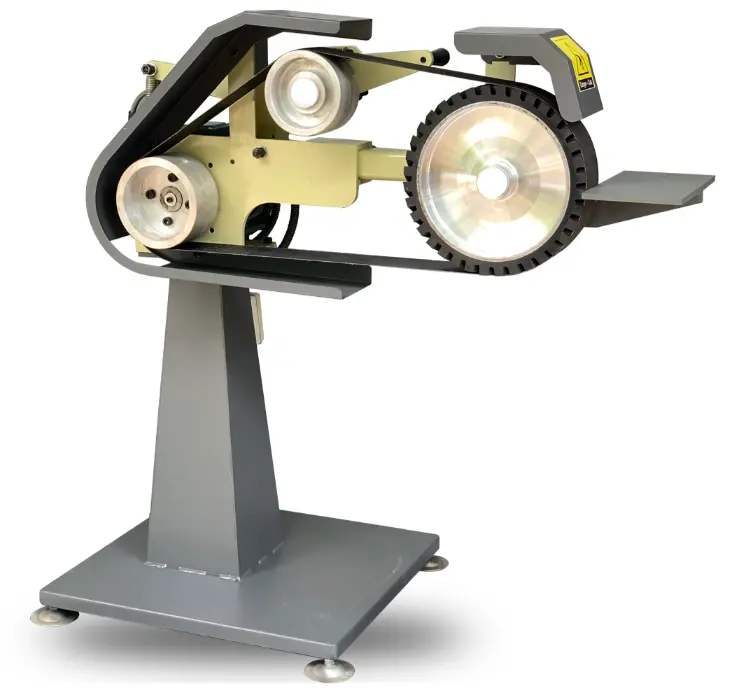
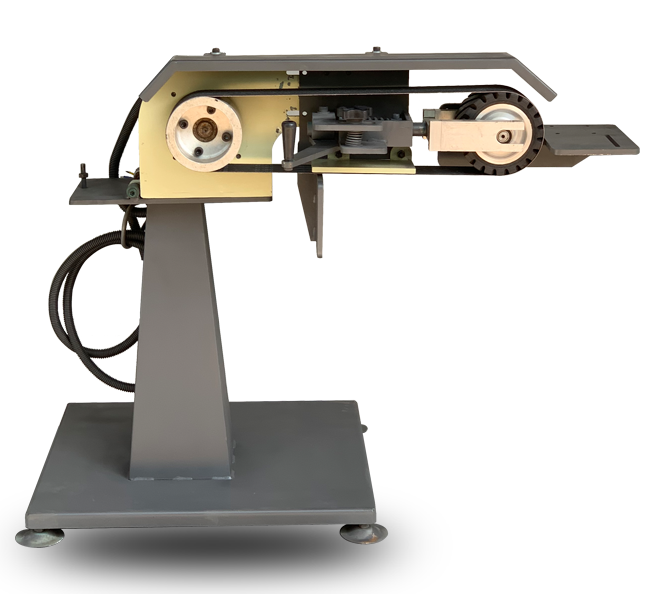
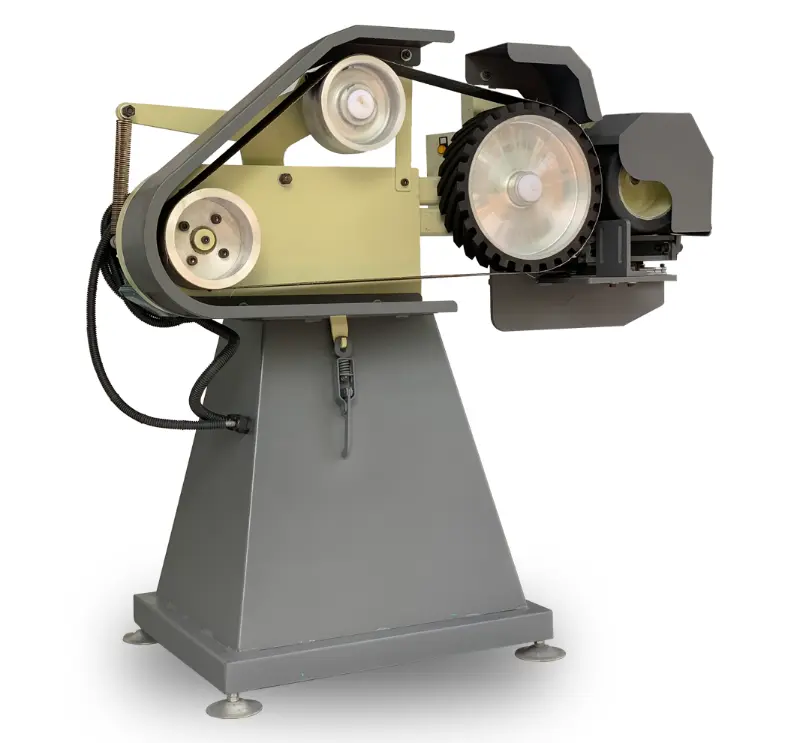
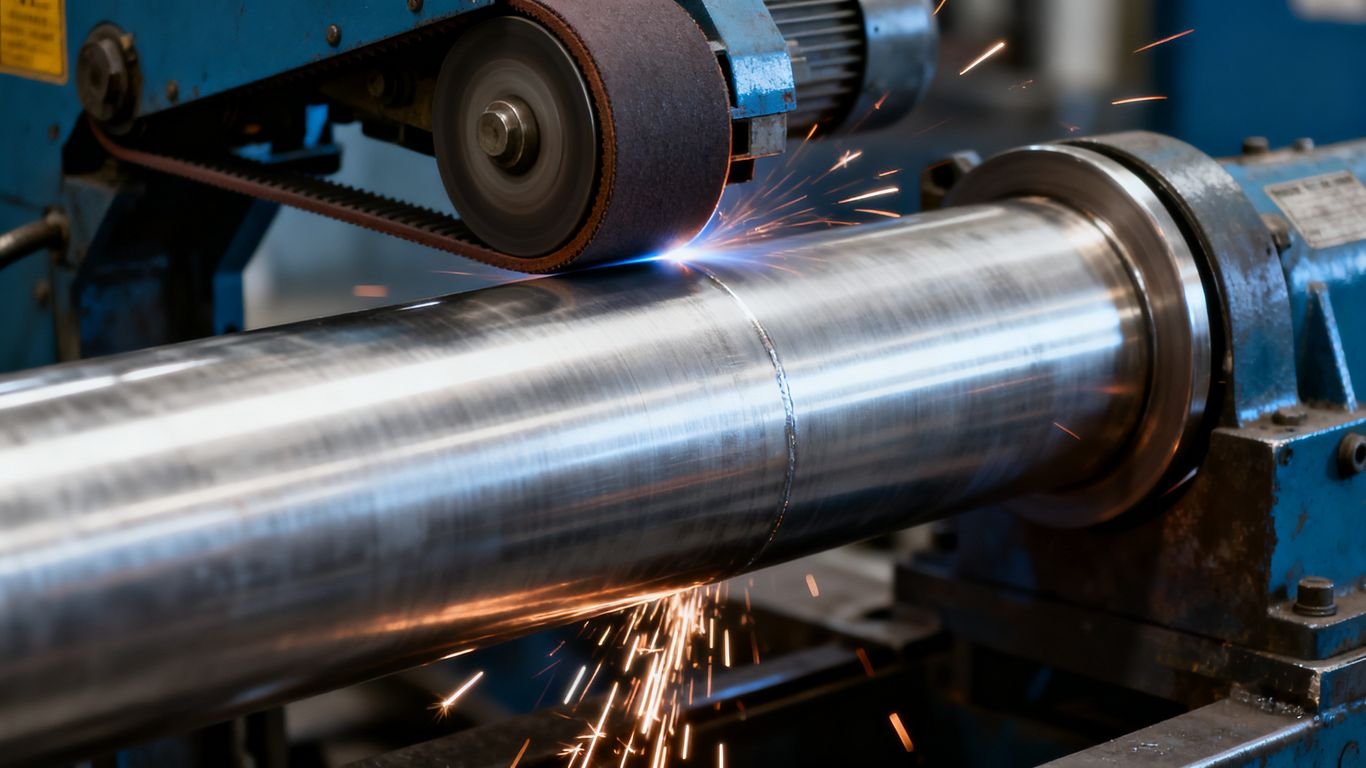
An industrial belt sander machine, often used interchangeably with the term industrial belt grinder, is heavy duty finishing equipment that uses a continuous abrasive belt to remove material, blend welds, deburr edges, or bring metal surfaces to a specific finish grade. Unlike bench top or hobbyist sanders, industrial units are built for continuous duty cycles, higher horsepower motors, and structural rigidity that keeps the belt tracking true under heavy load, shift after shift, week after week.
What Is an Industrial Belt Sander Machine and Why It Matters for Metal Production
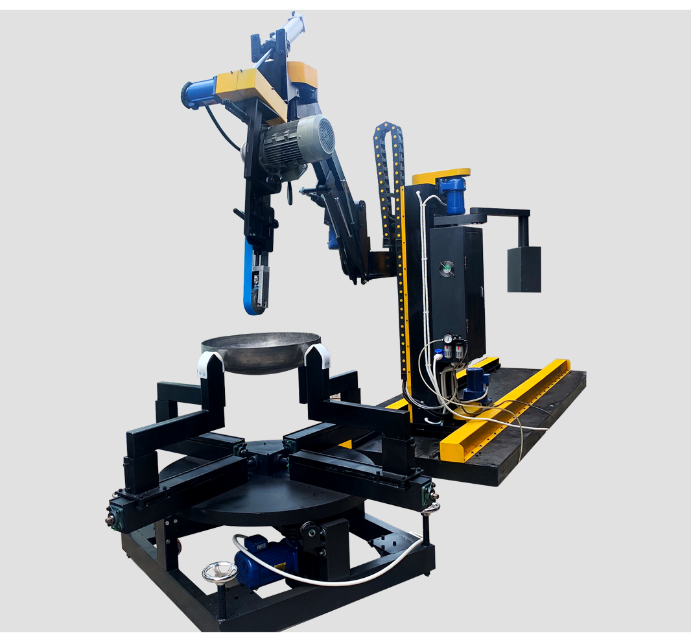
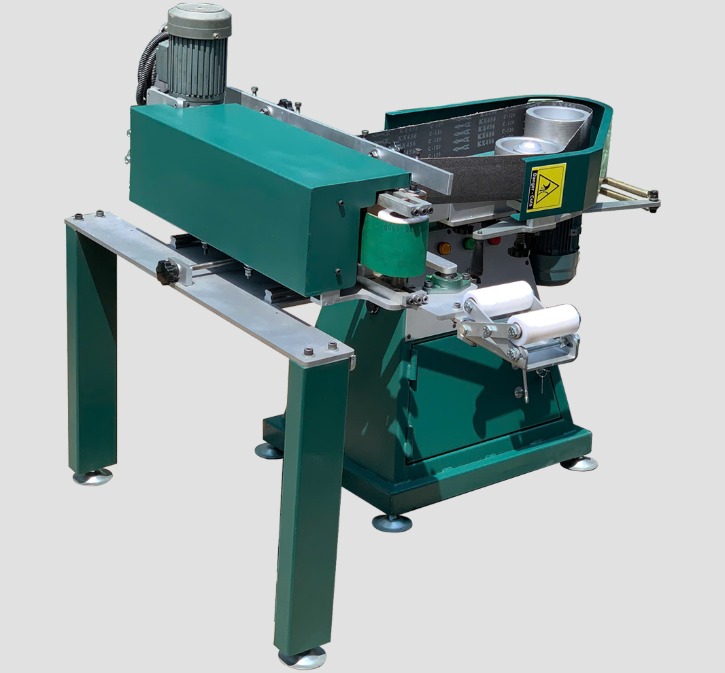
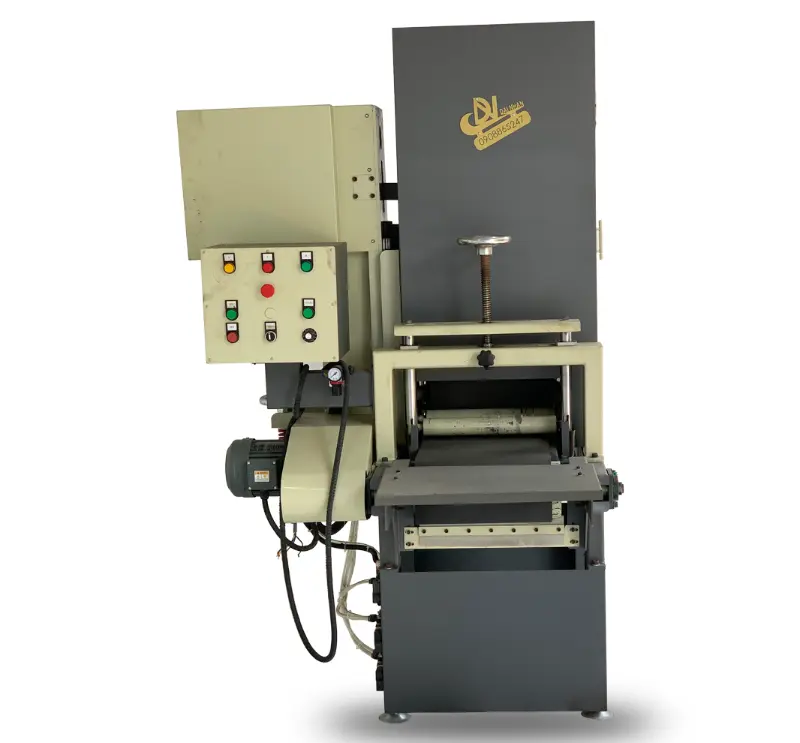
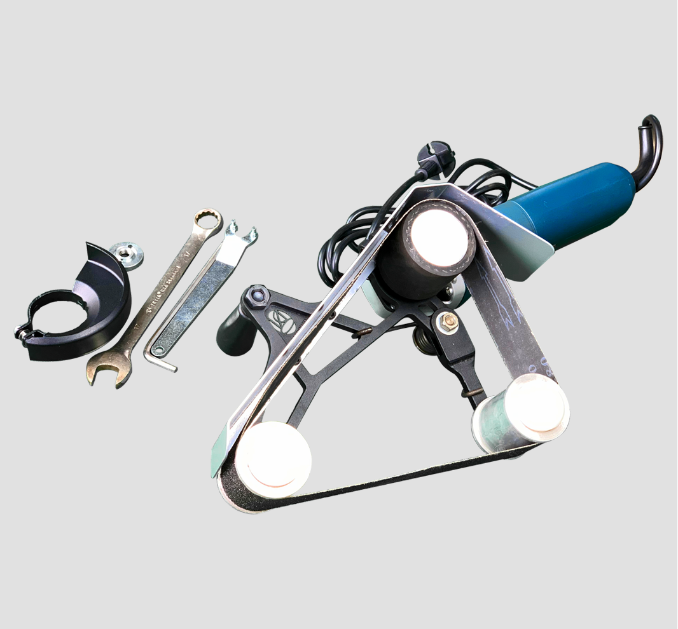
The category covers a wide range of configurations, and each one solves a different problem on the shop floor. Tube and pipe belt sanders handle full rotary finishing on round stock, producing an even, 360 degree surface without flat spots, while tank and vessel grinders are built for large scale sanitary grade polishing, often required to meet strict surface roughness values in food and beverage production. Dual station belt sanders give two operators independent, simultaneous work stations, which matters enormously for shops that need to double throughput without doubling floor space, and three wheel and four wheel belt grinders are configured for aggressive stock removal and deburring, where the priority is fast material removal rather than a mirror finish. Handheld industrial belt sanders solve the problem of on site work or awkward part geometry that cannot be brought to a stationary machine, and plate grinding machines are purpose built for flat stock and structural steel, where consistency across a long, flat surface is the main challenge.
What ties all of these together is the underlying job, which is belt sander metal finishing. Whether the goal is a mirror polish on a stainless tank or a consistent brushed grain on architectural steel, the machine has to deliver a repeatable result at production speed without introducing chatter, vibration, or inconsistent pressure across the belt.
The Technical Anatomy of an Industrial Belt Sander Machine
To understand why customization matters so much, it helps to understand what is actually inside the machine, because every one of these components is a variable that can be tuned to your specific job. The frame is the foundation, and a frame that flexes under load will transmit vibration directly into the belt, which shows up on the part as inconsistent grain or chatter marks. Frame rigidity is one of the most overlooked specifications buyers ask about, and it is usually the first thing that separates a well engineered industrial belt sander from a cheaply built one.
The motor determines both raw power and control, and a motor sized for aluminum will underperform or overheat on hardened alloys, while a motor sized for heavy stock removal on steel may be too aggressive for thin gauge stainless sheet, which is one of the clearest examples of why a generic catalog spec often does not fit a specific job. The contact wheel and platen shape how the belt interacts with the part, since a hard contact wheel is suited to aggressive material removal while a softer wheel allows the belt to conform to curved or irregular surfaces for a finer finish, and platens are used where a flat, controlled surface is needed, such as blending a weld seam flush with a plate.
The belt tracking system keeps the abrasive belt centered and stable during operation, and poor tracking causes belts to wander, wear unevenly, or run off the wheels entirely, which is one of the most common causes of downtime on lower quality machines. Dust and debris extraction is not a cosmetic feature either, since in food and beverage production and in enclosed shop environments, proper extraction is often a regulatory requirement as much as a safety one. Understanding these components is what allows an engineering team to move beyond a spec sheet and actually solve a finishing problem, which is the difference between buying an industrial belt sander machine and commissioning one.
Why Off The Shelf Often Is Not Enough
Most catalog machinery is built to a generic spec, meaning a fixed frame size, a standard motor, and a belt width chosen to fit the widest possible customer base, and that approach works fine until your production line runs into a real world constraint. This can mean tank diameters or pipe lengths outside standard ranges, so the part physically will not fit or rotate properly in a generic frame, or it can mean a material such as a high carbon alloy, thin gauge stainless, or aluminum that behaves differently under abrasive pressure and needs a different motor and belt speed combination. It can also mean a layout constraint such as ceiling height, floor footprint, or dust extraction routing that a standard frame simply does not accommodate, or a finish tolerance, often expressed as an Ra value, that is tighter than a general purpose machine can hold consistently across a full production run.
This is where the distinction between a belt sander supplier that only resells catalog units and a true manufacturer becomes critical. A supplier can quote you the closest available model and hope it is close enough, while a manufacturer can change the frame, the motor placement, the belt tracking system, or the tooling fixture to match your actual part before it ever reaches your floor.
The Dai Nhan Difference – Direct Manufacturer and Not a Trading Company
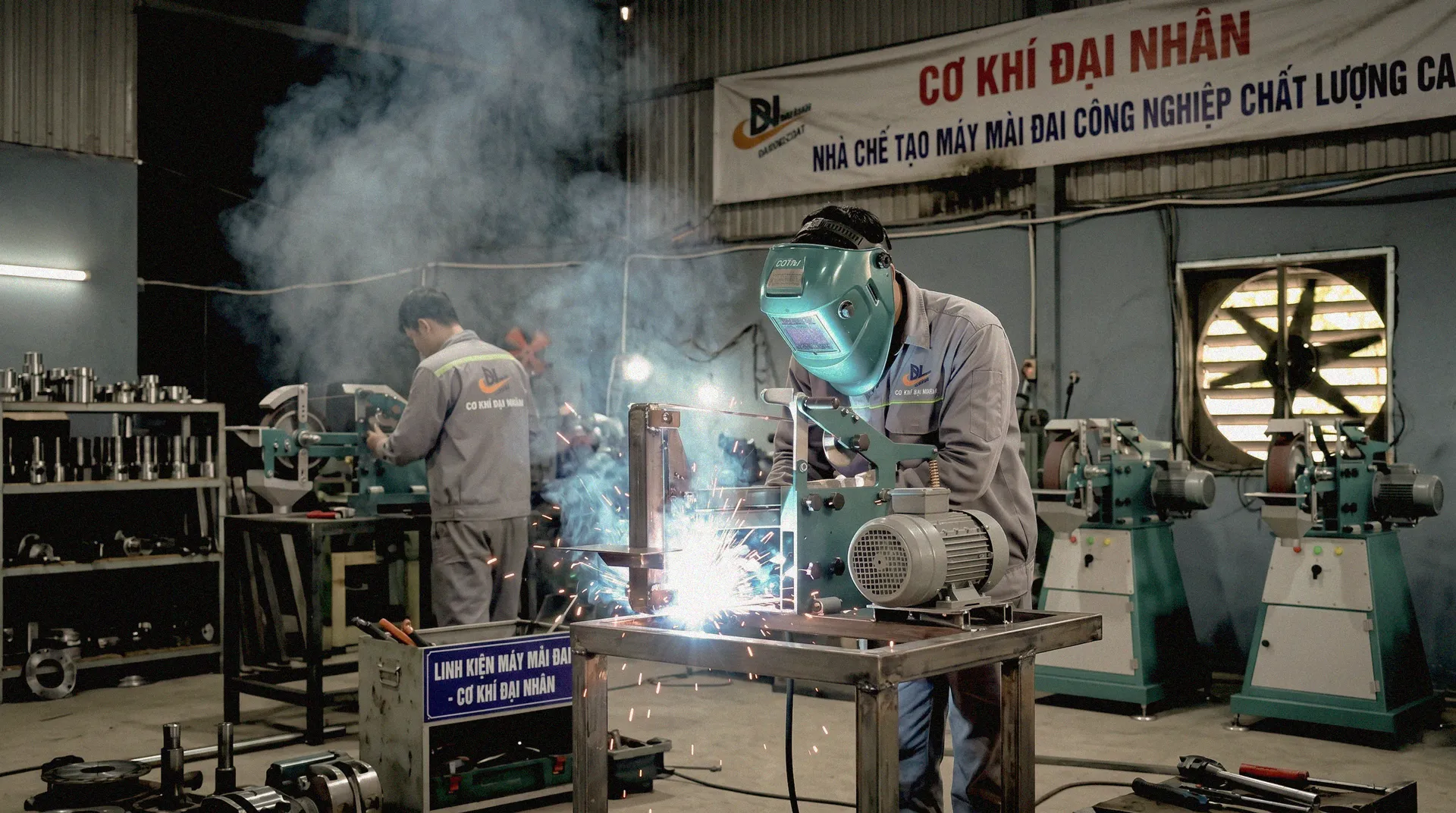
Dai Nhan Machinery keeps its full CNC engineering process inside its own factory in Vietnam, and that single fact changes what is possible on a project in several concrete ways. There are no supply chain bottlenecks, because design changes do not have to wait on a third party fabricator’s own production schedule, and there are no micro vibrations from mismatched parts, because frames, motor mounts, and belt tensioning systems are engineered and tested as one integrated system rather than assembled from unrelated off the shelf components sourced from different suppliers.
Pricing also stays competitive without tariff layers, since the equipment is engineered and built directly in Vietnam rather than imported through multiple trading intermediaries, each adding its own markup, and there is full traceability throughout the build. Because Dai Nhan is the factory, our team can trace and adjust every stage, from steel selection to final motor calibration, rather than relaying your specifications through a broker who has no visibility into the actual production floor. This direct manufacturer model is the core reason customers choose Dai Nhan over a general belt sander supplier, since when you order a custom industrial belt sander machine, you are speaking directly with the engineers who will build it, not with a sales layer that simply relays your requirements to a factory you will never see or verify.
How OEM Engineering Actually Works
OEM engineering sounds abstract until you see it applied to a real production problem, and it helps to walk through how a typical Dai Nhan OEM project actually moves from first inquiry to installed, running equipment. It begins with requirements and constraints, where you share your part specifications, meaning material, dimensions, your current bottleneck such as heavy slag removal, weld blending, hairline finish, or mirror polish, your target Ra value, and any spatial constraints on your floor. From there, our team moves into engineering review, evaluating whether an existing platform can be adapted or whether a new frame and tooling configuration is genuinely needed, and because CNC machining happens entirely inside our own factory, this stage moves faster than working through a broker or trading company that has to relay questions back and forth.
How OEM Engineering Actually Works
Once the direction is clear, the project enters custom configuration, which is where an industrial belt sander machine actually gets tailored to your job, including motor sizing matched to your material hardness, belt width and speed matched to your finish target, single or multi station layouts matched to your throughput target, and dust and extraction integration matched to your facility. Every custom unit then goes through build, test, and vibration verification, meaning it is built and run under load before it ships, checked against the same zero vibration standard we hold our standard catalog machines to. Finally, the project moves into delivery and support, where machines ship with full technical documentation and our team remains available for commissioning support and ongoing questions, because this is not a one time transaction but the start of a manufacturing relationship that typically continues through repeat orders, spare parts, and future custom projects.
Industrial Belt Sander for Metal and Applications Across Industries
Because finishing requirements vary so widely by sector, Dai Nhan engineers machines around the specific demands of each application rather than offering a single generic spec for every buyer. In food and beverage fabrication, sanitary grade tanks and dairy vessels often require a finish below Ra 0.8 microns, so an industrial belt sander for metal used in this sector needs consistent pressure control and belt tracking that will not leave micro scratches capable of harboring bacteria, which is a food safety issue as much as a finishing one. In architecture and structural steel, large architectural frames need consistent grain matching across long runs of material, a task where an underpowered or poorly tensioned belt sander produces visibly inconsistent results from one panel to the next, something that is immediately obvious on a finished building facade.
In precision CNC machining, deburring after CNC work has to remove sharp edges without altering critical dimensions, a use case where belt speed and pressure control matter just as much as raw power, since too aggressive a pass can push a part out of tolerance. In metalworking and knifemaking, high carbon alloys demand a belt sander for metalworking that can handle aggressive stock removal on three or four wheel configurations while still allowing fine control for final edge work, where the margin for error is measured in fractions of a millimeter. Across all four sectors, the common thread is the same, which is that a belt sander for metal fabrication only performs as well as the engineering behind its frame, motor, and belt tracking system, and that is exactly what a direct manufacturer relationship is built to control from the very first design decision.
Standard Machine or Custom OEM Build
A question we hear often from new buyers is whether they actually need a custom build or whether a standard catalog model will do the job, and a few honest signals can help guide that decision. If your parts fall within common industry dimensions, your material is a standard grade of stainless or carbon steel, and your finish target is a typical brushed or satin grade, a standard catalog machine is very likely sufficient and will also arrive faster and at a lower cost. On the other hand, if your parts fall outside standard dimensions, your finish tolerance is unusually tight, your material behaves unpredictably under standard settings, or your facility layout genuinely will not accommodate a standard frame, a custom OEM build is the more reliable path, even though it takes more lead time up front.
A good manufacturer will tell you honestly which category your project falls into rather than pushing every buyer toward the more expensive custom option. At Dai Nhan, our engineering review at the start of every OEM inquiry exists specifically to make that determination with you, based on your actual production data rather than guesswork.
Total Cost of Ownership, Not Just Purchase Price
Procurement teams evaluating an industrial belt sander machine purchase often compare quotes on sticker price alone, but the real cost comparison includes several other factors that show up over the life of the machine. Downtime cost matters more than most buyers expect, since a machine with poor belt tracking or an underpowered motor for your material will need more frequent stops for adjustment, belt replacement, or rework of parts that did not meet spec on the first pass, and belt and consumable costs vary depending on how well the machine’s speed and pressure settings match your material, because a poorly matched setup burns through abrasive belts faster than necessary.
Rework and scrap cost is often the largest hidden expense, since a machine that cannot hold your finish tolerance consistently will produce parts that need a second pass or, in worse cases, get scrapped entirely, and support and spare parts availability affects how long a machine stays productive after the warranty period ends. Working with a direct manufacturer typically means faster access to replacement parts and technical support than working through a reseller who has to relay requests back to a factory overseas, and when all of these factors are added up over several years of operation, a slightly higher upfront investment in a properly specified or custom engineered machine very often costs less overall than a cheaper machine that was never quite right for the job.
Choosing the Right Belt Sander Machine Manufacturer
For B2B buyers evaluating suppliers, a few questions separate a reliable long term partner from a one time vendor. It is worth asking whether a company is a manufacturer or a trading intermediary, since direct manufacturers can adjust design, timeline, and pricing without a middleman relaying every change request, and whether they can support custom OEM and ODM engineering or only sell fixed catalog models with no ability to modify them. It is also worth understanding their actual in house capability, since full CNC machining performed inside their own factory typically means faster iteration and tighter quality control than work that is outsourced to unrelated fabrication shops.
Beyond capability, it helps to confirm whether they have documented industry experience relevant to your material and finish tolerance, whether that is food grade, structural, precision CNC, or heavy alloy work, and what after sale support actually looks like, including commissioning help, spare parts availability, and responsiveness when you place a second or third order down the line. A dependable belt sander machine manufacturer should be able to answer all of these questions without hesitation, and ideally point to existing client work in your specific industry.
Why Vietnam Based Manufacturing Makes Sense for Global Buyers
Vietnam has become a competitive manufacturing base for industrial equipment for a straightforward reason. Labor and production costs remain lower than Western markets, while quality and precision, when the manufacturer keeps engineering fully in house, can match international standards. For buyers sourcing an industrial belt sander machine internationally, working with a Vietnam based direct manufacturer like Dai Nhan can mean a lower landed cost without sacrificing build quality, faster customization cycles since design and fabrication happen under one roof rather than across multiple vendors, and reduced exposure to tariff and trading layer markups that are common with multi step import chains involving several intermediaries.
Read more: How OEM/ODM Plate Graining Machine Improves Industrial Surface Adhesion


BOLA BAG's BLOG YOU MAY ALSO BE INTERESTED IN
How to Measure Sanding Belts: Width, Length, Grit and the Numbers Printed Inside
How OEM/ODM Plate Graining Machine Improves Industrial Surface Adhesion
Operational Mistakes With Export Standard Industrial Belt Sander Equipment