


An angle grinder with a thin cutting disc will go through steel that would stall a hacksaw and embarrass a jigsaw, and it will do it in seconds. That speed is exactly why so many cuts wander, why so many discs shatter, and why the grinder has the reputation it has. The tool is not the problem. Knowing how to cut steel with a grinder is about three things: the right disc for the thickness, a workpiece that cannot move, and a technique that lets the disc do the cutting instead of forcing it. Get those right and the cut is straight, the disc lasts, and the grinder stays in your hands.
How to Cut Steel With a Grinder Safely
A cutting disc is a millimetre of bonded abrasive spinning at over ten thousand rpm. It cuts steel, and it will cut anything else it touches. The setup is about making sure that is only ever steel.
Wear a Face Shield and Gloves
A full face shield over safety glasses, because a cutting disc that grabs can fragment and the pieces come toward you. Hearing protection. Leather gloves that fit closely enough not to catch. Sleeves down, natural fibre rather than synthetic, since a spark on polyester melts it into the skin. Clear anything flammable from several metres around, and look behind you as well as in front, because the spark stream from a cutting disc is long.
Clamp Both Sides of the Cut and Then Check the Clamp
The workpiece must be fixed so it cannot shift, vibrate, or pinch the disc as the cut opens. Clamp both sides of the cut on anything long, and support the offcut so it does not sag into the blade and bind it. A pinched disc is the single most common cause of a grinder kicking back or a disc breaking. The guard stays on, positioned so that it sits between the disc and your face.
Check the Disc and Its Speed Rating Every Time
Look for cracks, chips, or a disc that has got wet, since moisture weakens the bond. Check the speed rating printed on the disc is equal to or higher than the grinder’s maximum rpm. Fit it with the correct flange and tighten it properly, and never use a disc that has been dropped. Industrial shops work to the OSHA standard for portable powered tools for exactly this kind of guarding and handling, and it is a sensible baseline for anyone.
Choosing the Right Cutting Disc From Grinding Wheel Manufacturers
The disc is not a grinding wheel with a thinner profile. It is a different product with a different job, and using the wrong one is where most trouble starts.
Thin Cut Off Discs Between 1.0 and 2.5 Millimetres
Between 1.0 and 2.5 millimetres thick. Thinner discs cut faster, cooler, and with less waste, and they are the right choice for sheet, tube, and anything under about 6 millimetres. They are also more fragile, so they flex and shatter if twisted in the cut, and how well one survives that comes down to the bond, which is the part of the product that abrasive grinding wheel manufacturers actually compete on. Thicker discs handle bar and plate but remove more material and generate more heat.
Match the Disc to the Steel
Standard discs are aluminium oxide bonded for mild steel. Stainless needs a disc marked as iron and sulphur free, because contamination from an ordinary disc will leave rust spots on stainless within weeks. Hardened steel and thick sections benefit from zirconia or ceramic grain, which cut faster and last longer. Consistency between discs from the same batch is what separates a good supplier from a cheap one, and it is the reason fabrication shops buy through established grinding wheel manufacturers rather than by price alone.
Never Grind With a Cutting Disc
A thin disc is designed to take side load in one plane only. Use its face to grind and it will snap. If the cut needs dressing afterwards, change to a grinding wheel or flap disc. It takes thirty seconds and it is the reason the disc stays in one piece.
Can a Grinder Cut Steel Cleanly?
The technique is simple and it is almost entirely about not fighting the tool.
Mark the Line and Score It Before Cutting Through
Mark the line clearly with a scribe or a paint marker. Start the grinder off the work, let it reach full speed, then make a shallow scoring pass along the whole line before cutting through. The score guides the disc, stops it skating across the surface, and is the difference between a cut that follows the mark and one that wanders.
Let the Disc Do the Work
Hold the grinder with both hands, disc square to the work, and apply just enough pressure to keep it cutting. Forcing it slows the disc, builds heat, and increases the chance of a grab.
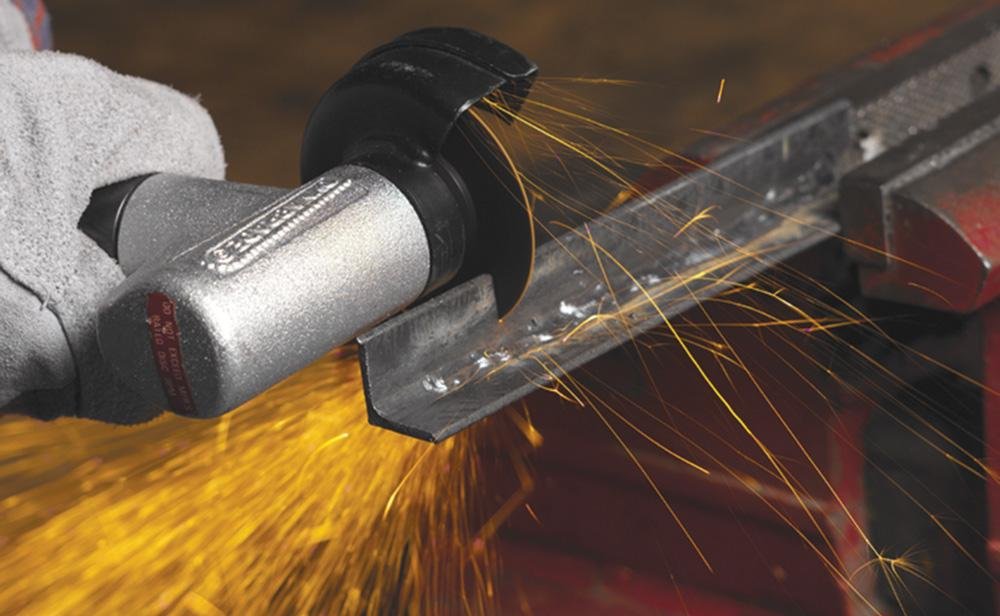
Cutting steel with grinder
On anything thicker than the disc can cross in one pass, cut in several passes rather than trying to plunge straight through, and keep the disc perpendicular throughout, because tilting it in the cut twists the disc and that is how discs break.
Stop the Disc Kicking Back or Getting Pinched
Kickback happens when the disc binds and the grinder throws itself back toward the operator. Stand to one side rather than directly behind the disc, keep a firm two handed grip, and cut so that the disc rotation pulls the tool into the work rather than pushing it out. If the cut starts to close on the disc, stop and support the offcut before continuing. Never withdraw a spinning disc from a cut at an angle.
Finish the Cut and Let It Cool
Ease off pressure as the disc breaks through so the last section does not tear. Switch off, let the disc stop completely before setting the grinder down, and leave the cut edge alone until it is cool, because it will be hot enough to burn for a surprising length of time.
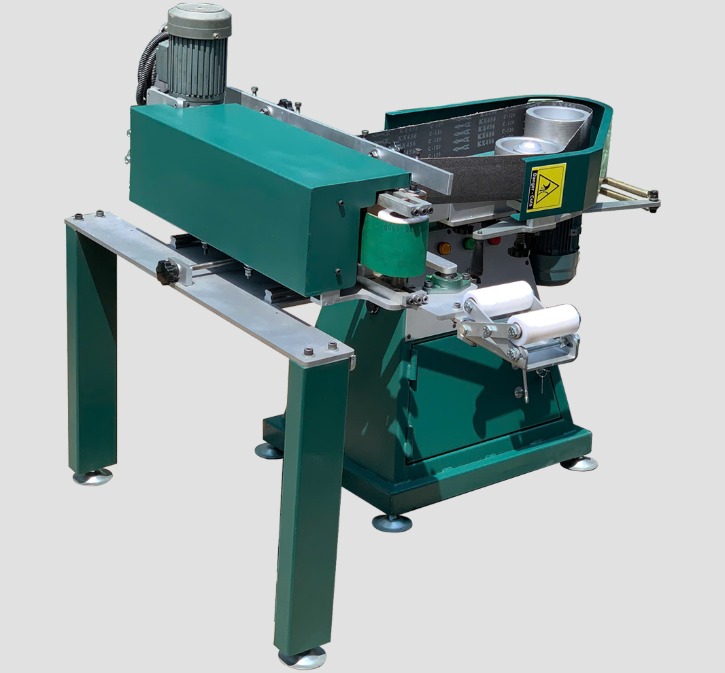
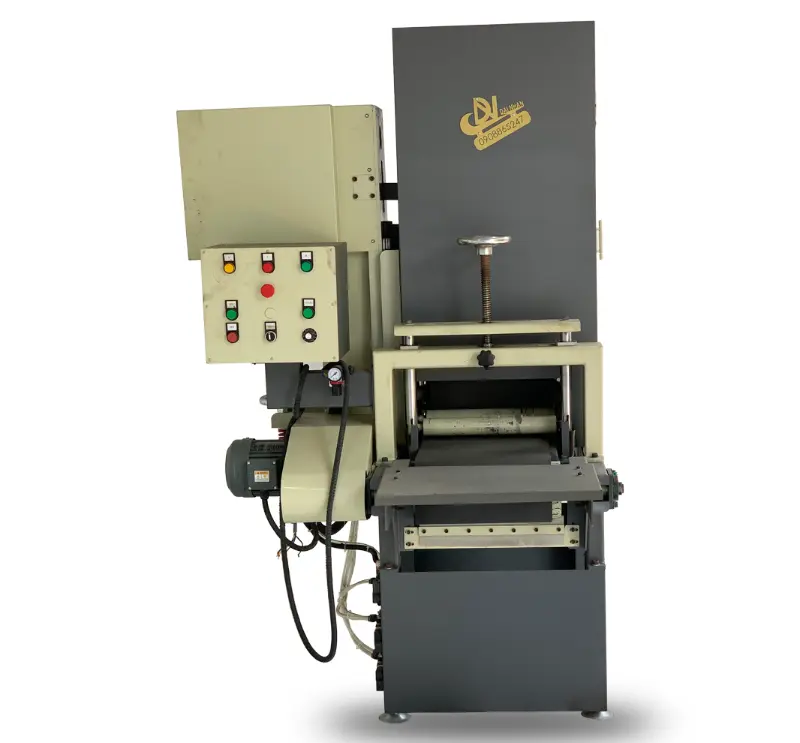
What the Cut Leaves Behind and Why an Industrial Belt Sander Machine Cleans It Up
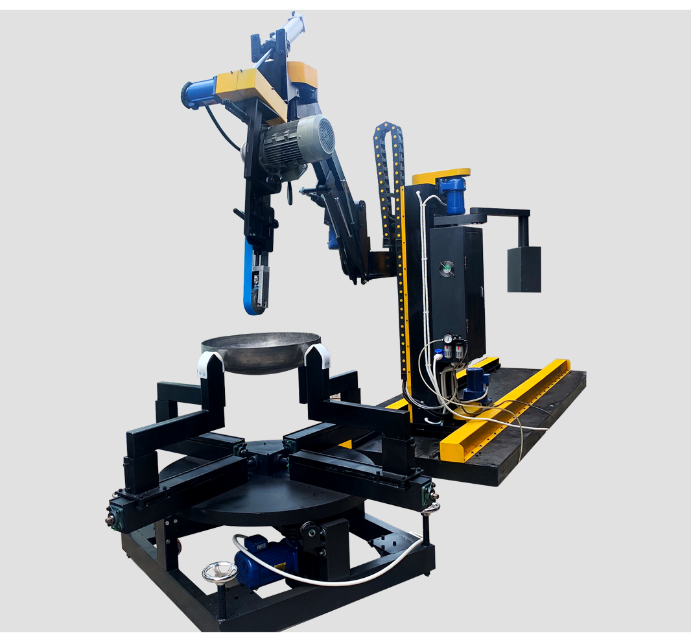
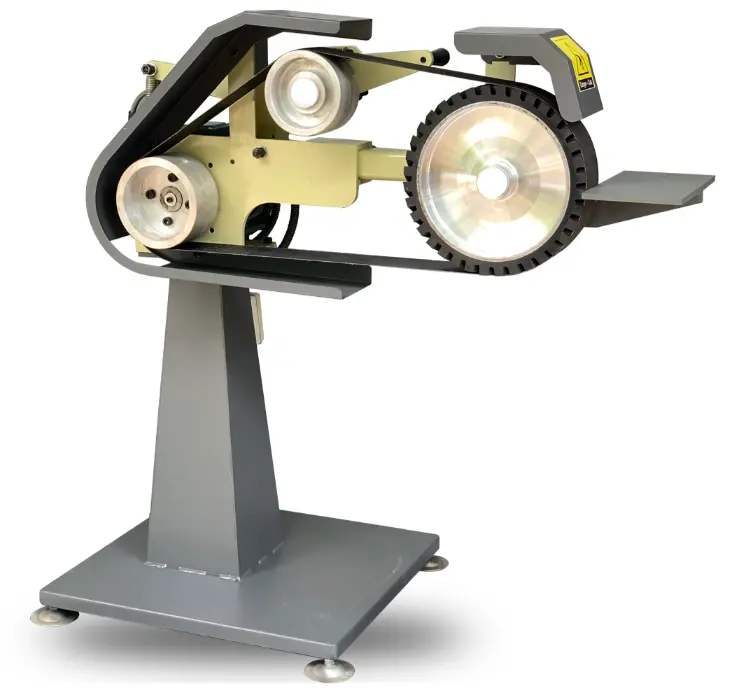
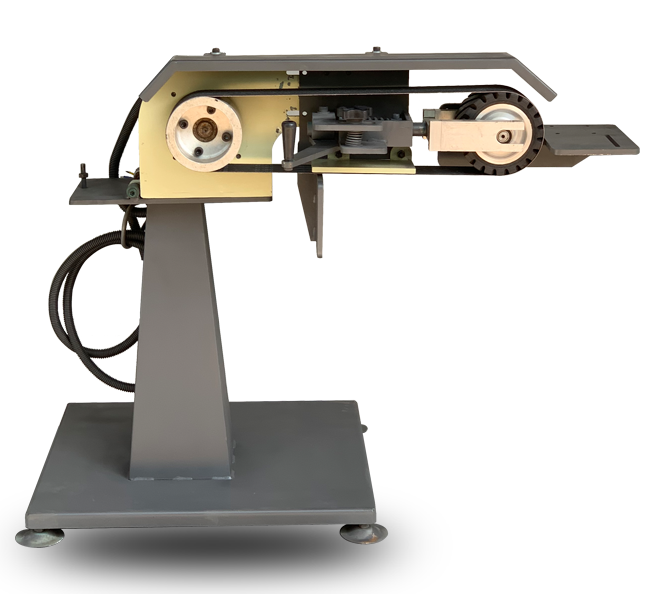
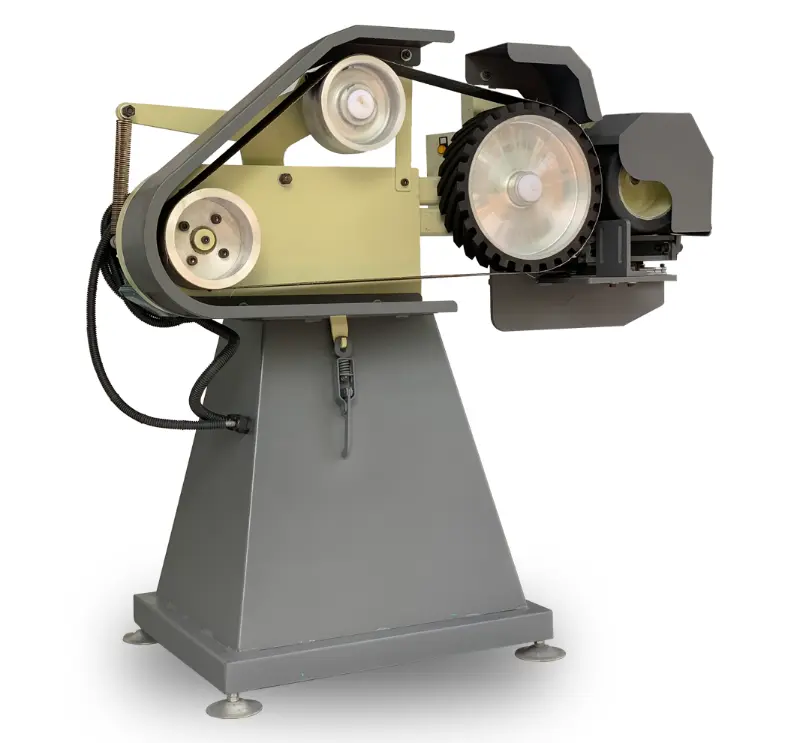
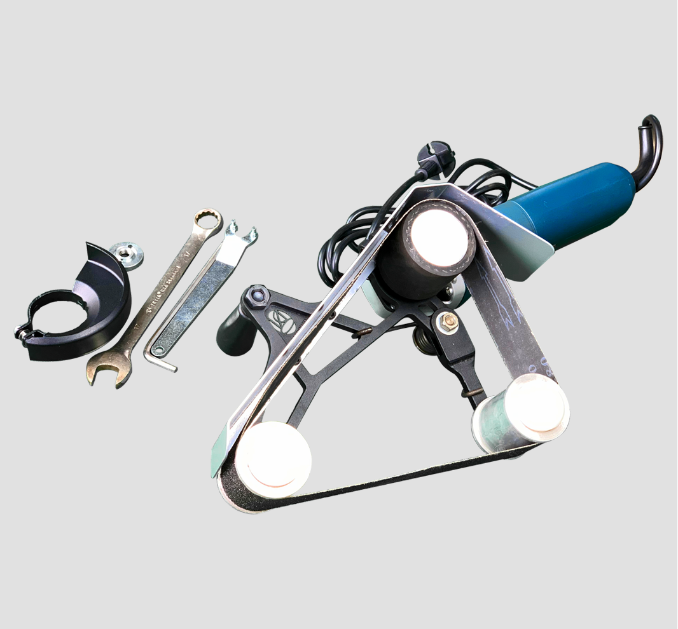
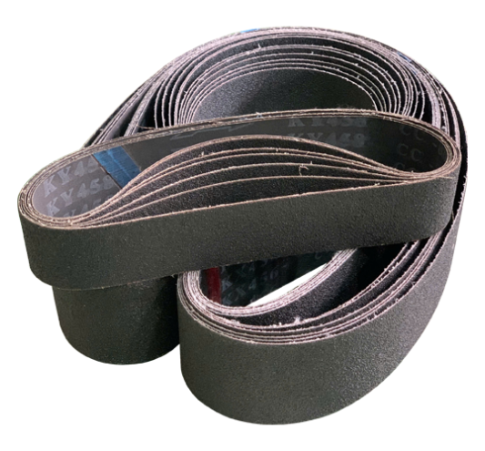
A cutting disc leaves a burr on the exit side, a slight heat tint along the edge, and on thin material a small lip where the disc broke through. None of that is the finished edge. Deburring is the immediate next step, and for a one off it is a file or a flap disc. For anything that has to look finished or fit against another part, the edge goes to a belt. A belt grinder squares the edge, removes the burr, and puts a consistent chamfer on in one pass, which a hand held disc cannot do repeatably. Anyone still asking what is a belt grinder for gets the answer here: the belt runs flat over a hard platen, so the edge it produces is flat too, and a hand held disc cannot do that.
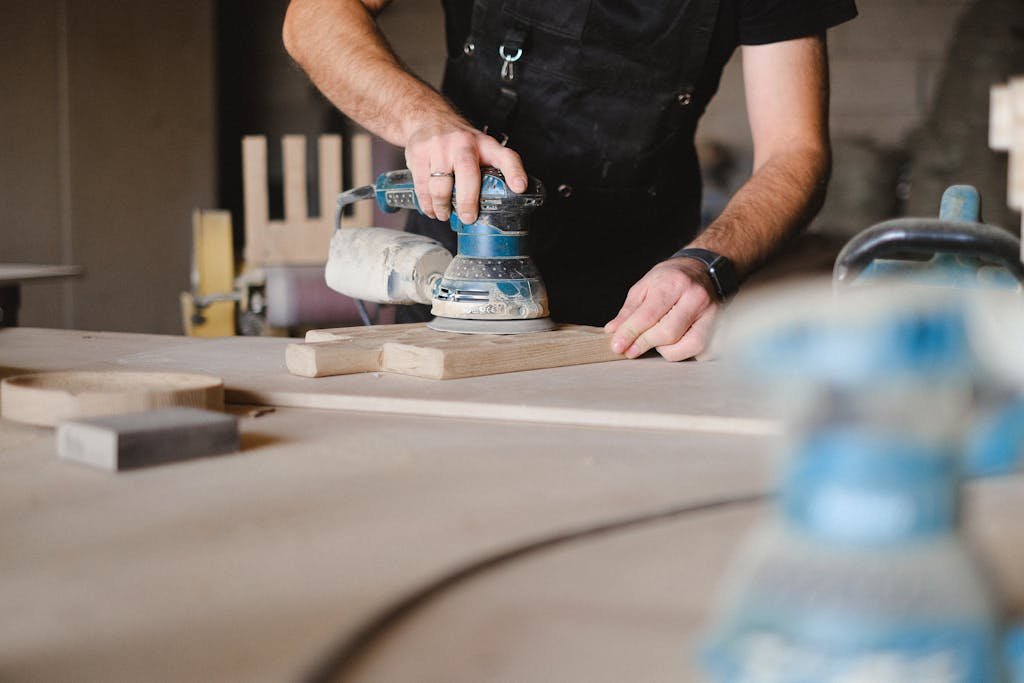
Belt Sander
At volume, the cut edge becomes a line item. A shop cutting two hundred brackets a shift cannot deburr them one at a time with an angle grinder, and the edge finish has to match across the batch. That is where an industrial belt sander machine takes over.
Conclusion
How to cut steel with a grinder comes down to a short list. Face shield, clamps on both sides of the cut, and a disc you have looked at before fitting. A thin cut off disc matched to the steel, never used for grinding. Score the line, let the disc cut under light pressure, keep it square, and stand to one side. Use a guide for anything that has to fit. Then deburr, because the cut is not the edge. Do that and the grinder is one of the fastest, most useful tools in the shop instead of the most dangerous one.
If the edges you cut have to be finished consistently across hundreds of parts, Dai Nhan Machinery builds belt grinding and deburring equipment for production metalworking. Browse the range on Our Machines page to see the deburring options. Or tell our engineering team what you are cutting and how many a shift and we will suggest a setup.
Read more: What Tools Are Needed for Metal Fabrication?


BOLA BAG's BLOG YOU MAY ALSO BE INTERESTED IN
Global Procurement Guide: Selecting the Best Industrial Pipe Polishing Machine Manufacturer
Top 4 Abrasive Belt Grinding Machine Manufacturers in Asia
How Is Square Tubing Made? Inside the Roll Forming, Welding, and Finishing Process