


Most people who need to measure a sanding belt are in one of three situations. They have a whole belt with the label worn off, a belt that snapped halfway through a job, or no belt at all and a sander waiting to be used. Each situation needs a slightly different method, and using the wrong one is how people end up ordering a box of belts that are an inch too short. So how do you measure a belt sander belt? Width is always the easy part. Length is where the method matters. This guide matches the method to the belt you actually have, then covers the mistakes that give a wrong number and what to do with the result.
How Do You Measure a Belt Sander Belt
An intact belt is the easiest case. Measure the width straight across the belt from edge to edge first. It should be close to a round number such as 1, 2, 3, 4 or 6 inches. Then find the length, which is always the full distance around the loop, using one of two methods.
Fold It Flat and Double the Length
Lay the belt on a table and press it flat into a long, narrow shape without creasing it hard. Measure from one folded end to the other, then multiply by two. A belt that measures 10 1/2 inches folded is a 21 inch belt. This works best on thin, flexible belts.
Roll It Along the Tape for One Full Turn
Stiff belts and heavy cloth belts do not fold flat easily. Make a pen mark on the back of the belt, set the mark at zero on a tape measure laid on the floor, and roll the belt along the tape until the mark comes round again. The reading is the full length.
When the Belt Is Broken or Missing
A broken belt or no belt at all needs a different approach, and a little more care.
Lay a Snapped Belt Flat and Measure End to End
If the belt broke across the middle, lay the strip flat and measure from one end to the other. That is the full length. If it split at the glued joint, remember that the two ends overlapped slightly there, so the strip may read a little long. In both cases, round to the nearest standard size rather than trusting the exact figure.
Run a String Around the Rollers
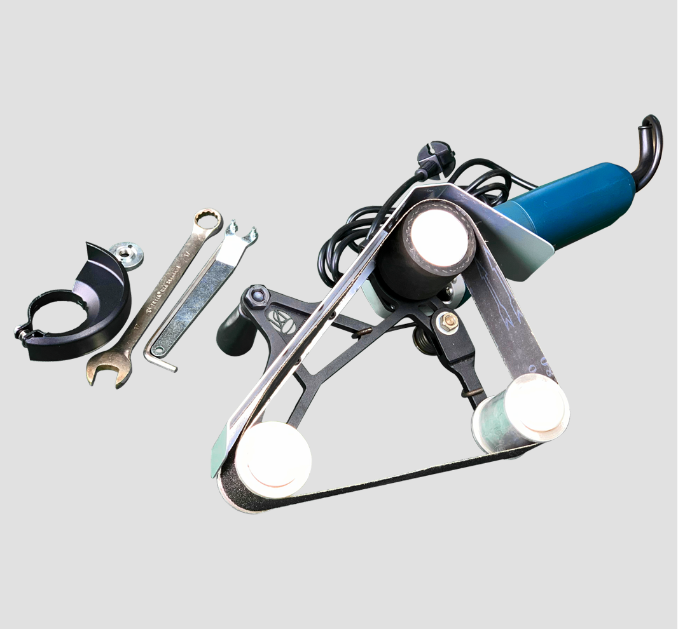
With no belt at all, measure the machine instead. Set the tension lever to its normal working position, run a piece of string that does not stretch around the rollers along the path the belt follows, mark where the ends meet and measure the string laid flat. The width comes from the roller face. Checking the label on the machine first saves the whole job, and it is the quickest route when working out how to measure belt sander size for the machine itself.
Why the Exact Length Matters
It is tempting to think a belt that is nearly the right size will do. It will not.
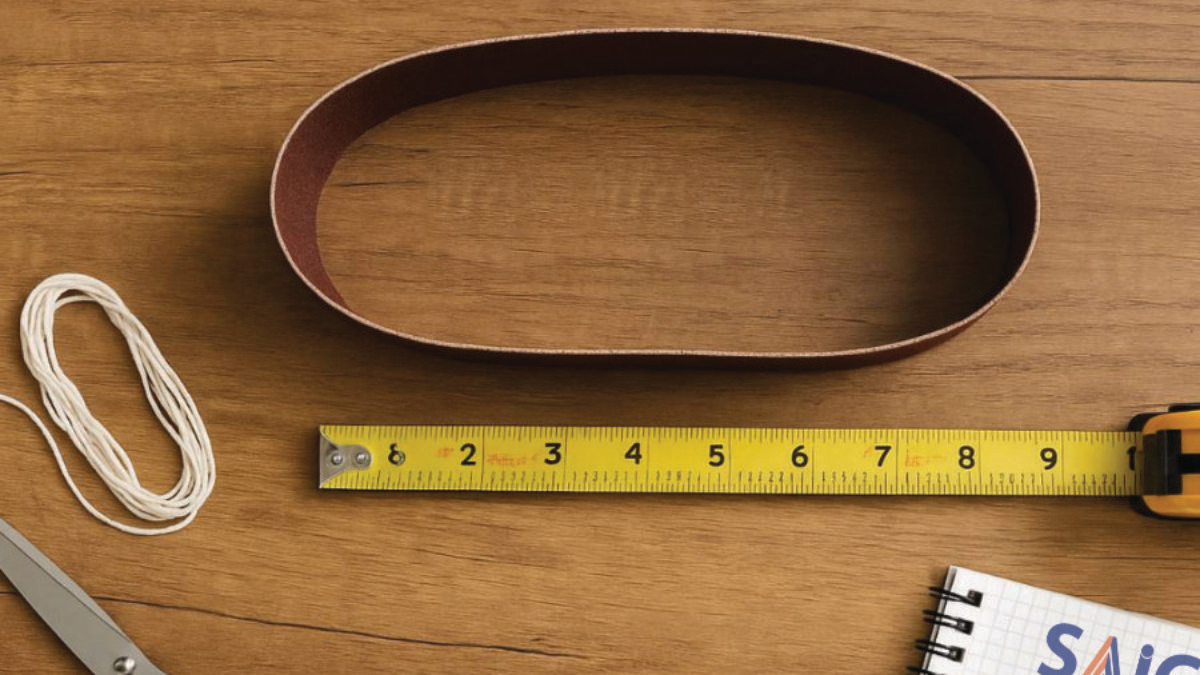
Measure Belt Sander Belt
The tension lever on a belt sander only moves the roller a short distance, so a belt that is too long never gets tight enough to grip and slips on the drive roller, while a belt that is too short either will not go on or is stretched so hard that the joint fails early. Width matters too: a belt wider than the rollers rubs the housing and frays, and a narrower one wanders and leaves part of the roller exposed.
Mistakes That Give the Wrong Number
Measuring an Old Belt That Has Stretched
A belt that ran for months under tension may stretch slightly beyond its original length. Measure it, then round down to the nearest standard size rather than up.
Mixing Up Inches and Millimetres
Many belts are sold in metric sizes that match inch sizes. A 3 by 21 inch belt is often labelled 75 by 533 mm, and a 4 by 24 inch belt as 100 by 610 mm. Check which system the seller uses before comparing numbers.
Rounding to a Size Your Machine Does Not Use
A string reading of 23 3/4 inches on a handheld sander is almost certainly a 24 inch belt, not an unusual custom size. Check the result against the sizes that type of machine normally takes before ordering anything unusual.
Forgetting to Check the Arrow Before Fitting
Measuring correctly does not help if the new belt goes on backwards. Most belts have an arrow printed inside that should point the same way the rollers turn.
The Numbers Printed Inside the Belt
Before measuring anything, turn the belt inside out and look. Most belts carry the size, the grit and the direction arrow on the back, often with the maker’s name and a batch code. Even a worn print can usually be read in good light. Knowing how to measure sanding belts is useful when the print has gone, but the label is always the most accurate answer when it is still there.
Measuring Long Belts on Grinders and Factory Machines
The same methods work on long belts, but small errors grow with length. A 2 by 72 inch grinder belt folded flat measures 36 inches, and a slight twist in the fold can put the result out by half an inch. For long belts, rolling along a tape or measuring the string is more reliable.
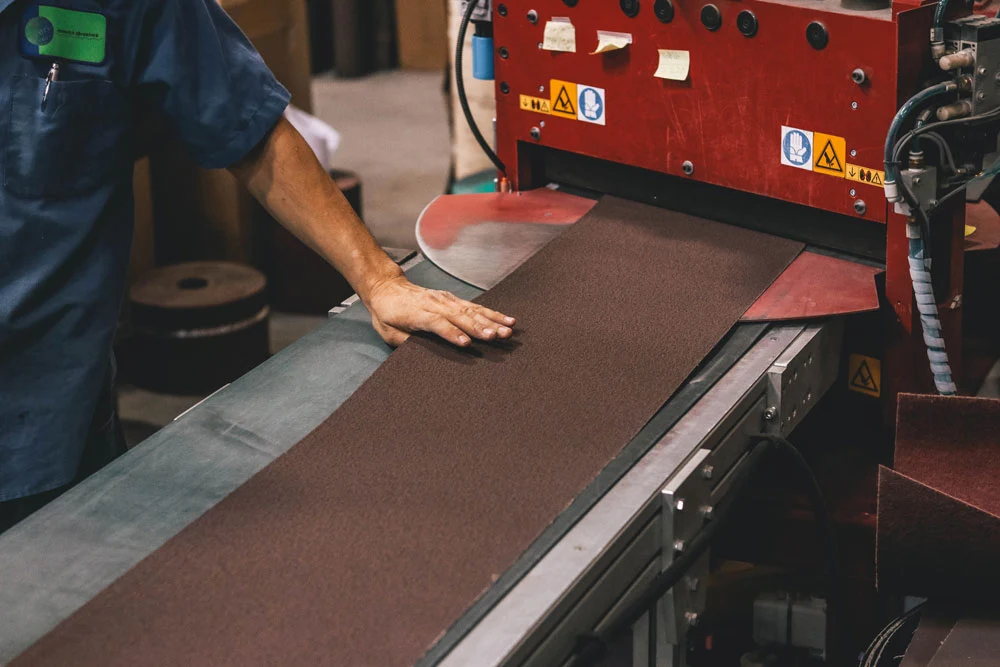
Custom Made Sanding Belt
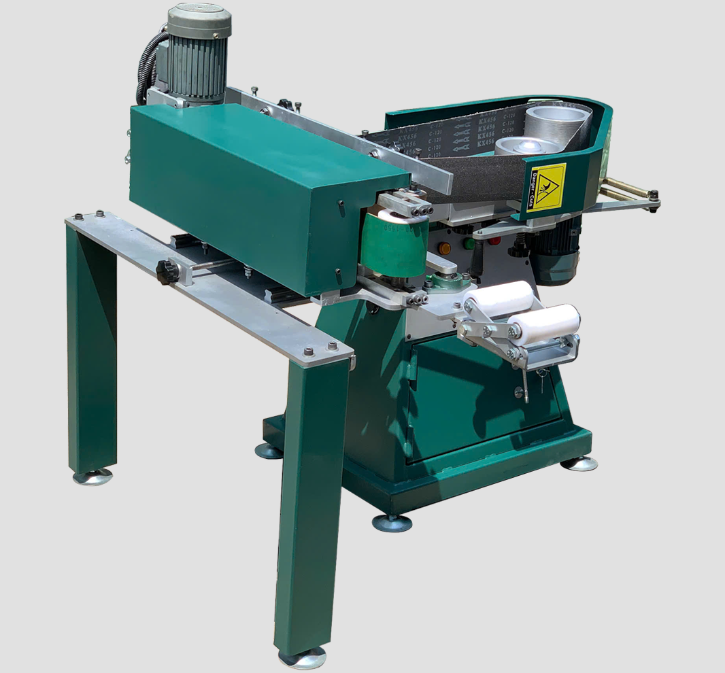
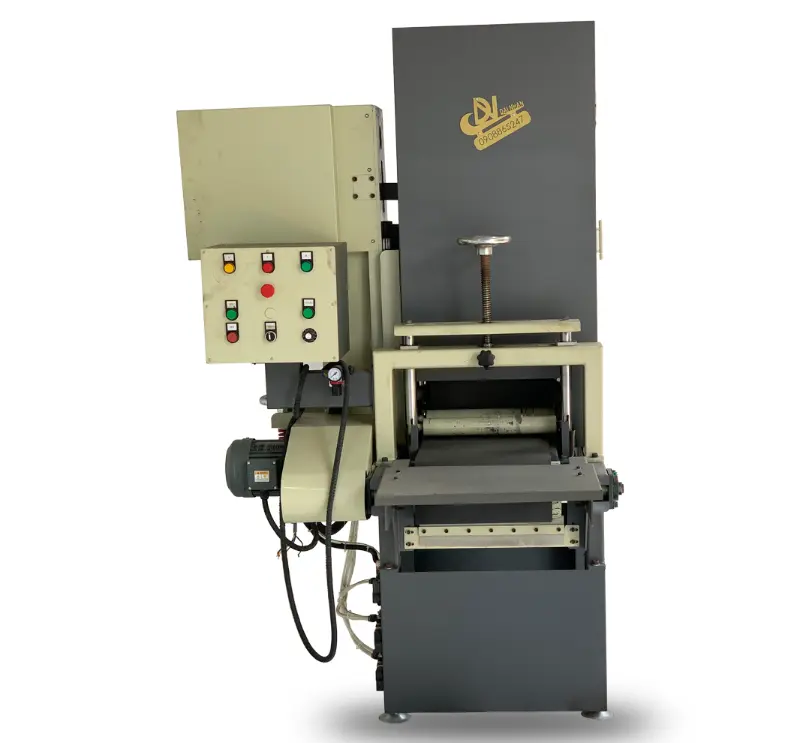
On factory machines, the belt runs over several wheels and a tension arm, so measure with the arm at its working position and write down the wheel layout. For an industrial belt grinder for metal built to a custom design, the belt size from the builder is always better than any measurement.
Conclusion
How do you measure a belt sander belt? Start by reading the size printed inside. If it has worn off, measure the width across the belt, then find the length by folding a flexible belt flat and doubling it, rolling a stiff belt along a tape, measuring a snapped strip end to end, or running a string around the rollers when there is no belt. Watch for stretched belts, mixed units and odd sizes, and round to the nearest standard size for that machine.
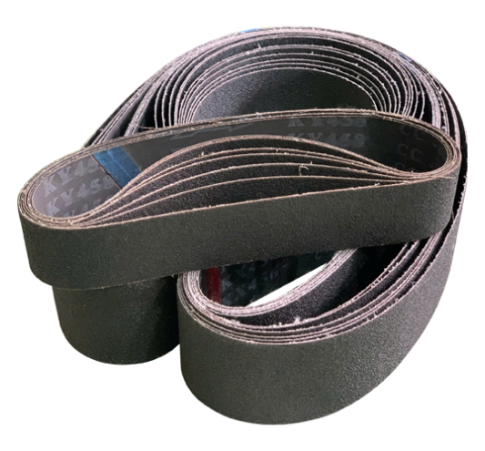
When a machine needs a belt that no standard size fits, Dai Nhan Machinery makes custom sanding belts in Vietnam to the exact length and width, alongside the industrial belt grinders that run them. See our custom made sanding belts on Our Machines page, or send us your belt measurements and the machine you run and we will confirm the size before we quote.
Read more: What Are Belt Sanders Used For? Nine Jobs From Rough Boards to Steel Plate


BOLA BAG's BLOG YOU MAY ALSO BE INTERESTED IN
Why You Should Buy Directly from a Belt Sander Machine Manufacturer
A Buyer’s Checklist for Partnering with Specialized Buffing Wheel Manufacturers
Do Belt Sanders Work on Metal? Here’s What We Found