


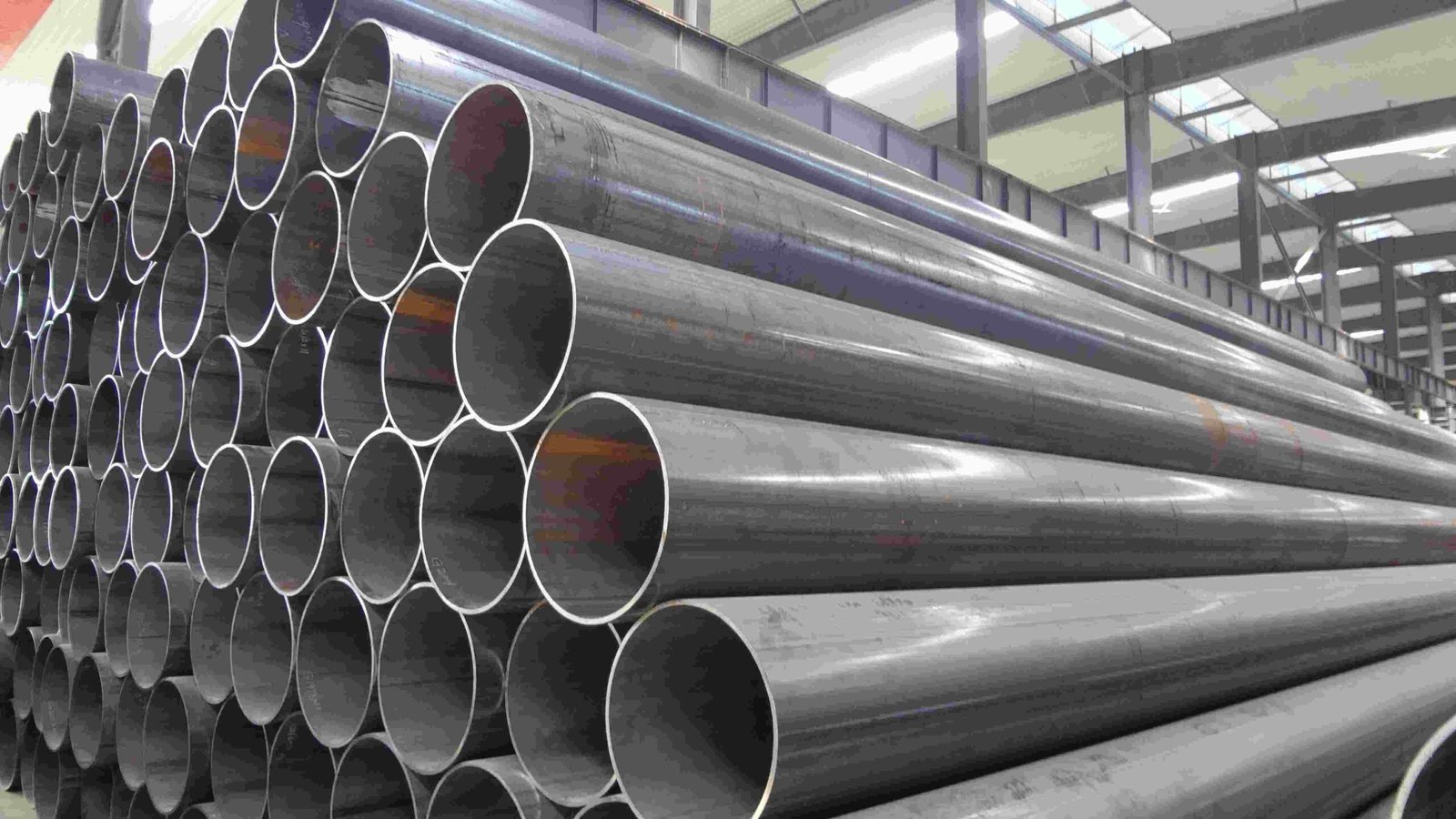
A steel pipe is about as plain an object as industry produces, and it hides one of the more interesting forks in manufacturing. There are two completely different ways to arrive at the same hollow cylinder. One starts with a solid bar and punches a hole through the middle of it while it glows orange. The other starts with a flat strip and rolls it into a tube, then welds the seam shut. Both are in use today, they produce pipe with genuinely different properties, and understanding how are metal pipes made really means understanding why a mill would choose one route over the other.
Pipe and Tube Are Not the Same Thing
Worth clearing up first, because the words get used interchangeably and the industries behind them do not. Pipe is specified by nominal bore and schedule, and it exists to carry something: water, gas, oil, steam. Tube is specified by actual outside diameter and wall thickness, and it exists to be a structural or mechanical component. A 50 millimetre tube measures 50 millimetres across the outside. A 50 millimetre pipe does not measure 50 millimetres across anything in particular.

Metal Pipes
That difference drives the tolerances. Tube is held to tighter dimensional limits because something has to fit over it, inside it, or weld to it. Pipe is held to tighter pressure ratings because something has to flow through it at pressure without bursting.
Everything Starts as Molten Metal
Both routes share a beginning. Whatever the mill makes at the far end, it starts with steel that has been melted, adjusted, and cast into a shape suited to the process that follows.
Melting and Alloying
Iron ore or, far more commonly now, recycled scrap goes into an electric arc furnace and comes out as liquid steel at around 1600 degrees. This is where the alloy is decided rather than discovered: carbon is trimmed and elements such as chromium, nickel, and molybdenum are added to hit the grade. A 316 stainless and a plain carbon steel diverge here, at the furnace, long before either sees a rolling mill.
Casting Into Billets and Slabs
The liquid steel is then continuously cast, and the shape it is cast into effectively chooses the manufacturing route. Cast it into a billet, a solid round or square bar, and it is destined to become seamless pipe. Cast it into a slab, a wide flat rectangle, and that slab gets hot rolled into coil, which becomes welded pipe. One decision at the caster, two completely different mills downstream.
Route One: Seamless Pipe
Seamless pipe has no weld line anywhere in it, which is why it dominates high pressure and high temperature service. Making a hole through a solid bar sounds implausible until you see it done.
Heating the Billet
The billet goes into a rotary hearth furnace and comes out at roughly 1200 degrees, glowing and soft enough to deform without cracking. Temperature uniformity matters enormously here. A billet hotter on one side than the other will pierce off centre, producing a pipe with a wall thicker on one side than the other, and that eccentricity cannot be corrected later.
Piercing the Centre
This is the clever part. The hot billet is gripped between two barrel shaped rolls set at an angle to each other, which spin it and drive it forward at the same time. The rotation sets up tensile stress at the exact centre of the billet, and the metal there begins to pull apart on its own before a conical piercing mandrel is even fully engaged. The mandrel simply opens and shapes the cavity that the stresses have already started. The technique is over a century old and still carries the name of the brothers who developed it, the Mannesmann process.
Elongating and Sizing
What comes out of the piercer is a thick walled hollow shell, far shorter and fatter than the finished pipe. A mandrel mill then stretches it dramatically while thinning the wall, and sizing stands bring the outside diameter to specification. A shell a couple of metres long can leave the line many times that length. Some grades are then cold drawn for tighter tolerance and a better surface.
Route Two: Welded Pipe
Most of the pipe in the world is welded, because it is faster, cheaper, and entirely adequate for the majority of applications. The modern welded seam is not the weak point people assume it is.
From Slab to Skelp
The cast slab is hot rolled into a long coil of flat strip, then slit lengthwise into narrower strips called skelp. Each strip is cut to a width calculated from the finished circumference plus an allowance for the weld. Get that width wrong by a millimetre and every pipe made from that coil is out of tolerance, so the slitting operation carries more responsibility than it appears to.
Roll Forming the Cylinder
The strip runs continuously through a series of driven roll stands, often fifteen to twenty pairs, each bending it a little further until the two edges meet and form a cylinder. No single stand does much. The cumulative effect turns flat strip into a tube travelling at speed. Because the line cannot stop between coils without scrapping everything in the forming section, the tail of one coil is welded to the head of the next while an accumulator feeds the mill.
Welding the Seam
With the edges brought together, high frequency induction or contact welding heats them to forging temperature and squeeze rolls press them into a solid state weld. No filler metal is involved, which surprises people. The process pushes a small bead of displaced material, called flash, both inward and outward, and the outer flash is scarfed off by a carbide tool while the metal is still hot. On higher specification product the weld zone is then normalised to restore the grain structure.
Large Diameter Pipe Takes a Third Route
Past the diameter a continuous mill can form, the approach changes again. Line pipe for oil and gas transmission is usually made by longitudinal submerged arc welding: a single plate is pressed into a U shape, then an O shape, welded along one straight seam, and expanded hydraulically to final size. For very large diameters, spiral welding feeds a narrower coil in at an angle and winds it into a helix, so one coil width can produce many pipe diameters simply by changing the feed angle. Both use submerged arc welding with filler wire rather than the forge welding of smaller ERW pipe.
Heat Treatment, Cutting, and Testing
Whichever route produced it, the pipe is not finished when it has a hole down the middle. What happens next determines whether it can be sold against a standard.
Straightening, Cutting, and End Preparation
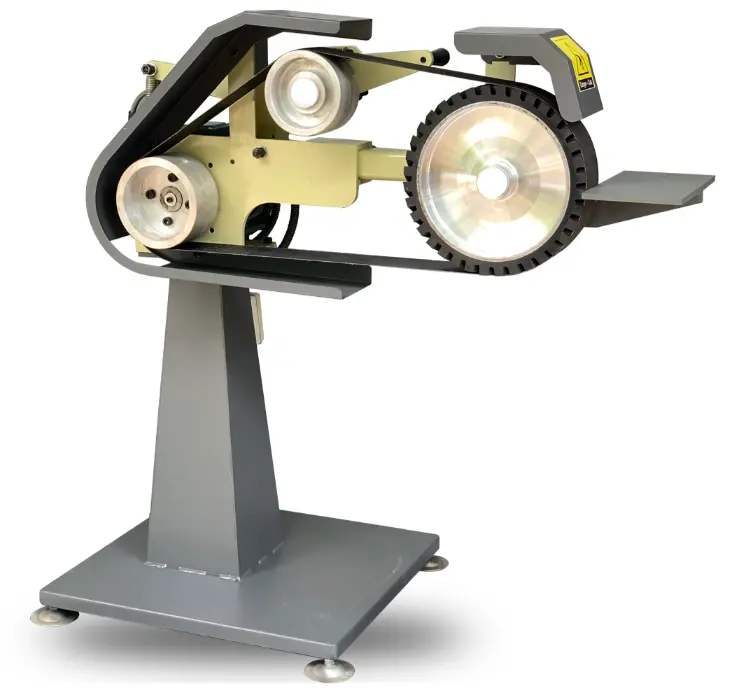
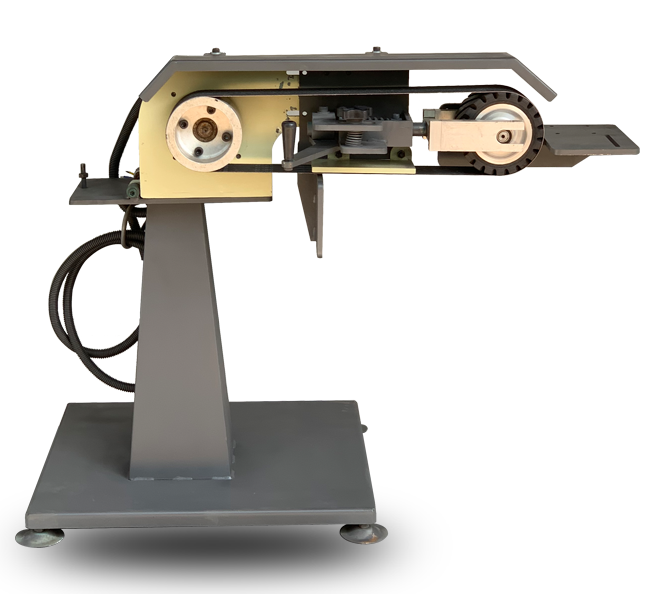
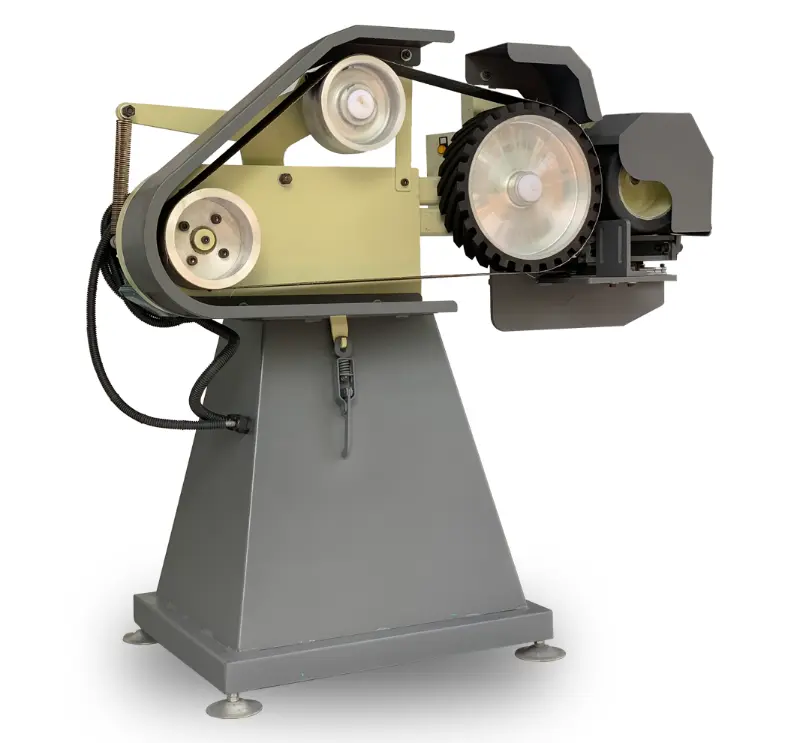
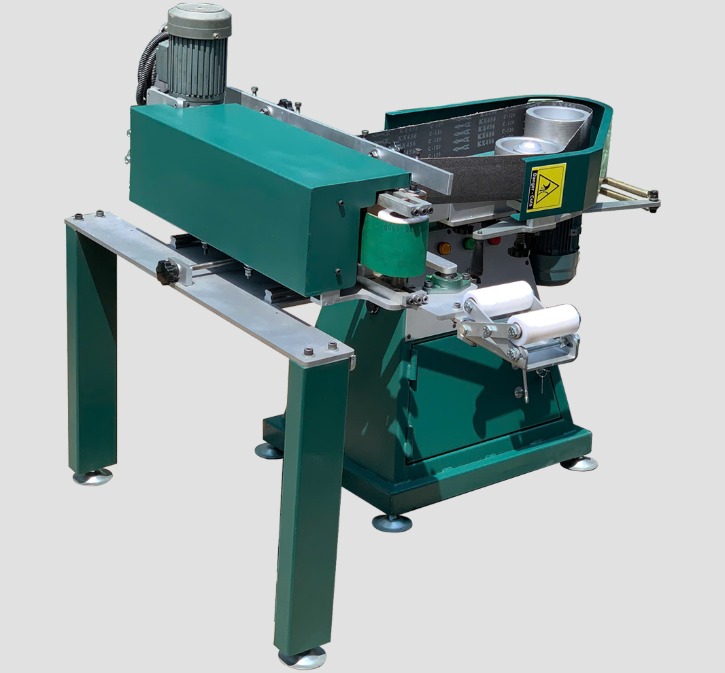
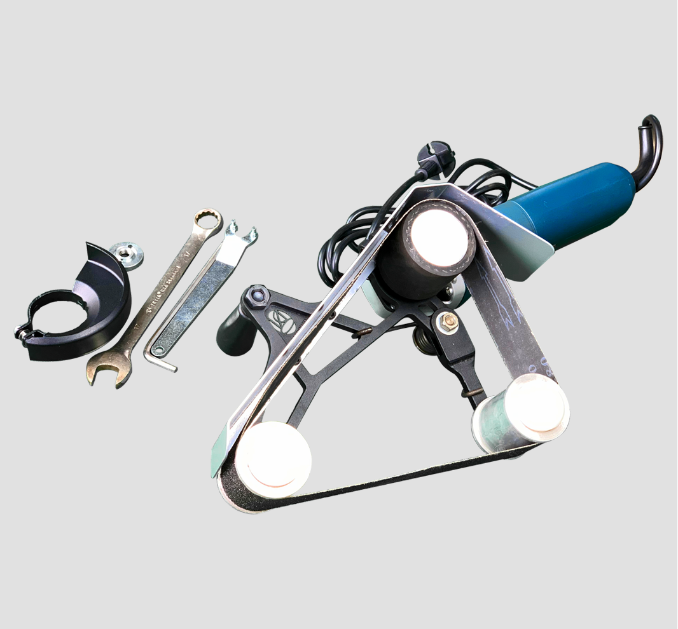
Pipe leaves the forming stages with residual stress and a degree of bow, so it is heat treated and straightened between offset rolls. Cutting to length happens on the move, with a saw that accelerates to match line speed. Ends are deburred and, depending on the order, faced, bevelled, or threaded. End preparation and weld dressing on awkward assemblies is where an industrial belt sander machine earns its place, because those operations resist automation.
Testing Every Length
Pressure pipe is hydrostatically tested, filled with water and pressurised well above its rated service pressure while watched for leaks. The weld seam is checked continuously in line by eddy current or ultrasonic testing that flags discontinuities without stopping production, and destructive flattening tests are run on samples at intervals. Mills supplying regulated markets issue test certificates traceable back to the original heat of steel.
What the Mill Does Not Do
Pipe leaves the mill with roll marks, a scarfed weld line, handling scratches, and often a layer of mill scale. That is entirely acceptable for a buried gas main and completely unacceptable for a stainless handrail, a brewery, a food processing line, or a shopfront. Surface finish is a separate operation, performed after the mill by the producer or by a service centre, and it uses abrasive belts rather than rolls.
Round Pipe
Round section is finished on machines that rotate the pipe while abrasive heads index across the surface, producing an even circumferential or longitudinal scratch pattern along the full length. Head count and feed rate are matched to the target finish grade rather than chosen from a catalogue, which is the main thing a pipe polishing machine manufacturer configures around the customer part.
Square and Rectangular Section
Square section cannot be finished on a machine built for round stock, because four flat faces and four corners need independent contact pressure or the corners get rounded over.
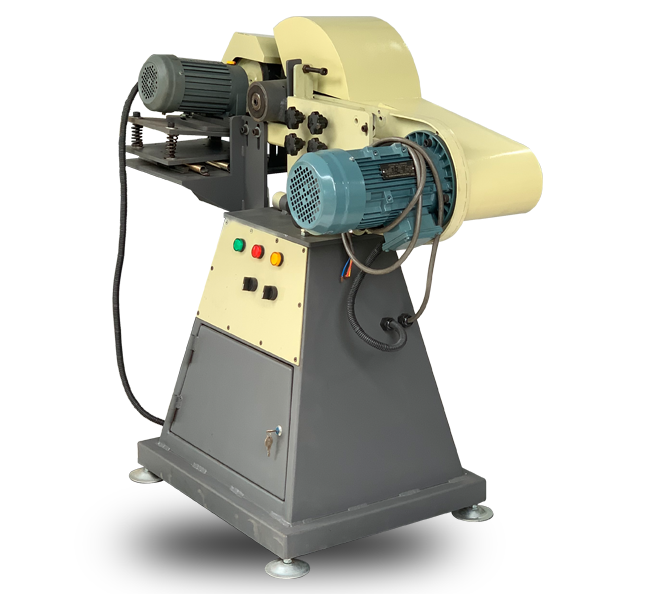
Round Pipe Polishing Machine
Dedicated multi head machines solve this, and specifying one is a different conversation from specifying a round line, which is why buyers approach a tube polishing machine manufacturer with section dimensions rather than just a finish grade.
Plate and Weldments
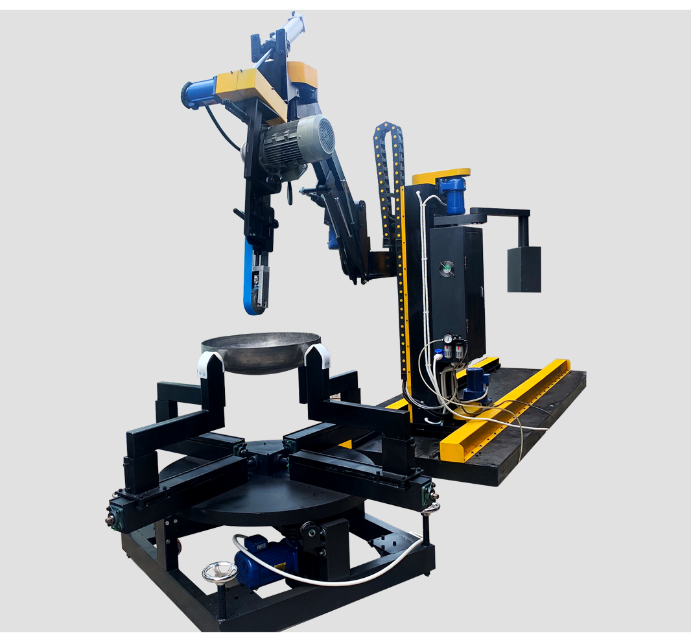
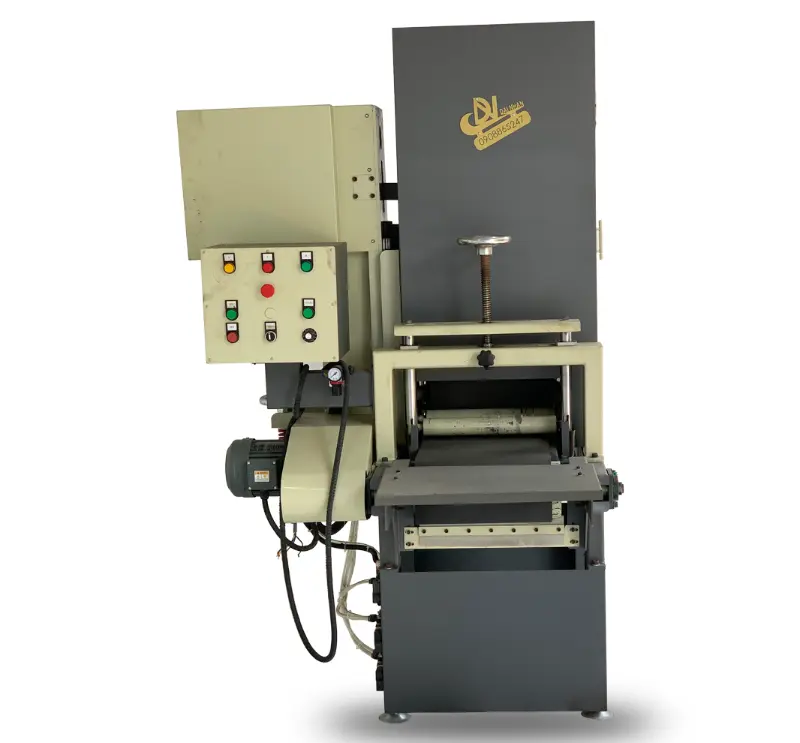
Most shops working with pipe also work with plate, and the finishing requirements run alongside each other. Flanges, base plates, and fabricated assemblies all need weld dressing and a matched surface finish, which is where a plate grinding machine handles the flat components while tube heads handle the sections.
Conclusion
So how are metal pipes made? Steel is melted and cast, and that casting decides everything. A solid billet gets heated and pierced through the centre by angled rolls, then elongated and sized into seamless pipe for high pressure work. A cast slab gets rolled into coil, slit into strip, roll formed into a cylinder, and forge welded along a continuous seam into welded pipe for everything else. Very large diameters take a third path through plate and submerged arc welding. Both routes then converge on the same finishing: stress relief, straightening, cutting, end preparation, and testing.
What the mill does not deliver is surface finish, and for anything visible or hygienic that is a separate line entirely. Dai Nhan Machinery designs and builds grinding and polishing systems around the exact sections our customers run, from round pipe to square tube to plate. Have a look at the current range on our machines page, or send us your section sizes and target finish and our engineering team will come back with a configuration and a realistic output figure.


BOLA BAG's BLOG YOU MAY ALSO BE INTERESTED IN
How to Use a Polishing Machine: From First Setup to a Consistent Mirror Finish
How Export-Standard Plate Grinding Machine Streamlines Assembly Lines
How to Choose a Reliable Belt Sander Supplier for High-Volume Production