


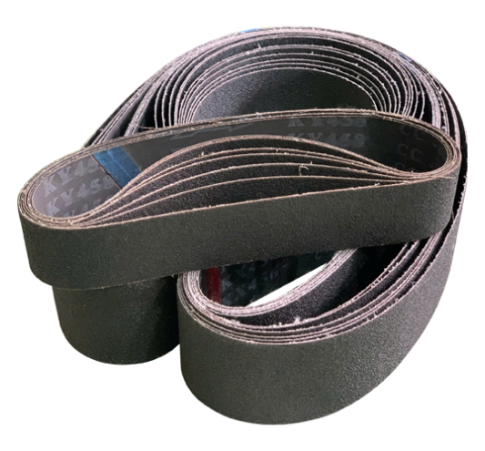
Someone finds a box of belts bought on sale three years ago, fits the first one, and it snaps at the joint within a minute of switching on. The grit looked perfect. The belt was not worn out at all; it had simply aged on the shelf. That is the part most answers miss when people ask how long do sanding belts last. Every belt runs on two clocks at once. One counts the minutes it spends cutting, and the other counts the months it spends waiting in a box. This article looks at what drives each one, how to tell when a belt is finished, and the simple storage habits that stretch both.
How Long Do Sanding Belts Last on the Machine
There is no honest single number for working life. The same belt might last a few minutes grinding hard steel or several weekends of light sanding on softwood. Abrasive makers agree on the factors that decide it, and three of them matter far more than the rest.
What You Sand Matters More Than Anything Else
Softwoods like pine are easy on the grain but full of resin that clogs the belt. Dense hardwoods wear the grain down faster. Metal creates heat, which dulls the grain and weakens the glue, and plastics can melt and build up on the surface. A belt used on the wrong material can be ruined in a single job.
Pressure and Heat Shorten Every Belt
Pushing harder does not make a belt cut faster for long. It raises the temperature, glazes the grain and cooks resin into the gaps. Sanding with light pressure and letting the belt cool between heavy passes keeps the grain sharp for longer than leaning on the machine ever will. On metal, the same rule applies to how long the part stays against the belt: short contact with a pause beats one long, hot pass.
The Kind of Grit Printed on the Back of the Belt
Aluminium oxide is the common all round grain for wood and general metal work. Zirconia and ceramic grains are tougher and break in a way that keeps exposing fresh sharp edges under heavy pressure, which is why they are the usual choice for grinding steel. Paying more for the right grain usually costs less per part finished.
How Long Does a Sanding Belt Last Sitting on a Shelf
Shelf life is easier to put numbers on. One abrasive supplier puts the life of a belt that is used correctly and stored well at one to two years, and at least one belt maker quotes about 18 months for its own made to order belts. The usual weak point is the joint where the two ends of the belt are glued together, followed by the backing, which absorbs and releases moisture from the air.
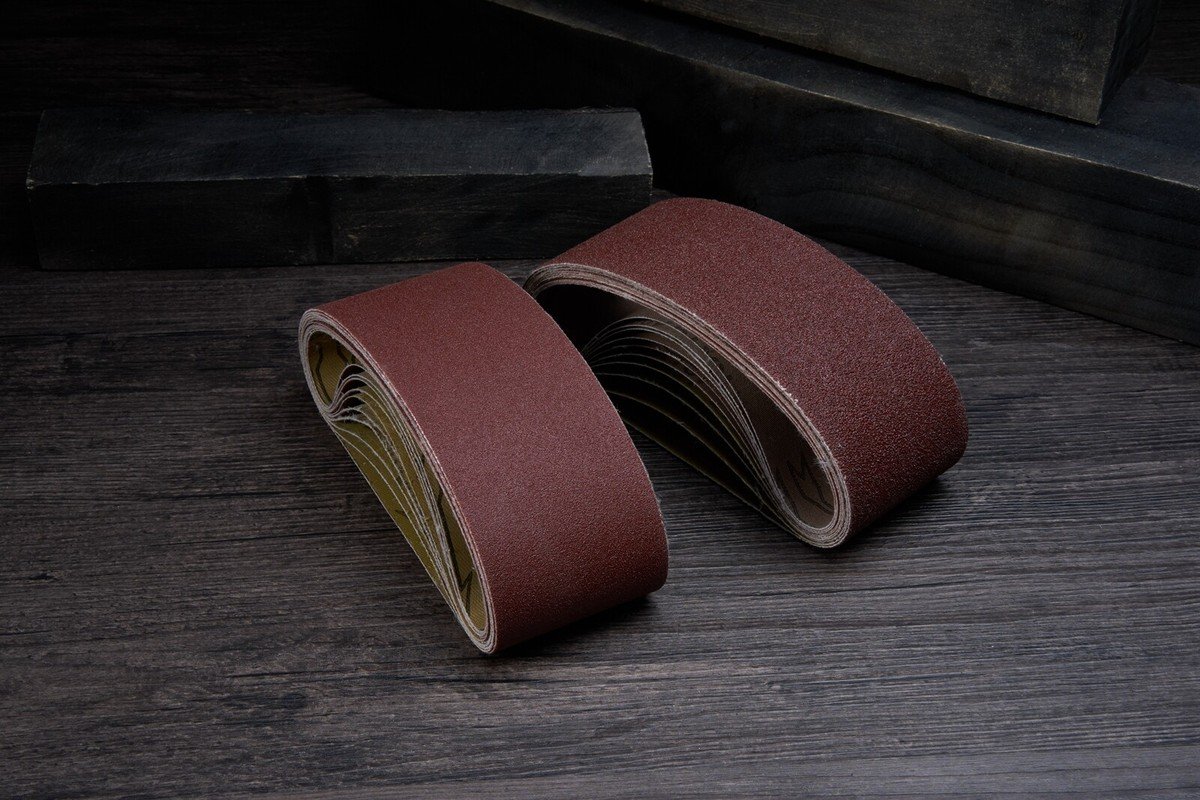
Custom Made Sanding Belts
Storage conditions decide where in that range a belt ends up. Klingspor recommends storing abrasives at about 18 to 22 degrees Celsius with relative humidity between 45 and 65 percent, in the original packaging and away from sunlight and heat. One distributor’s storage guide goes further and warns that long exposure to high humidity can cut the performance of coated abrasives by as much as half of their normal useful life.
What Humid or Dry Air Does to a Belt
Workshops in hot, humid climates and heated workshops in dry winters both shorten belt life, just in different ways.
Belt Sander Keep Breaking Belts at the Joint
When the air is damp, the backing absorbs moisture and swells while the glue at the joint softens. The belt then fails under tension, often within moments of starting up. If several belts from the same box break the same way, storage is the likely cause rather than the sander.
Belts Curl Up and Refuse to Sit Flat in Dry Air
In very dry air the backing gives up moisture and shrinks. Narrow belts tend to twist and curl, and wider belts can cup toward the backing side. They track badly and wear unevenly even though the grit is fine.
Signs a Belt Is Finished and Not Just Dirty
Before throwing a belt away, check whether it is worn or simply clogged, because a clogged belt can often be cleaned in seconds. A finished belt shows smooth, shiny grain across its whole width, cuts slowly even when clean, leaves burn marks on wood and runs noticeably hot on metal. Frayed edges, cracks in the backing and a joint that has started to lift are all reasons to replace it straight away rather than risk it breaking.
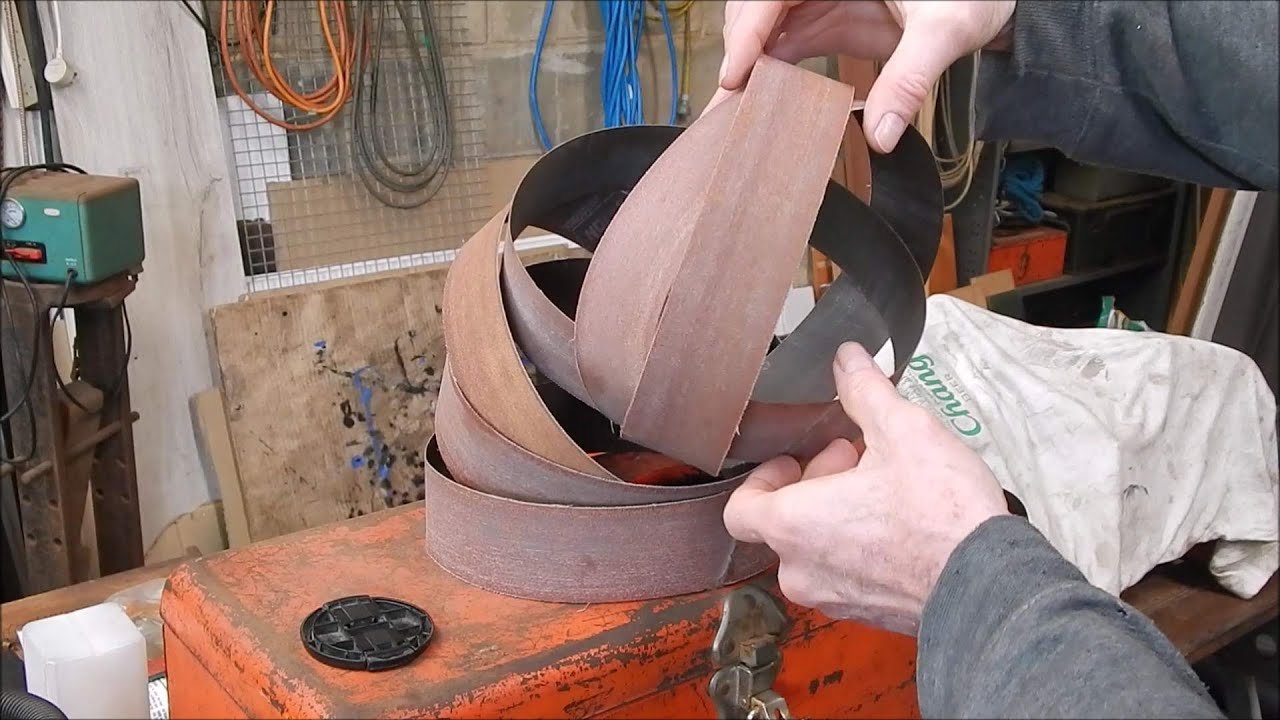
Finished Sanding Belt
Write down the size printed inside before the old belt goes in the bin. If the print has worn off, knowing how to measure sanding belts from the old loop saves you from ordering the wrong size.
Simple Habits That Make Belts Last Longer
Hang Belts on a Wide Peg Instead of a Nail
Storage guides for coated abrasives advise hanging belts on fixtures with a generous diameter rather than nails or thin rods, which can crease the backing and leave a weak line across the belt.
Keep Belts in the Box Until the Day You Need Them
Closed packaging slows the swings in moisture. Buy what you will use within a year and rotate the stock so the oldest belts go on first. When ordering in bulk, ask your belt sander supplier when the batch was made, not just the grit and size.
Clean Off Buildup Before It Hardens
A few seconds with a rubber cleaning stick while the belt runs keeps dust and resin from baking into the grit, which is one of the easiest ways to add useful hours.
Conclusion
So how long do sanding belts last? On the machine, anywhere from minutes to weeks, depending mostly on the material, the pressure and whether the grain suits the job. On the shelf, roughly one to two years when stored cool, dry and in the box, and much less in damp or very dry air. A belt that snaps at the joint or curls up has usually aged in storage, while a shiny, slow cutting belt is simply worn out. Good storage and light, clean sanding extend both clocks.
For factories that grind steel and stainless every shift, Dai Nhan Machinery makes custom sanding belts in Vietnam alongside its industrial belt grinders, made to order in the grain, backing and size each production line needs. See our custom made sanding belts on Our Machines, or tell us your belt size and what you grind each shift and we will recommend a belt that fits the job.
Read more: How to Change Grinder Belt Without Wrecking the Tracking


BOLA BAG's BLOG YOU MAY ALSO BE INTERESTED IN
Do Belt Sanders Work on Metal? Here’s What We Found
How Industrial Abrasive Grinding Wheel Manufacturers Optimize Grain Bonding for Hardened Steels
How Is Square Tubing Made? Inside the Roll Forming, Welding, and Finishing Process