



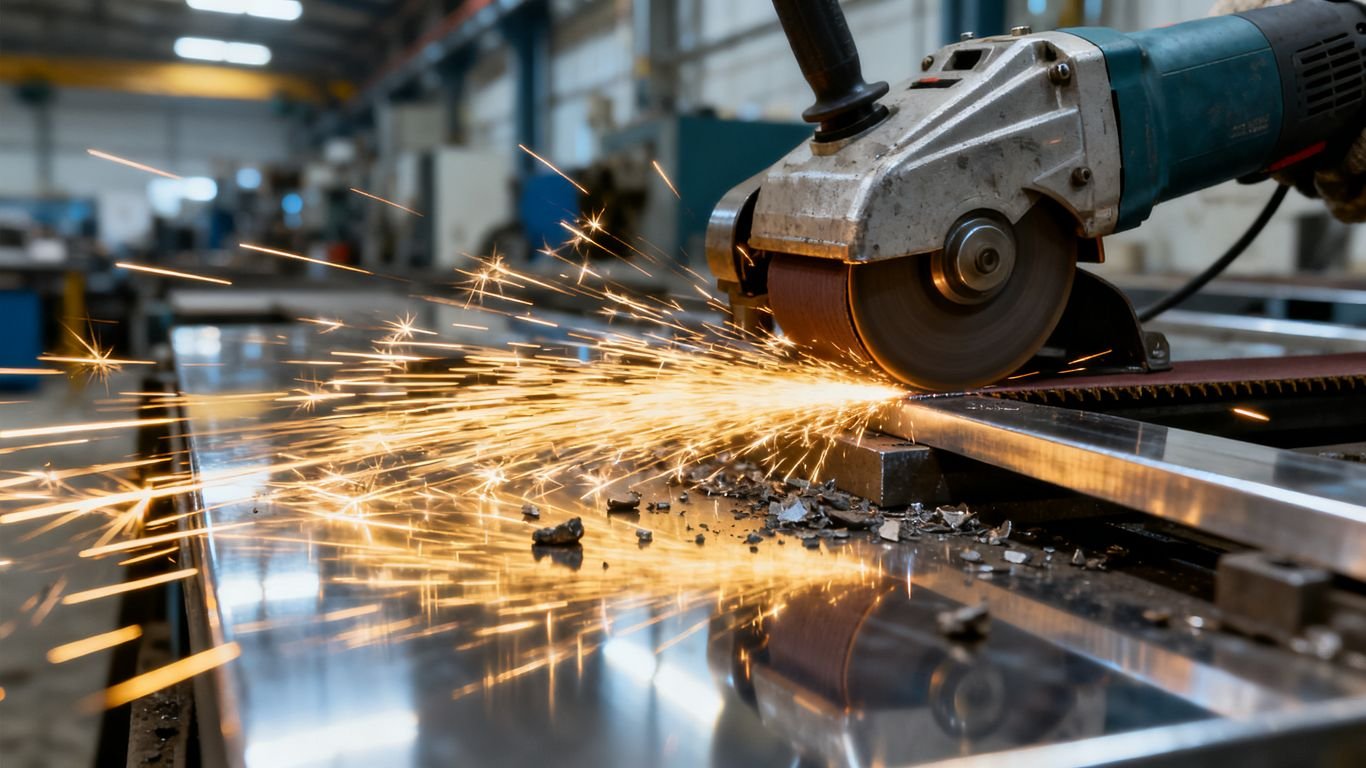
Hardened steel is where abrasive engineering stops being a commodity conversation and becomes a materials science problem. A wheel that performs beautifully on mild structural steel can glaze within seconds on a through-hardened tool steel at 62 HRC, generating heat, burning the workpiece surface, and removing almost nothing. The grain is fine. The bond is fine. The combination is wrong.
Understanding why that happens — and what manufacturers actually adjust to fix it — is worth the effort for anyone specifying abrasives for hardened work. It changes the questions you ask, and it converts a purchasing decision into an engineering one.
This article covers the mechanics of grain-bond interaction on hardened steels: which abrasives work and why, how bond systems control the self-sharpening cycle, how structure and grade influence heat, and what to specify when the material is hard.
What Makes Hardened Steel Difficult
Three properties of hardened steel conspire against conventional abrasives.
Hardness Approaches That of The Abrasive Itself
Hardened tool steels run 58–65 HRC, and heavily alloyed grades contain carbides — vanadium, tungsten, chromium — that are harder still. Conventional aluminum oxide sits around 9 on the Mohs scale. When the workpiece constituents approach the abrasive hardness, cutting efficiency collapses and the grain wears by attrition rather than fracturing to expose fresh edges.
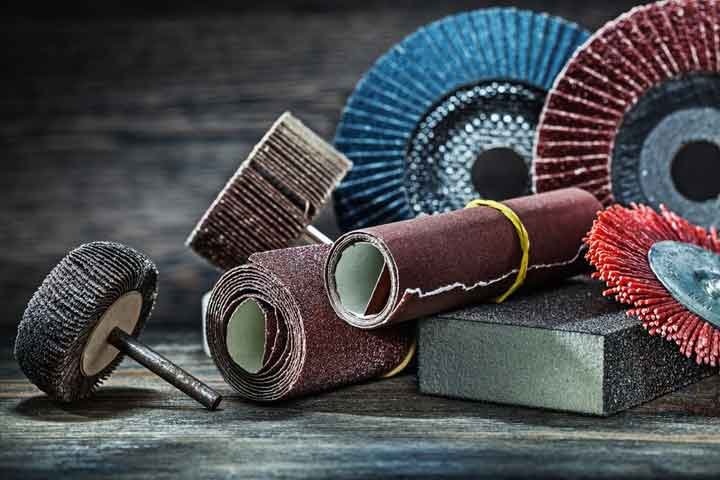
Hardness Approaches That of The Abrasive Itself
Thermal Conductivity Is Low
Alloy steels conduct heat poorly compared to aluminum or copper. Grinding heat that would dissipate into the workpiece bulk instead concentrates at the contact zone, where temperatures can reach levels that alter the metallurgy of the surface layer.
Thermal Damage Is Metallurgically Irreversible
This is the critical point. Excessive heat on hardened steel produces surface tempering — a softened layer — or, worse, rehardening burn, where a thin surface layer austenitizes and re-quenches into untempered martensite. That layer is brittle, carries tensile residual stress, and is a fatigue crack initiation site. Visually it may show as a light discoloration or nothing at all. On a die, a bearing race, or an aerospace component, this is a scrapped part or a field failure.
Everything abrasive engineers do for hardened steel follows from that third point. The objective is not maximum stock removal. It is maximum stock removal within a thermal budget.
Grain Selection: Matching Abrasive to Hardness
Conventional Aluminum Oxide
Brown fused alumina is tough and relatively blocky, resisting fracture. That toughness is an asset on soft steel and a liability on hardened steel, where the grain dulls rather than fracturing and the wheel glazes.
White fused alumina is purer, harder, and more friable — it fractures more readily under load, exposing fresh cutting edges. This self-sharpening behavior is exactly what hardened steel demands, and white alumina remains a workhorse for hardened work at moderate specification levels.
Pink and ruby alumina, produced by adding chromium oxide, sit between white and standard grades in friability and are common for precision hardened grinding.
Ceramic Aluminum Oxide
Ceramic alumina, produced by sol-gel processing rather than fusion, is the most significant development in conventional abrasives in decades. Its microcrystalline structure — grain sizes measured in fractions of a micron — means fracture occurs at the microcrystal level rather than across the whole grain. Instead of a grain either staying dull or shattering entirely, it continuously sheds microscopic fragments, maintaining a sharp edge throughout its life.
The practical result on hardened steel is dramatically lower grinding forces, lower heat generation, and wheel life often several times that of fused alumina. The material costs considerably more per kilogram, which is why most commercial products blend ceramic grain with fused alumina rather than using it neat. Blend ratio is one of the primary levers abrasive grinding wheel manufacturers use to position products across price and performance tiers, and it is worth asking about explicitly when specifying.
Zirconia Alumina
Zirconia alumina is tough rather than hard, with excellent impact resistance. It excels on heavy stock removal, foundry work, and aggressive rough grinding under high pressure. On hardened steel, its behavior is pressure-dependent — it needs load to fracture and self-sharpen. Under light pressure it dulls. For heavy hardened work at high force it performs well; for precision finishing it is generally the wrong choice.
Silicon Carbide
Harder than alumina but more brittle, silicon carbide has a chemical problem with ferrous materials: at grinding temperatures it reacts with iron, causing rapid chemical wear. It is excellent on cast iron, non-ferrous metals, and carbides — and generally poor on hardened steel despite its hardness advantage.
Superabrasives: CBN
For the hardest applications, cubic boron nitride changes the equation entirely. Second only to diamond in hardness, chemically stable against ferrous materials, and with thermal conductivity roughly an order of magnitude better than alumina, CBN actively conducts heat away from the grinding zone rather than trapping it.
CBN wheels cost dramatically more upfront and require rigid machines, proper conditioning, and adequate coolant delivery. On high-volume hardened production — tool steel, bearing races, gears, hardened shafts — the economics frequently favor CBN decisively once wheel life, reduced dressing frequency, dimensional stability, and eliminated thermal damage are counted. Diamond, by contrast, is chemically unsuitable for ferrous grinding because carbon diffuses into iron at temperature.
Bond Systems: Controlling the Self-Sharpening Cycle
Grain selection determines cutting capability. Bond determines whether that capability is ever expressed.
The governing principle is the self-sharpening cycle. A grain cuts, dulls, and generates rising force. If the bond releases it at the right moment, a fresh grain engages and cutting continues efficiently. If the bond holds too long, the dull grain rubs, heat spikes, and the wheel glazes. If the bond releases too early, sharp grain is thrown away and wheel life collapses. Optimization is entirely about timing that release for the specific material and operating condition.
- Vitrified bonds: glass-ceramic, fired at high temperature — are rigid, porous, and precisely controllable. Porosity provides chip clearance and coolant access, which is why vitrified wheels dominate precision hardened grinding. They can be dressed to fine tolerances and hold form well. The trade-off is brittleness under impact.
- Resinoid bonds: phenolic and related resins — are more elastic, absorbing shock and running cooler under interrupted or off-hand conditions. They are the standard for cutting and grinding discs, rough grinding, and any application involving impact. Resin bonds release grain more readily, which suits heavy stock removal but limits form holding.
- Metal and electroplated bonds: are used almost exclusively with superabrasives, holding grain very firmly and suiting profile applications and long-life plated wheels.
Grade: The Bond Hardness Lever
Grade — designated by letters, soft through hard — describes how firmly the bond retains grain. It is the most commonly misunderstood specification in abrasives, and the rule for hardened steel is counterintuitive:
Hard materials generally require softer wheel grades. A soft grade releases dulled grain quickly, keeping the wheel sharp and heat low. A hard grade on hardened steel holds dull grain, generates friction rather than cutting, and burns the workpiece. Conversely, soft materials tolerate harder grades because grain dulls slowly.
Contact area modifies this. Larger contact area means more grains sharing the load, less force per grain, slower fracture — so larger contact areas need softer grades still. Higher wheel speed increases the number of grain passes per unit time, effectively making a wheel act harder, so speed increases usually require a softer grade to compensate.
Grit Size and Its Interaction With Grade
Grit size is often treated as a simple finish-versus-removal trade-off, but on hardened steel it interacts with everything else. Coarser grit means fewer, larger cutting points, each carrying more load — which promotes fracture and self-sharpening, and produces larger chips that clear more easily. Finer grit means more cutting points sharing the load, less force per grain, slower fracture, and a wheel that behaves harder than its designated grade.
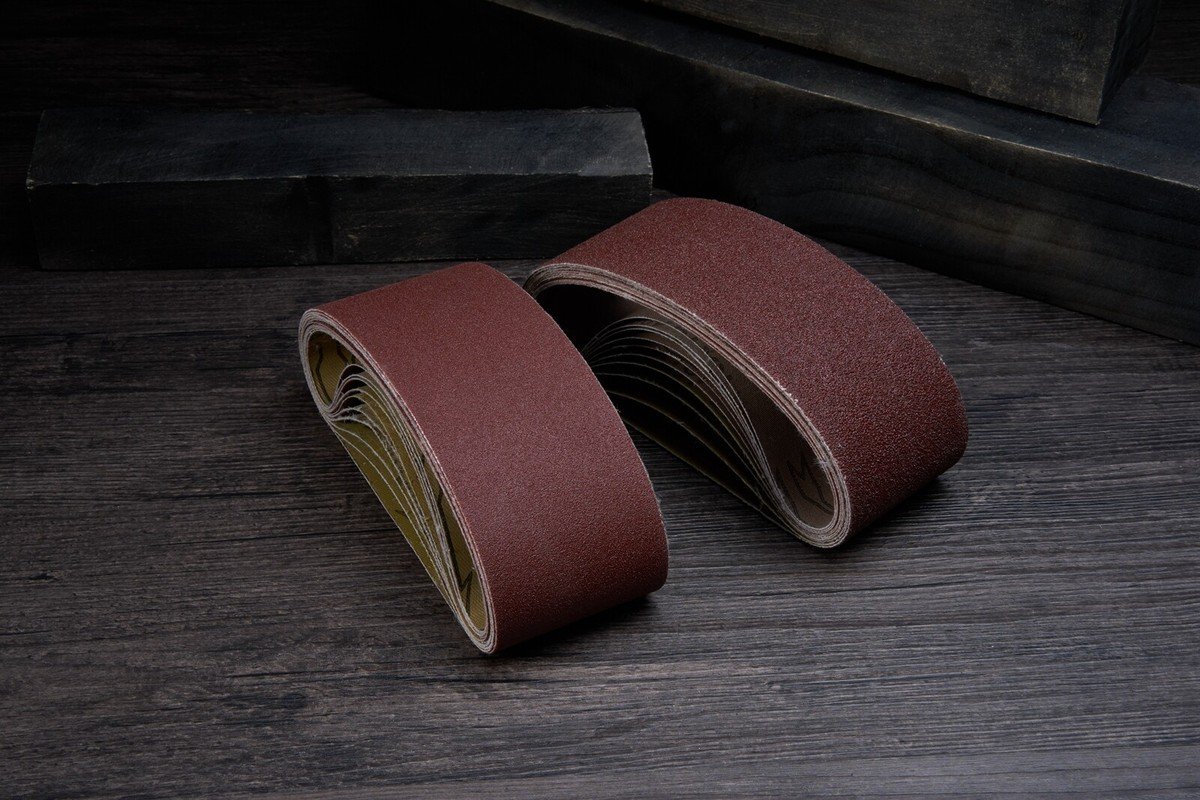
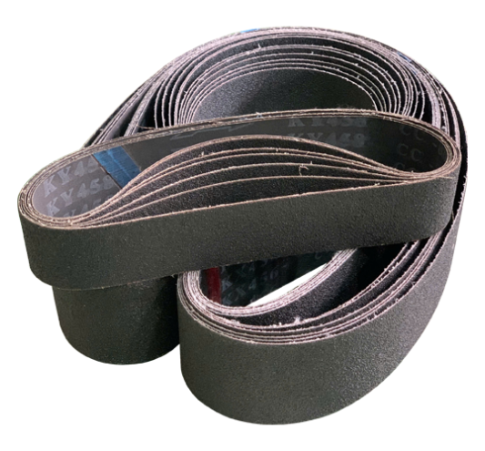
Custom Made Sanding Belts – Dai Nhan Machinery
The practical consequence is that moving to a finer grit for surface finish reasons frequently requires simultaneously moving to a softer grade to avoid glazing and burn. Shops that change grit without adjusting grade often conclude the finer wheel is defective when the specification is simply now unbalanced. Where finish requirements are demanding, a two-stage approach — coarser grit for stock removal, finer for finishing — usually beats forcing a single wheel to do both.
Structure and Porosity
Structure number describes grain spacing. Open structures provide chip clearance and coolant paths; dense structures provide more cutting points and better form retention.
On hardened steel, open structures are usually preferable. Chips must clear the contact zone or they load the wheel, and coolant must reach the cutting interface or it is decorative. Induced porosity — created by adding materials that burn out during firing — gives manufacturers a way to open structure without changing grain concentration, and it is one of the more effective tools for reducing thermal damage on difficult materials.
Coolant, Dressing, and the Rest of the System
Wheel specification alone does not solve hardened grinding.
- Coolant delivery is frequently the actual limiting factor. A rotating wheel carries an air barrier at its periphery that deflects poorly-aimed coolant entirely. Adequate pressure, correct nozzle position, and sufficient volume matter more than coolant chemistry in most cases. High-pressure through-nozzle delivery aimed into the contact zone can transform performance on hardened work.
- Dressing controls the wheel’s cutting surface. Dressing parameters — depth, lead, and dresser condition — determine whether the wheel surface is open and free-cutting or closed and burnishing. A dull diamond dresser produces a glazed wheel surface no matter how well the wheel is specified.
- Machine rigidity determines whether specified parameters are actually delivered. Vibration and deflection produce chatter, inconsistent contact, and localized heat spikes. This is where finishing outcomes on hardened components are frequently won or lost — a well-specified wheel on an unstable machine will underperform a mediocre wheel on a rigid one, every time.
Specifying for Hardened Steel: Practical Guidance
Bring the following to any technical conversation with grinding wheel manufacturers and the discussion changes character immediately.
- State the material precisely. Not “hardened steel” but the grade, the hardness in HRC, and the heat treatment condition. D2 at 60 HRC behaves nothing like 4140 at 45 HRC.
- State the thermal tolerance. Whether any surface discoloration is acceptable, and whether the part will be inspected for grinding burn, drives the entire specification.
- State the operation. Contact area, wheel speed, feed rate, coolant type and delivery pressure, and machine rigidity.
- Ask what the grain blend actually is. A product described as ceramic may contain 10% ceramic or 50%. This single number explains most of the price and performance spread in the market, and a supplier unwilling to discuss it is telling you something.
- Ask about structure and induced porosity, particularly if you are experiencing loading or burn.
- Evaluate on cost per part, not cost per wheel. On hardened work the correct comparison includes wheel life, dressing frequency, cycle time, and — critically — scrap and rework from thermal damage. A wheel costing three times more that eliminates burn on a high-value component is not expensive.
Buyers sourcing wholesale grinding wheels for mixed general fabrication and hardened work should resist the temptation to standardize on one product across both. The specifications that optimize each are genuinely different, and consolidating usually means the hardened work suffers. Similarly, when working through a grinding discs supplier or distribution partner, ask whether they can access the factory’s technical team — the ability to reach an actual formulation engineer separates useful partners from catalog vendors, and grinding wheel wholesalers with genuine manufacturer relationships can usually make that connection.
The Underlying Logic
Optimizing abrasives for hardened steel comes down to a single balance: keeping the cutting edges sharp enough that the wheel cuts rather than rubs, while staying within a thermal budget the metallurgy will tolerate. Every variable — grain type and blend, bond chemistry, grade, structure, porosity, dressing, coolant — is a lever on that same balance.
Manufacturers who understand this can engineer to the application rather than sell from a catalog. Buyers who understand it can ask questions that surface the difference.
Precision Finishing Starts With Stable Machinery
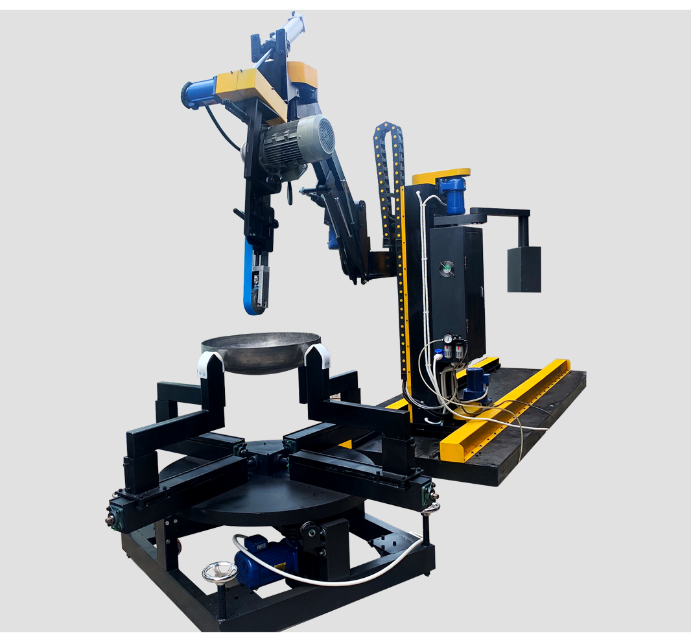
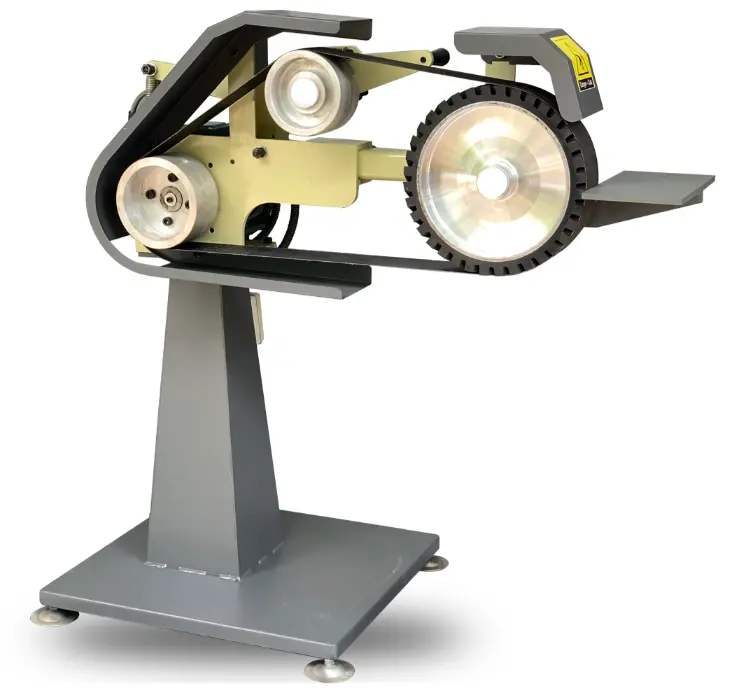
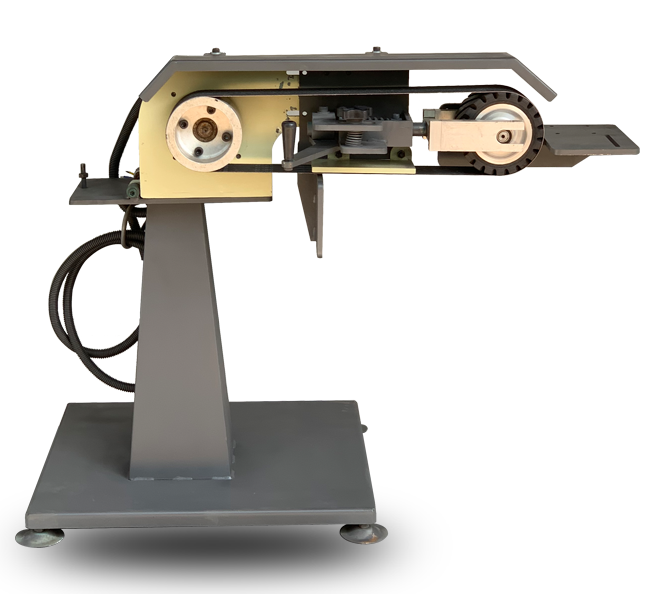
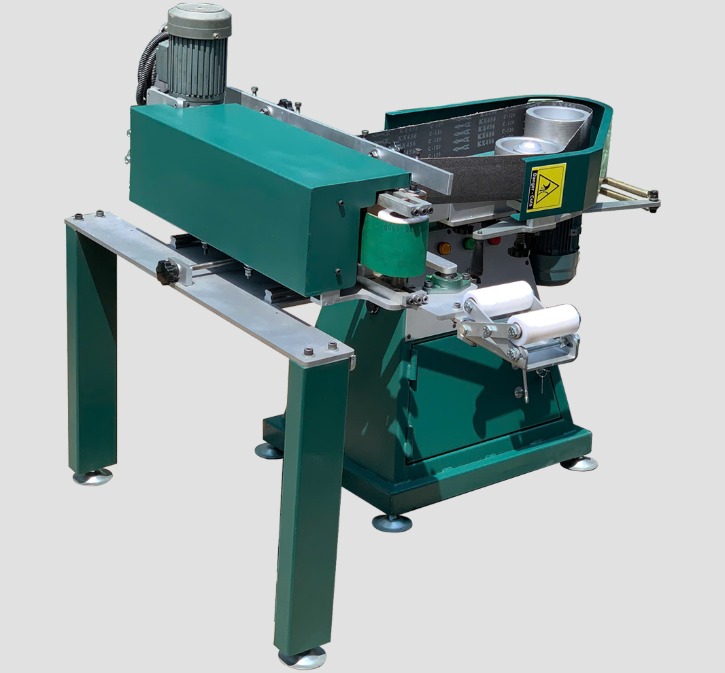
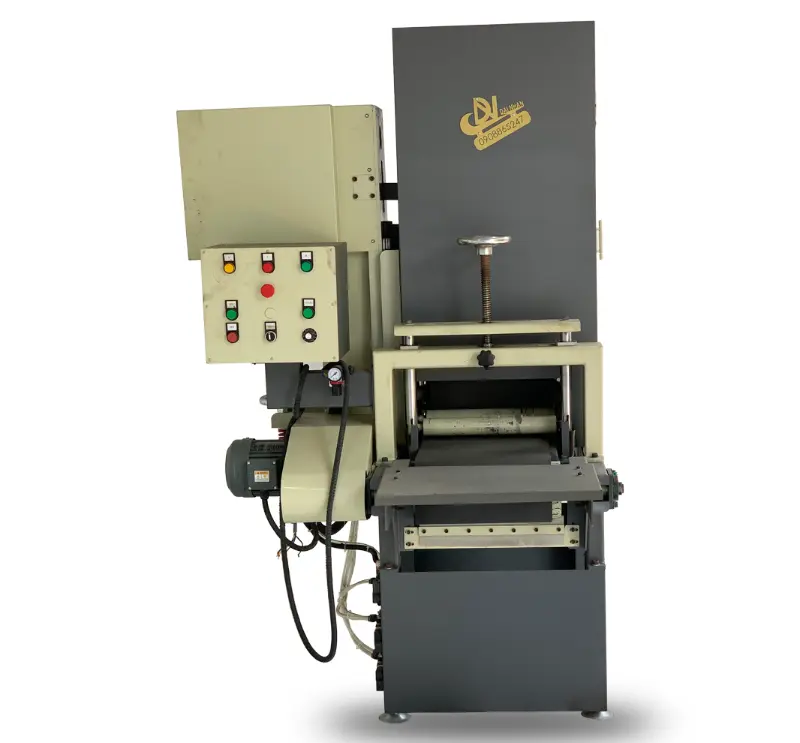
The finest abrasive specification cannot compensate for an unstable platform. Dai Nhan Machinery is Vietnam’s direct manufacturer of industrial belt grinders and surface finishing equipment engineered specifically for heavy-duty stability — zero micro-vibration under continuous load, which is exactly what hardened and heat-sensitive work demands.
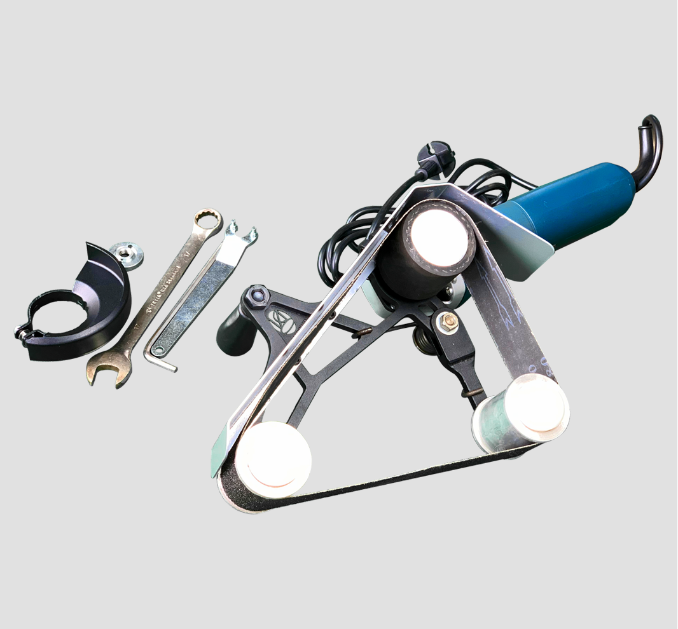
Our lineup covers tube and pipe polishing machines, tank and vessel grinders, dual-belt stand grinders, 3-wheel and 4-wheel deburring stations, plate grinding machines, handheld belt grinders, and custom-made sanding belts. We handle stainless steel, aluminum, carbon steel, and hardened alloys across heavy stock removal, weld blending, hairline finishing, and mirror polishing — with one hundred percent of our CNC engineering done in-house at our Cu Chi facility.
Read more: The B2B Blueprint for Ordering OEM ODM Custom Made Sanding Belts


BOLA BAG's BLOG YOU MAY ALSO BE INTERESTED IN
How to Make a Wheel Polishing Machine: Design, Build, and Safety Fundamentals
How to Select an OEM/ODM Belt Grinder Manufacturer for Global Supply Chains
How to Evaluate an Industrial Belt Sander for Sale for OEM/ODM Scale and Procurement