


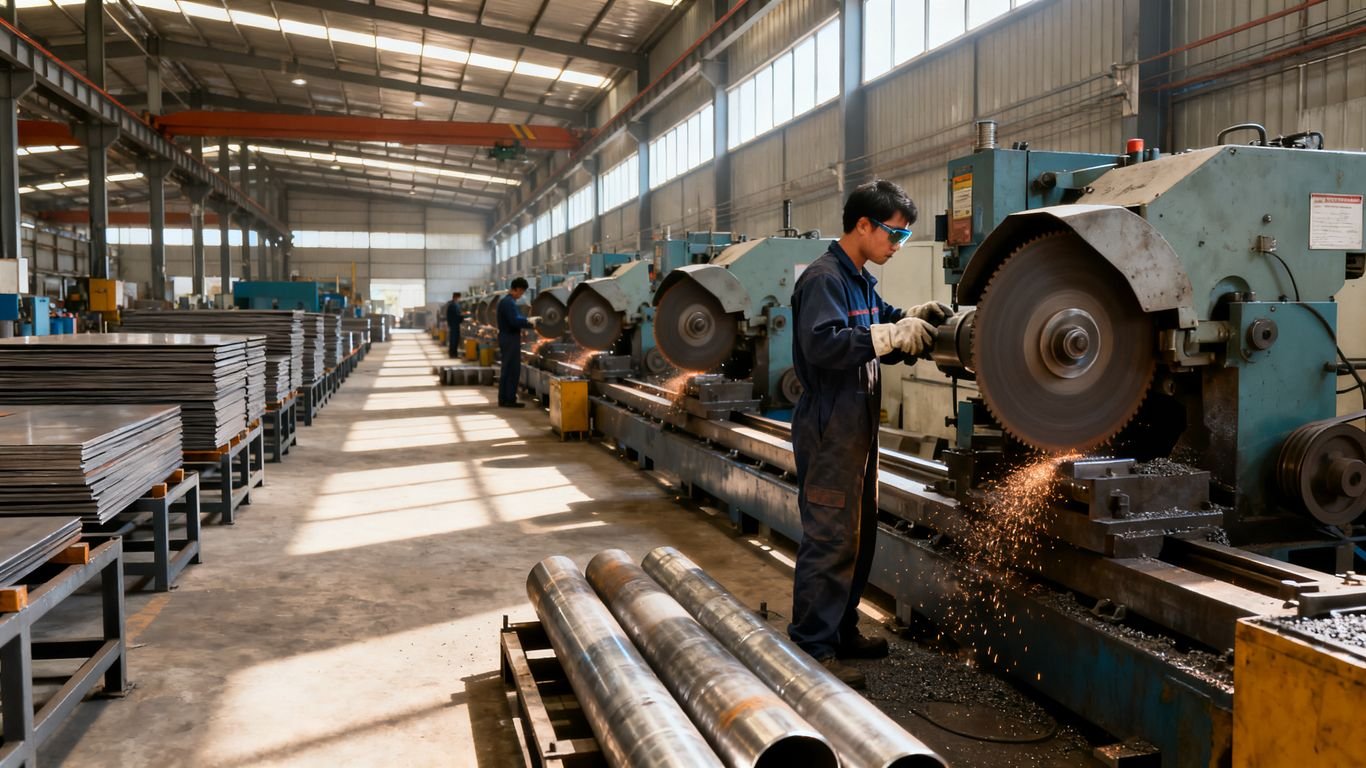
Put a tier-1 depressed-centre grinding wheel and a budget equivalent side by side on a table and almost nobody can tell them apart. Same diameter, same thickness, similar printing, comparable claims on the label, often the same declared maximum operating speed. One costs perhaps forty percent more than the other. The obvious conclusion is that the premium buys branding.
Put the same two wheels on the same angle grinder against the same weld and the picture separates within a minute. One removes metal steadily, stays cool, holds its edge, and keeps cutting at consistent pressure. The other starts well, glazes, demands more force, heats the workpiece, wears its edge into a rounded profile, and consumes itself while the operator leans harder into it.
That gap is engineering, not marketing. It exists because the properties that make a bonded abrasive work — grain quality, bond cure state, reinforcement integrity, batch-to-batch consistency — are invisible in the finished product and expensive to control in the factory. Removing that cost produces a wheel that looks identical and performs and behaves differently.
This article sets out what actually separates export-standard tier-1 grinding wheel manufacturers from budget producers, where the cost is removed, how the difference shows up in operating economics, and how a buyer can tell them apart before committing to a container. It is written for distributors, industrial brands, fabricators, and procurement teams sourcing across borders.
What “Tier-1” and “Budget” Actually Describe
These terms get used loosely, so it is worth defining them by capability rather than by price.
A tier-1 manufacturer controls its own production, holds documented conformity to the safety standards of the markets it exports to, performs destructive testing to a defined sampling plan, maintains batch traceability from finished goods back to raw material lots, and can hold a specification stable across shipments separated by months. It employs engineers who will discuss formulation and application rather than only quoting against a part number.
A budget producer may do some of this. What defines the tier is that cost pressure is absorbed by removing verification and material quality rather than by improving efficiency. The wheel is designed down to a price, and the compromises are placed where the buyer cannot see them.
The distinction is not about country of origin. Excellent and poor producers operate in every manufacturing region. It is about whether a factory’s commercial model depends on the buyer never checking.
Where the Cost Is Actually Removed
Understanding the difference requires knowing what a grinding wheel is made of and which inputs are easiest to degrade invisibly.
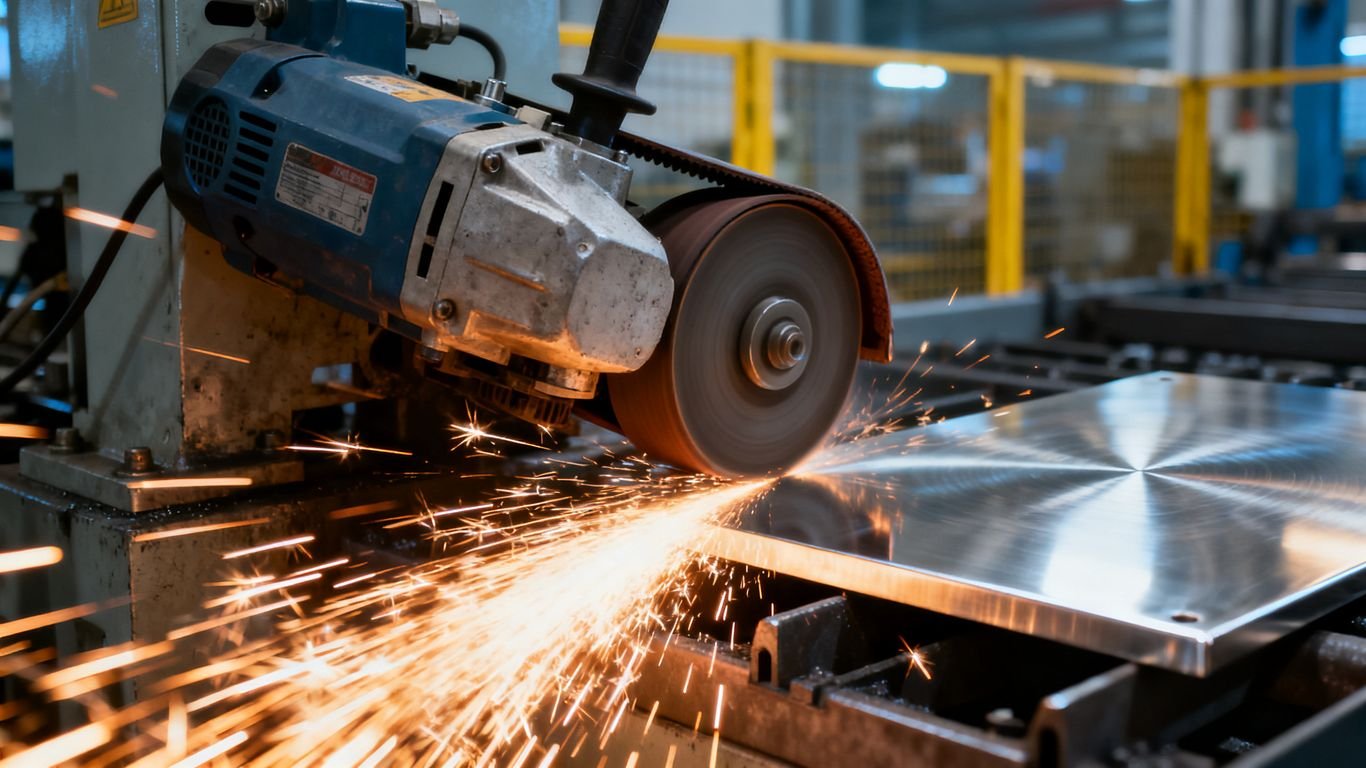
Grinding Wheel
A depressed-centre grinding wheel is a composite. Abrasive grain does the cutting. A phenolic resin bond holds the grain and releases it at the right moment. Fillers modify heat and chemistry at the cutting interface. Fiberglass mesh reinforcement — typically three plies in a grinding disc, more than a thin cut-off wheel carries — holds the wheel together under centrifugal and lateral load. Each of these is a place to save money.
Abrasive Grain
Grain is the largest single material cost, so it is the first target. Substituting lower-grade brown fused aluminium oxide for zirconia alumina, or diluting a zirconia blend with a higher proportion of standard alumina, reduces cost immediately and is undetectable without laboratory analysis.
The performance consequence is direct. Zirconia alumina self-sharpens through controlled microfracture under pressure, sustaining removal rates through long grinding sequences. Ceramic alumina does so at a finer, more engineered scale. Standard alumina dulls and rubs instead of fracturing, which is precisely the behaviour operators describe as a wheel that “stops cutting” halfway through its life.
Grain grading matters as well as grain type. Consistent particle size distribution keeps the mix uniform and the wheel cutting evenly. Off-grade grain with excessive fines increases resin demand and creates weak zones in the wheel body.
Bond Resin and Cure
Phenolic resin is moisture-sensitive and has a limited shelf life. Storing it in an uncontrolled warehouse in a humid climate, or using stock beyond its life, produces inconsistent cross-linking that no inspection will catch.
Curing is the more consequential compromise. A proper cure is a staged temperature ramp held over many hours, climbing gradually toward a final hold before a controlled cool-down. It is slow, energy-intensive, and occupies oven capacity that a factory under commercial pressure would rather turn over faster.
An under-cured wheel is dangerous in a specific way. It passes visual inspection, feels normal cold, and then loses strength as frictional heat during grinding pushes the incompletely cured bond past its softening point. The wheel deforms and weakens exactly when it is under load. An over-cured wheel goes the other way, becoming brittle and losing the toughness that lets its reinforcement do its job.
Reinforcement Mesh
Fiberglass mesh is the safety component. It contributes nothing to how well a wheel grinds; it exists to hold the disc together when a fracture initiates, converting catastrophic fragmentation into a contained failure.
That makes it the perfect cost reduction from a budget producer’s perspective. Reducing ply count, using lighter mesh, using mesh with the wrong resin sizing so it never bonds properly to the phenolic matrix, or using mesh cut undersized so it stops short of the periphery — none of this is visible, none affects the wheel’s appearance, and all of it reduces the margin between marked operating speed and actual breaking speed.
For grinding wheels specifically, this matters more than for cut-off discs, because grinding applies sustained lateral load. The wheel is worked at an angle against the surface, not fed radially into a kerf. Reinforcement is carrying stress continuously, not occasionally.
Verification
The final compromise is simply not testing. Burst testing is destructive, so every tested wheel is a wheel that cannot be sold. Dimensional and hardness checks cost labour. Documentation costs staff time. A producer that tests only when a customer is visiting has a test chamber rather than a safety system, and the difference does not appear on any certificate.
The Safety Margin Nobody Sees
The definitive safety property of a bonded abrasive is the gap between the speed marked on the label and the speed at which the wheel actually breaks.
The European safety framework for bonded abrasives, EN 12413, is built around maintaining a substantial margin here, with the widely applied benchmark being a breaking speed of at least one and a half times the maximum operating speed. In North America, ANSI B7.1 governs the use, care, and protection of abrasive wheels, and ISO standards address dimensional and general requirements. Independent oversight through recognised abrasive safety organisations that audit member factories adds a further layer of assurance.
Well-made wheels exceed the minimum margin comfortably. The question for a buyer is not whether a producer knows the number but whether it verifies it continuously — how many wheels per batch are drawn for testing, at what point in production, and what happens to a batch when a sample falls short.
This is where the tier distinction becomes concrete. Ask a candidate to show you a batch that failed its burst test and the record of what was done about it. Tier-1 producers can, because failures happen in any real process and the response is documented. A factory that cannot produce a single failed batch record in its history is either not testing meaningfully or not keeping records, and neither answer is reassuring.
The practical consequence of a thin safety margin is not that wheels routinely explode. It is that the buffer absorbing real-world abuse — a slightly worn spindle, an accidental side load, a wheel dropped and remounted, a tool running above its rated speed — has been quietly reduced. Safety margins exist for the abnormal case. Removing them shifts risk onto whoever is holding the grinder.
How the Difference Shows Up in Operating Cost
Most procurement decisions on abrasives are made on unit price, which is the least informative number available.
The figure that matters is cost per unit of work — cost per metre of weld dressed, per part deburred, per square metre prepared. Building it requires the wheel price divided by the work completed per wheel, plus the labour rate multiplied by the time taken, plus the labour cost of wheel changes distributed across the work each wheel completes, plus any rework caused by heat damage or poor surface condition.
Run that calculation honestly and the ranking frequently inverts. A budget wheel at sixty percent of the price that completes half the work, takes longer per pass because it glazes, and needs twice as many changes is more expensive in any economy with meaningful labour rates. It also consumes machine time, which in a constrained production cell is the binding resource.
Three costs are habitually left out of the comparison.
Labour is the largest. Grinding is operator-intensive, and consumable cost is almost always a minor line beside the hours spent at the wheel. A wheel that requires more feed pressure to maintain removal rate also fatigues the operator faster, which affects output across a shift in ways no spreadsheet captures.
Downstream work is the second. Wheels that glaze generate heat rather than chips, and heat causes discolouration, distortion in thin sections, and in stainless work a compromised surface that requires additional finishing or passivation. On architectural, sanitary, and food-grade stainless these costs regularly exceed the abrasive spend entirely.
Contamination is the third and applies specifically to corrosion-resistant alloys. Wheels intended for stainless should be formulated with iron, sulfur, and chlorine held below the commonly specified threshold of 0.1 percent combined, because residues transferred into the worked surface initiate pitting and rust staining in service. A grinding discs supplier that cannot provide a declaration for contaminant content is not equipped for that market, whatever its price.
Consistency: The Difference That Compounds
For a buyer importing across long lead times, consistency is worth more than peak performance. A wheel that performs at ninety-five percent of the best available option in every shipment is more valuable than one that oscillates between excellent and unusable, because ocean freight means a bad batch discovered on arrival cannot be replaced quickly.
Consistency is a process property. It comes from controlled raw material sourcing, logged press charge weights, recorded cure profiles from properly distributed thermocouples, and statistical monitoring of hardness and performance across batches. None of this is glamorous and all of it costs money that a budget producer has structurally decided not to spend.
The symptom that distributors report most often is not outright failure but drift: a product that qualified well two years ago and now generates complaints, with no single event to point at. That is what happens when a factory has no mechanism to detect gradual change in resin lots, grain suppliers, or oven behaviour.
Ask any candidate for batch-level performance data across the last twelve months rather than a single test report from a golden sample. The willingness to provide it, and the variance visible in it, tells you more than any certificate.
What Changes for Wholesale and Distribution Buyers
For distributors and industrial brands, the tier difference extends beyond the product into how a supply relationship functions.
Wholesale grinding wheels move in volume, which means a quality problem is discovered after a container has cleared customs and entered stock. The exposure is not one bad wheel; it is thousands, sitting in a warehouse, already invoiced. Tier-1 producers reduce this exposure through pre-shipment verification, batch documentation supplied with each consignment, and the traceability needed to quarantine a specific range rather than a whole shipment.
Shelf life is a further consideration that budget supply routinely mishandles. Organic-bonded abrasives age, because phenolic resin continues to cross-link and absorb ambient moisture, and the industry norm is to treat three years from date of manufacture as usable life. Wheels arriving with no date marking, or already eighteen months old, transfer an inventory management problem to the distributor. Grinding wheel wholesalers holding broad ranges with slow-moving SKUs feel this acutely, because a specification that turns twice a year cannot absorb stock that arrives half-aged.
Packaging is another practical divide. Export-standard packing means moisture barriers, appropriate inner packaging, and carton engineering that survives ocean freight and humid storage. Budget supply frequently means domestic packaging with an export label added, and product that arrives with crushed cartons and damp blotters.
Then there is the question of what happens to non-conforming production. Ask directly whether rejects are destroyed, downgraded and marked, or sold unmarked into secondary channels. For any brand running a private-label programme, the last answer is disqualifying — those wheels eventually surface in a market where your label competes, carrying your specification’s reputation without your quality control.
Finally, documentation. Abrasive grinding wheel manufacturers geared for export maintain conformity declarations, safety data sheets in required languages, restricted substance declarations, correct customs classification, and accurate country-of-origin documentation as routine output. Producers without that capability treat each request as an exception, which becomes a chronic drag on a distributor’s own compliance obligations and, increasingly, on customs clearance in a tightening tariff environment.
How to Tell the Difference Before You Order
The good news is that the tier distinction is detectable without laboratory equipment, provided you look at process rather than product.
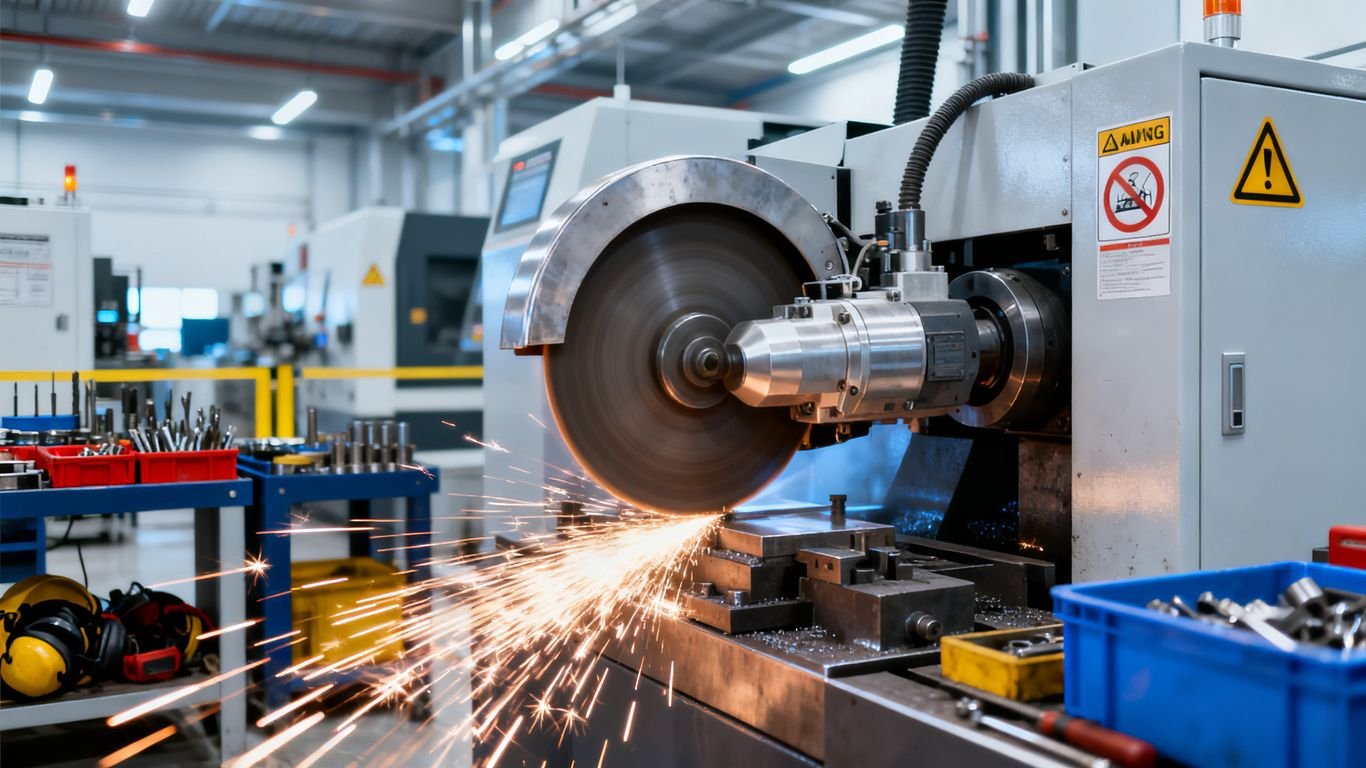
Export-Standard Grinding Disc
The most efficient diagnostic is the quality of a supplier’s questions. A tier-1 partner will want to know which alloys and section sizes you are working, on what machines and at what speeds, whether your duty cycle is continuous or intermittent, what surface condition you need and what happens downstream, what your labour costs are and whether machine time or consumable cost is your binding constraint, and what has failed for you previously. A budget producer asks for a part number and a quantity.
The questions worth putting back to them start with ownership: which specific factory produces the wheels, do you own it, and can we visit within a normal notice period. Then move to verification: what is your burst test sampling plan, what margin over marked speed do you typically achieve, and can you show me a failed batch record. Then traceability: pick a wheel from the warehouse and trace it back to its raw material lots and cure profile while I watch, and tell me how long you retain those records. Then formulation: what grain type and proportion is in this specification, what is your iron, sulfur, and chlorine declaration for the stainless range, and how is it verified. Then curing: how many calibrated thermocouples are in the oven, where are they, and are per-batch profiles recorded and retained.
Verify any certificate numbers directly with the issuing body rather than accepting images, which are trivially easy to alter and frequently circulate long after expiry.
Then test properly. Fix everything except the wheel — same material and section, same machine and speed, same operator or fixed-load rig, same technique — and measure work completed per wheel, time per pass, wheel wear over the test, surface condition and heat discolouration, and operator-reported feed pressure and vibration. Test blind where practical, because expectation bias in abrasive evaluation is powerful and well documented.
Most importantly, do not stop at samples. Samples are often produced under exceptional conditions by the best operator with unhurried curing. Order a first production batch made at commercial speed and re-run your acceptance testing against that before releasing a full programme. This single step catches more transition failures than every other check combined, and it is the step most commonly skipped.
When a Budget Wheel Is the Right Answer
It is worth being fair about this, because reflexive premium-buying is its own form of waste.
Where grinding is intermittent, labour is inexpensive, tolerances are loose, and the material is mild steel in non-critical service, an economy specification may genuinely deliver the lowest total cost. A maintenance workshop using a few wheels a month is not in the same position as a fabrication line running continuous shifts.
What is never reasonable is compromising the safety margin. Grain type, filler package, and wheel life are commercial trade-offs a buyer can legitimately make. Reinforcement plies, cure integrity, burst testing, speed marking, and mandatory safety information are not. A wheel can be economical and safe. The two are separate axes, and any supplier who treats them as the same axis — implying that safety verification is what makes a wheel expensive — has misunderstood the category or is hoping you have.
The distinction to hold onto is this: buy down on performance if your application justifies it, never on verification.
Why Global Buyers Work with Dai Nhan Machinery
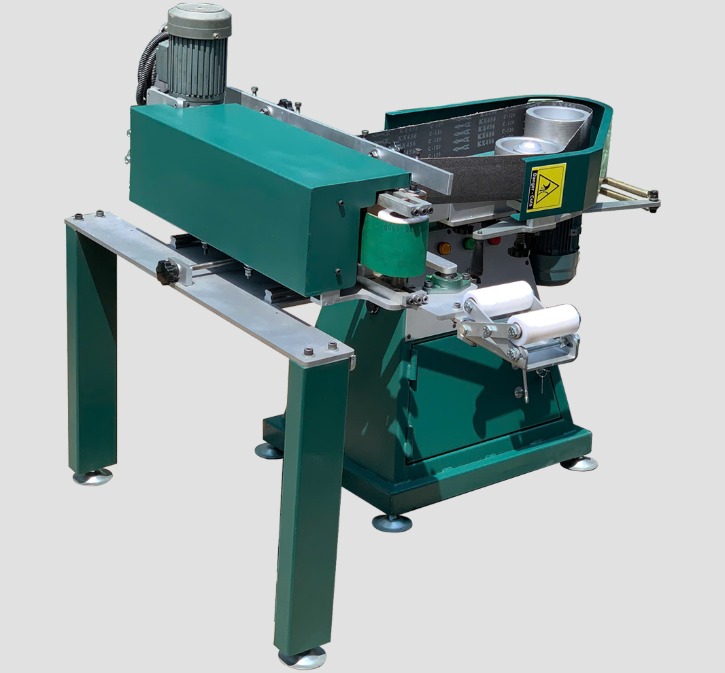
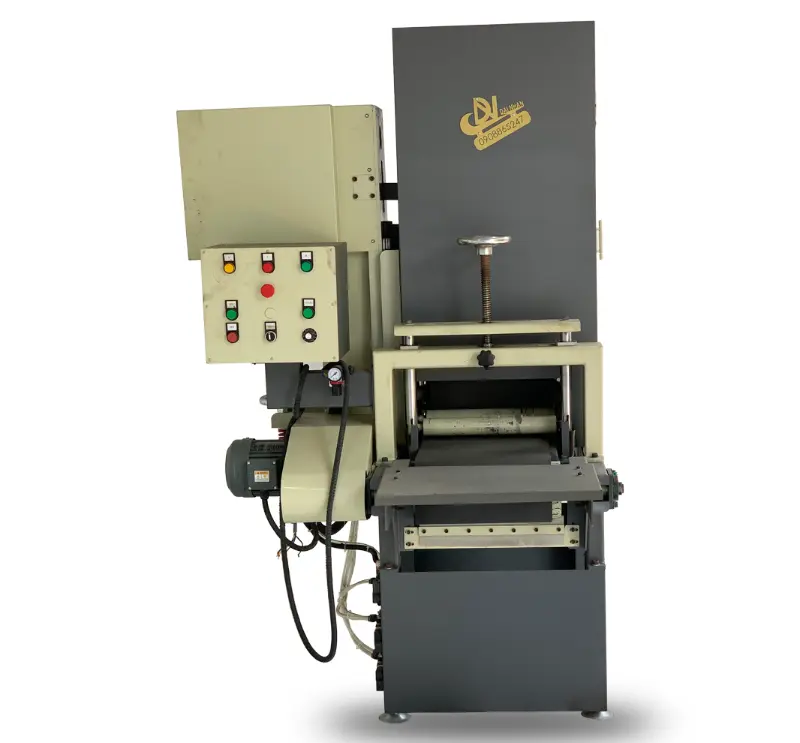
Dai Nhan Machinery is Vietnam’s direct manufacturer of industrial belt grinders, polishing machines, and surface finishing systems, based in Cu Chi with 100 percent of our CNC engineering held in-house. We are not a trading intermediary, and that shapes what we can offer a buyer working through a sourcing evaluation: direct access to engineers, transparency about how equipment is produced, and technical answers that do not have to be relayed through a third party.
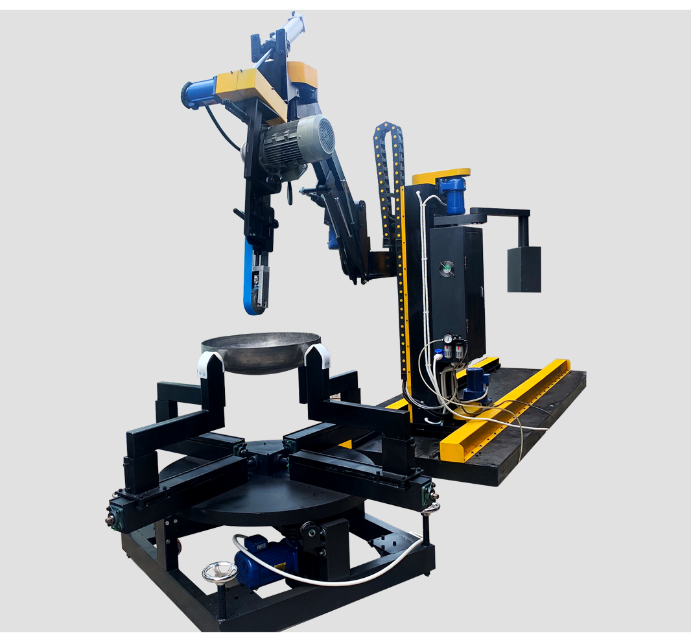
Because we build the machines, we see abrasives in context. Tank and vessel grinders producing sanitary finishes, tube and pipe polishing systems, dual-station stand grinders, and heavy deburring stations each impose different demands on consumables, and the correct specification depends on the machine, the alloy, the geometry, and the duty cycle together. Specifications written in isolation from the equipment routinely underperform in practice, which is why datasheet comparisons so often fail to predict shop-floor results.
For buyers restructuring supply chains toward diversified manufacturing origins with export-standard documentation practice, Vietnamese manufacturing has become a practical answer rather than a theoretical alternative. We support OEM and ODM programmes with engineering-led specification development, we expect to be audited, and we welcome exactly the kind of questions this article recommends asking.
Conclusion
The gap between a tier-1 grinding wheel and a budget equivalent is real, but it lives in places a buyer cannot see: grain quality and grading, resin storage and cure integrity, reinforcement ply count and mesh specification, burst test sampling discipline, and the process control that holds all of it steady from one batch to the next. Two wheels can be dimensionally identical and structurally unrelated.
The difference surfaces in operating cost, where a cheaper wheel that completes less work in more time with more operator effort is routinely the more expensive choice once labour and downstream finishing are counted. It surfaces in safety, where a thinner margin between marked speed and breaking speed simply moves risk onto the operator. And it surfaces in supply reliability, where drift, aged stock, and missing documentation cost a distributor more than the unit price ever saved.
None of this requires taking a supplier’s word for anything. Ask about ownership, testing, traceability, and cure control. Ask to see a batch that failed. Test under controlled conditions, calculate cost per unit of work rather than cost per wheel, and verify a production batch before committing. Suppliers that welcome that scrutiny are usually the ones who have already done the work it is checking for.
Partner with Dai Nhan Machinery
If you are qualifying sources for abrasives and surface finishing equipment, developing an OEM or ODM range, or restructuring your supply base for origin diversification and export-standard documentation, Dai Nhan Machinery is ready to work as your technical partner. Our engineering team evaluates your materials, machines, production objectives, and quality requirements before recommending anything — because a specification written without understanding the application is the most expensive shortcut in industrial procurement.
Contact Dai Nhan Machinery to discuss your requirements, request technical documentation, or start a custom OEM engineering project built to your specifications.
Read more: A Buyer’s Checklist for Partnering with Specialized Buffing Wheel Manufacturers


BOLA BAG's BLOG YOU MAY ALSO BE INTERESTED IN
How to Clean a Belt Sander Belt in Five Minutes and Keep It Cutting Longer
The B2B Blueprint for Ordering OEM ODM Custom Made Sanding Belts
Versatility in Metalworking: The Power of an Industrial Belt and Disc Sander