


Ask ten knife makers what belt sander for knife making they started on and most will name a cheap 1 by 30 inch bench sander. Ask what they use now and nearly all of them say a 2 by 72 inch grinder. The distance between those two answers is the whole buying decision. A small sander will grind a knife, but slowly, hot and with belts that wear out in minutes. A proper grinder does the same bevel in a fraction of the time with a belt that lasts for hours. This guide explains what actually matters on a machine for knife work, compares the three common sizes, and shows what to look for at each budget, including the point where a maker becomes a small factory.
What Belt Sander for Knife Making Really Depends On
Knife making asks more of a sander than woodwork does. Steel is hard, it heats up fast, and a bevel has to be ground flat and even along the whole blade.
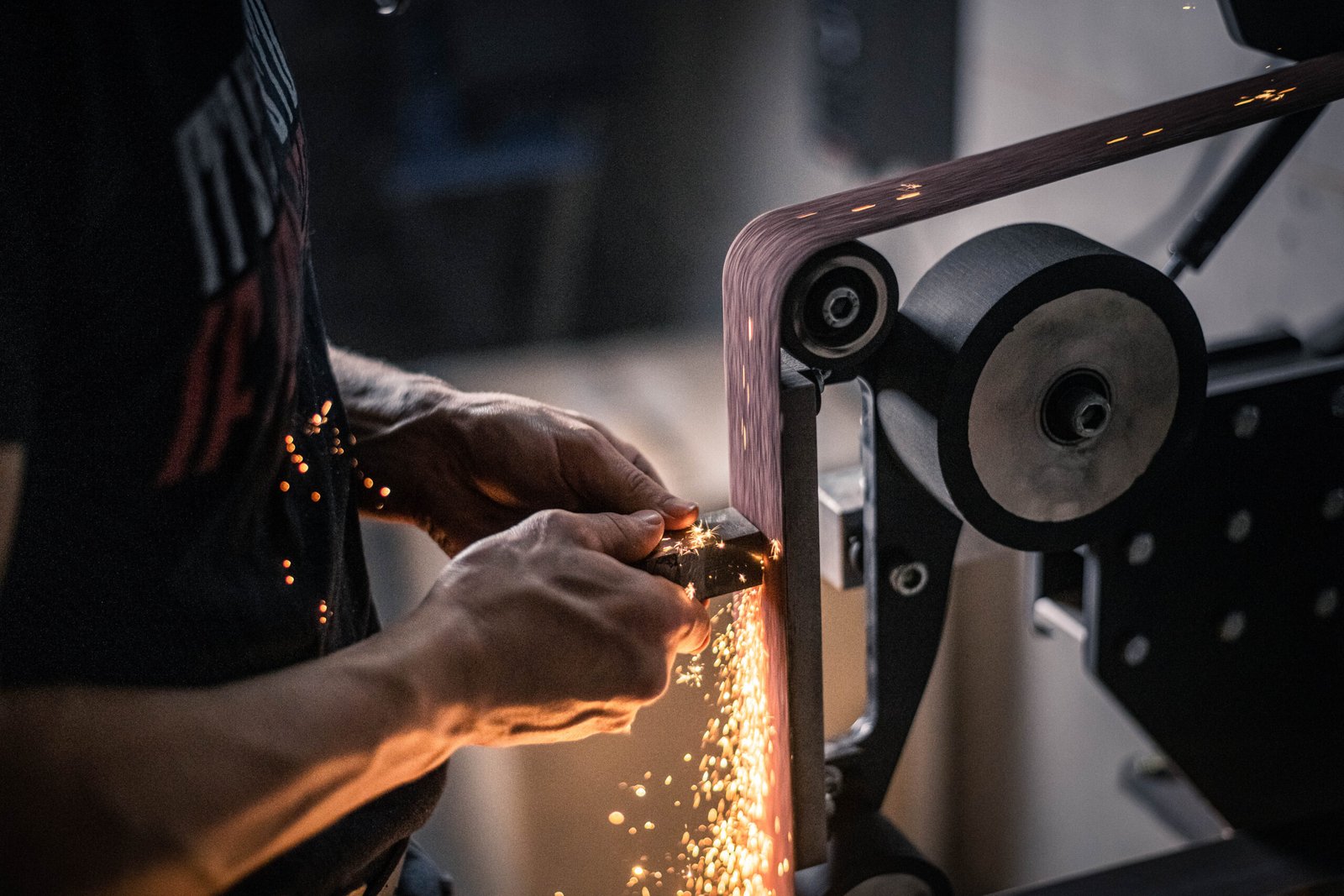
Belt Sander
Four things on the machine decide how well it copes.
Belt Length Decides How Hot the Steel Gets
Each grain on a belt only cuts while it touches the blade, then travels round the loop cooling down. A 72 inch belt has more than twice the abrasive of a 30 inch belt, so every grain rests longer between cuts. The belt runs cooler, lasts longer and puts less heat into the blade, which matters most after heat treatment when a blue edge means a ruined knife. Dipping the blade in water between passes helps, but a longer belt helps more.
Motor Power Decides Whether the Belt Slows Under Pressure
Small bench sanders usually run a motor of around a third of a horsepower. Press a blade into the belt and it bogs down. Serious grinders run one and a half to two horsepower or more, so the belt keeps its speed and the bevel stays even.
Variable Speed Lets You Slow Down for Fine Work
Most cheap sanders run at one fixed speed. Hogging steel wants a fast belt; fine grits, handles and work near a finished edge want a slow one. A grinder with variable speed does both, and it is the feature makers miss most when they do not have it.
Belt Choice Decides What Grits and Grains You Can Buy
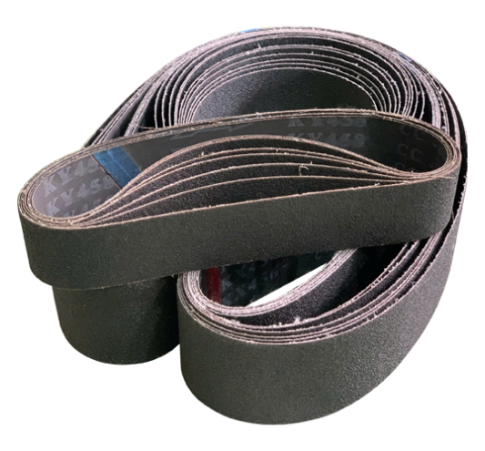
The 2×72 size is the standard for bladesmiths, so ceramic and zirconia belts for steel, soft belts for finishing and leather belts for stropping are all easy to find in it. Smaller sizes are mostly stocked in aluminium oxide belts made for wood, which dull quickly on hardened steel.
The Three Common Sizes Compared
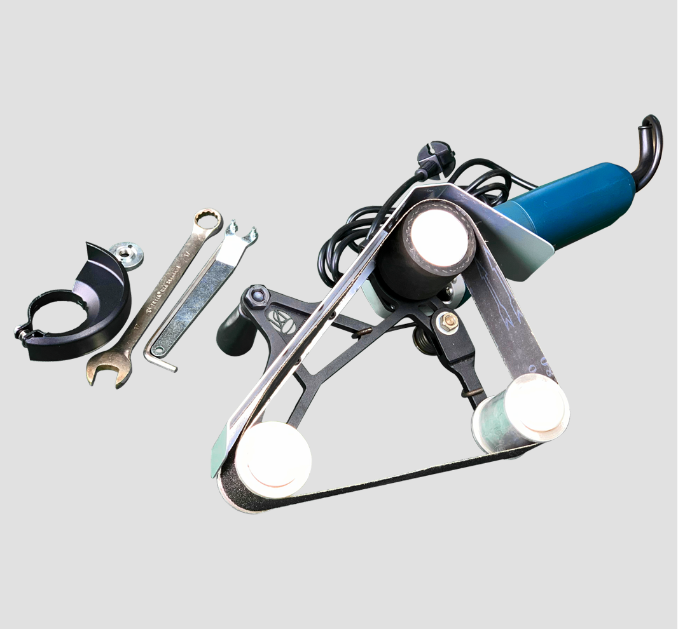
1×30 Bench Sanders for Beginners
These cost about as much as a good dinner out, fit on any bench and will get a first few knives made. The narrow belt flexes, the motor is weak, and belts wear out within minutes on steel. They are a way in, not a long term tool. Many makers keep theirs afterwards for handles, small parts and sharpening, where the narrow belt is actually handy.
2×42 Sanders as the Budget Middle Ground
A wider, longer belt and a stronger motor than a 1×30, with reasonable belt availability, at a price still well below a full grinder. Many makers build a dozen knives on one before moving up. Check that the platen is flat and that ceramic belts are stocked in the size before buying, because some 2×42 machines are sold as wood sanders with belts to match.
2×72 Grinders as the Standard for Serious Work
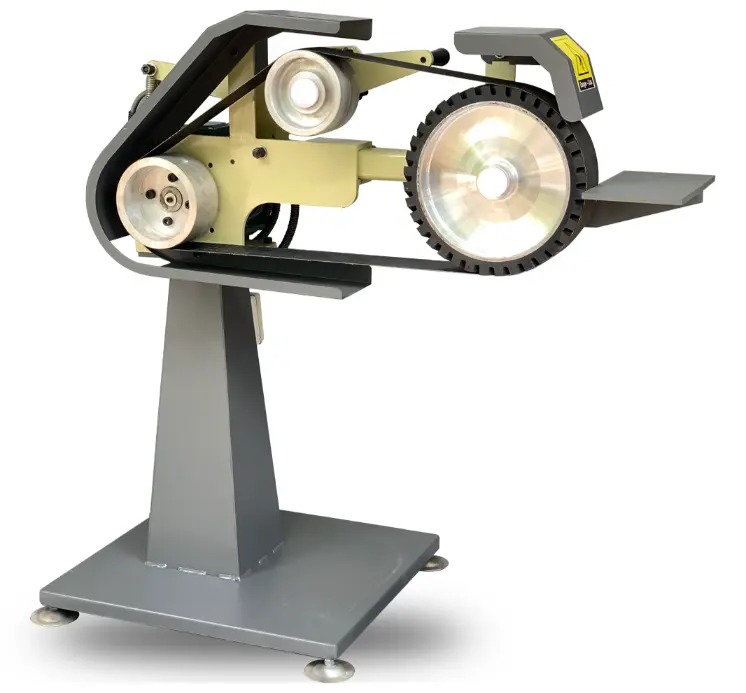
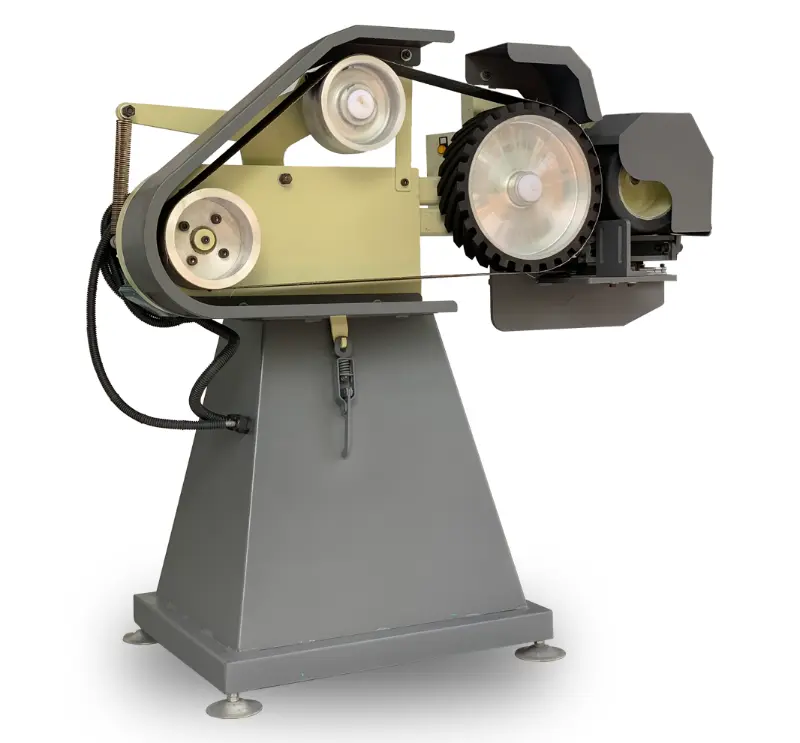
Long belts, big motors, variable speed and interchangeable attachments: a flat platen for bevels, a contact wheel for hollow grinds, a small wheel for finger grooves. It is the size every knife belt is made in first, and the machine most makers keep for life. This is what people usually mean when they ask what is a belt grinder rather than a sander.
What to Look For at Each Budget
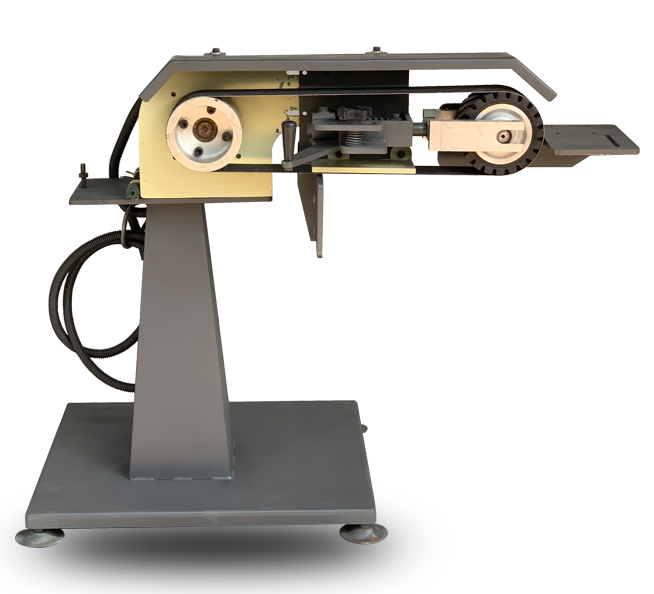
Whatever the size, a few checks separate a good machine from a frustrating one. The platen behind the belt should be flat and hard, ideally faced with glass or ceramic, because a soft platen grinds a curved bevel. Belt changes should take seconds, with a lever rather than bolts. The tool rest should adjust to a fixed angle and lock solid. The tracking should hold once set. On a 2×72, ask whether the motor runs through a variable speed drive, and whether the frame accepts other makers’ attachments, which keeps the machine useful as your skills grow. Budget for belts as well as the machine. A new maker often spends as much on belts in the first year as on the grinder itself, so a size with cheap, plentiful belts saves money every month.
When Knife Making Becomes Knife Production
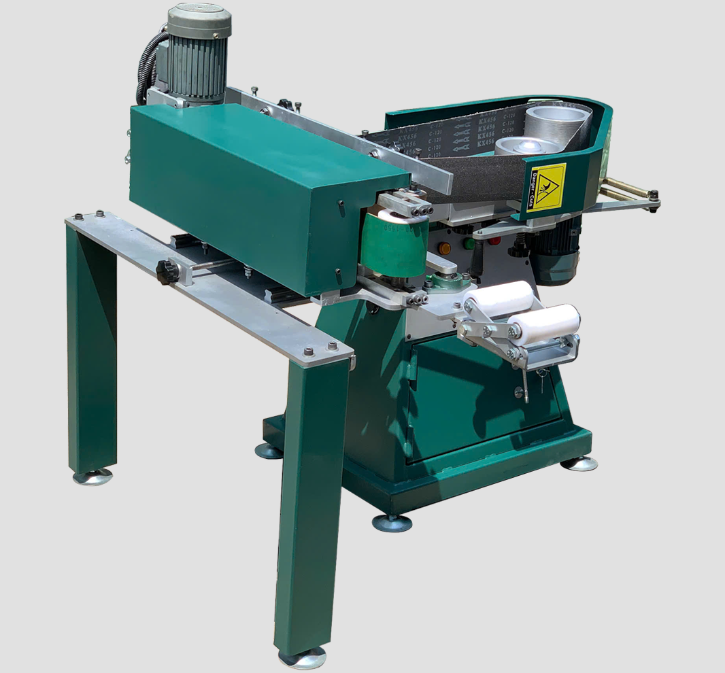
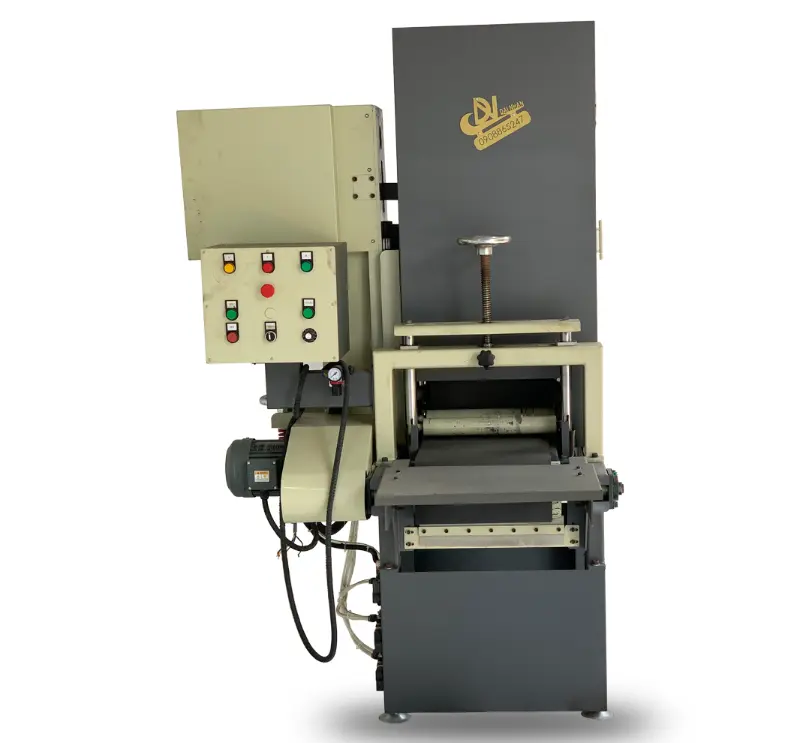
A single 2×72 grinder makes a maker. It does not make a factory. Once a shop grinds dozens of blades a day, the questions change: how to hold every blade at the same angle, how to keep belt speed steady through a full shift, how to extract steel dust safely and how to change belts without stopping the line.
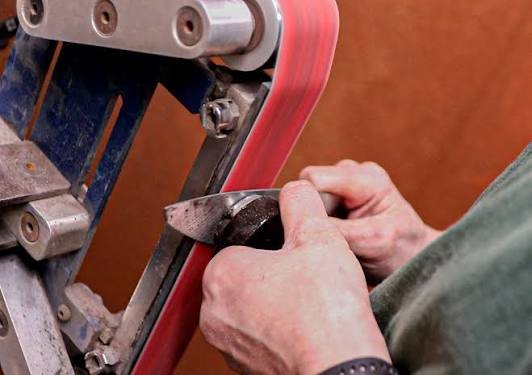
Belt Sander For Knife Making
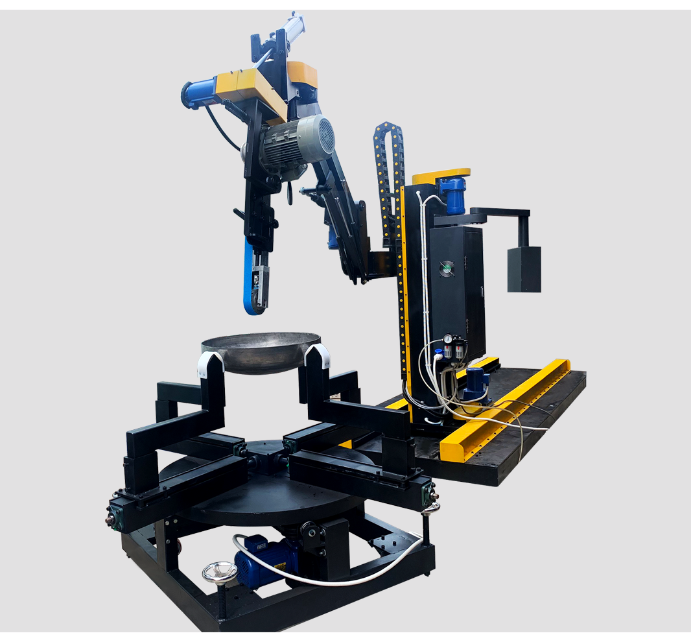
That is where fixed industrial grinders with jigs, guards and extraction take over, and where a maker starts talking to a belt grinder manufacturer about a machine built for the blade rather than a general purpose one. The same conversation covers dust extraction and guarding, which a home shop can manage with care but a factory floor has to build in.
Conclusion
So what belt sander for knife making? A 1×30 will get you started, a 2×42 will carry you through your first dozen blades, and a 2×72 grinder with a strong motor, variable speed and a hard flat platen is the machine to aim for. Belt length keeps the steel cool, motor power keeps the bevel even and belt choice decides what grains you can buy. When one grinder becomes a production line, a fixed industrial machine with jigs and extraction is the next step.
For blade shops and tool makers grinding all shift, Dai Nhan Machinery builds industrial belt grinders in Vietnam and makes custom sanding belts matched to each machine and each steel. Browse the range on Our Machines page, or tell our engineering team what you grind and how many blades a shift and we will suggest a setup.
Read more: Can You Use a Belt Sander on Metal?


BOLA BAG's BLOG YOU MAY ALSO BE INTERESTED IN
A Buyer’s Checklist for Partnering with Specialized Buffing Wheel Manufacturers
How Is Square Tubing Made? Inside the Roll Forming, Welding, and Finishing Process
How Do You Measure a Belt Sander Belt? Pick the Right Method for your Belt