


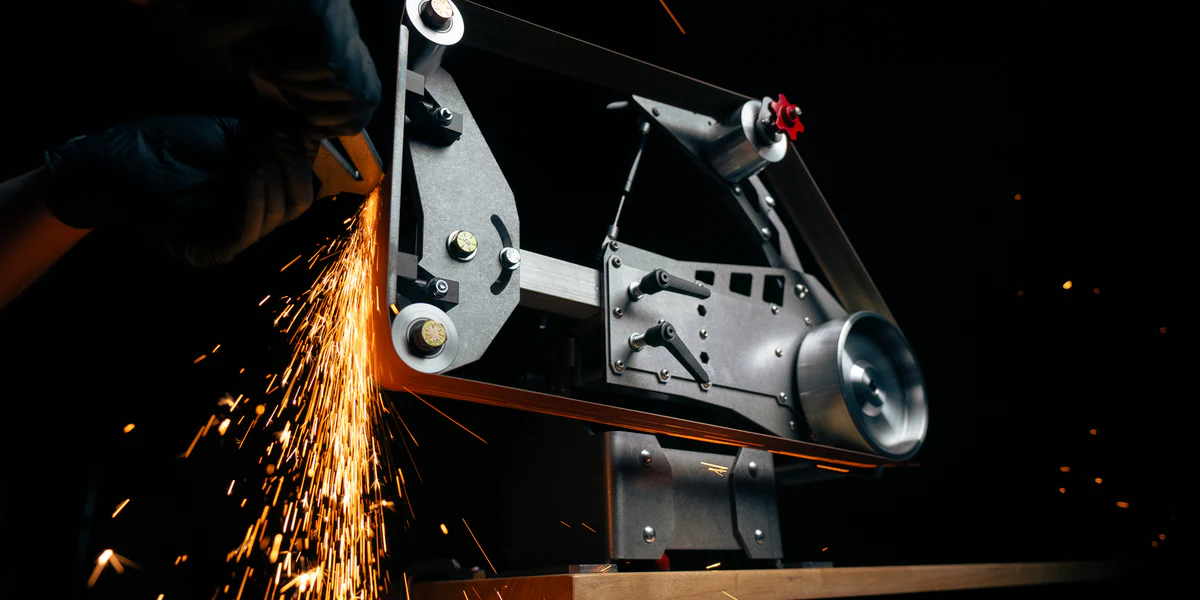
Most people grind steel the way they were never taught: disc flat on the surface, full body weight behind it, one spot until it turns blue. It works, in the sense that metal disappears. It also burns the steel, wears out the disc in minutes, and leaves a surface that takes twice as long to clean up as the grinding took. Learning how to grind steel properly is mostly unlearning that. The tool wants a shallow angle, light pressure, and constant movement, and the moment you give it those three things the whole job gets faster, cooler, and quieter.
How to Grind Steel Safely
Grinding throws hot sparks several metres and fine steel dust everywhere else, and the disc is spinning at over ten thousand rpm a few centimetres from your hands. Two minutes of setup changes the risk completely.
Protect Yourself First With a Face Shield and a Dust Mask
Sealed safety glasses at minimum, and a full face shield over them for anything above a quick touch up, because a disc fragment travels faster than you can blink. Hearing protection, since an angle grinder on steel sits well above the level that damages hearing in minutes. A respirator, not a dust mask, because ground steel is fine enough to reach deep into the lungs. Leather gloves, sleeves down, no loose clothing, and nothing flammable within spark range, which is further than it looks.
Clamp the Work and Keep the Guard On
Clamp the steel in a vice or to the bench so it cannot move, shift, or vibrate. A workpiece that moves under the disc is how the disc digs in, and a disc that digs in is how the grinder kicks. Leave the guard on. It is there to direct a disc that shatters away from you, and the fact that it occasionally gets in the way is not a reason to remove it.
Choosing the Disc From a Grinding Discs Supplier
The disc decides most of the result before the trigger is pulled. Three families cover nearly everything, and they are not interchangeable.
Grinding Wheels for Taking Off a Lot of Metal Fast
The thick bonded discs, typically 6 millimetres, are for heavy stock removal: knocking down a weld bead, taking a rough cut back to a line, chamfering a thick edge. They remove metal fast and leave a coarse surface that will need further work. Ceramic grain wheels cut faster and last longer on hard steel than the standard aluminium oxide, and at production volume the difference in disc life is large enough to matter, which is why consistency from a grinding discs supplier becomes a purchasing question rather than a hardware store one.
Flap Discs for Smoothing Welds and Removing Scale
Overlapping flaps of abrasive cloth on a backing plate. In 40 to 80 grit they blend welds, remove rust and scale, and level a surface without the gouging a hard wheel produces. They wear evenly and give a much more controllable finish, and for most fabrication work they are the disc that stays on the grinder longest.
Finer Grits and Finishing Discs to Sand Metal for Painting
120 grit and above is for the final cleanup before paint or before moving to a finer process. Surface conditioning discs, the non woven type, take a surface to a uniform satin without removing meaningful material. None of these are for stock removal, and using them that way just burns them out. Coarse to remove, medium to refine, fine to finish is the same rule whether you are learning how to sand with a belt sander or working with a disc, and skipping a step costs the same on both.
The Grinding Technique That Actually Works
Everything below is about heat. Steel that gets hot enough to change colour has already changed its properties, and a disc that gets hot enough to glaze has stopped cutting.
Hold the Disc at 15 to 30 Degrees
Never flat, never vertical. A shallow angle puts the working edge of the disc against the steel so it cuts, while a flat disc rubs across its whole face and a vertical disc digs its edge in. Fifteen degrees for finishing and blending, closer to thirty for aggressive removal. The angle is the single biggest technique difference between someone who grinds well and someone who does not.
Let the Disc Cut Instead of Forcing It
Light, steady pressure. The disc is designed to cut at the speed it spins, and pushing harder does not make it cut faster. It builds heat, loads the abrasive, and wears the disc out. If it feels like it needs more pressure to remove material, the disc is glazed or the grit is too fine for the job, and either way the answer is a different disc rather than more force.
Keep the Grinder Moving in Long Overlapping Passes
Sweep across the work in long, overlapping passes and never dwell. A grinder held in one spot cuts a groove within a second and blues the steel within three. Long passes spread the heat, keep the surface flat, and produce a scratch pattern that the next grit can remove. Work with the disc’s rotation so that sparks fly away from you, and check the surface between passes rather than at the end.
Watch the Colour of the Steel and Stop Before Blue
Straw, then brown, then blue. The moment the steel starts to colour, stop and let it cool, or dip it if the part allows. On mild steel a blue patch is mostly cosmetic. On a hardened edge or a heat treated part it means the temper has gone, and no amount of grinding brings it back. An angle grinder spinning at over ten thousand rpm does not care whether the thing in front of it is steel or a hand, which is why the colour of the workpiece is the warning to watch.
Common Jobs and How to Approach Them
The technique is the same. The order of operations changes with the job.
Grinding a Weld Flat With the Metal Around It
Take the bead down with a grinding wheel until it stands just above the surface, then switch to a 60 grit flap disc to bring it flush and blend the edges into the parent metal. Going straight to the flap disc is slow, and staying on the hard wheel to flush leaves gouges either side of the weld that show through paint.
Removing Rust and Mill Scale
A flap disc at 40 or 60 grit, shallow angle, light pressure. Scale comes off in sheets and the disc should not be cutting into the steel beneath it. If it is, the angle is too steep.
Flattening a Surface Is Where an Industrial Belt Grinder for Metal Takes Over
This is where an angle grinder reaches its limit. It can level a small area, but a hand held disc will always follow the surface it is on, so a wavy plate stays wavy with the waves smoothed. Genuinely flat work is belt or platen work. If you have ever wondered what is a belt grinder for, this is it: a hard flat platen behind the abrasive holds the surface flat where a hand held disc cannot.
Where to use the Industrial Belt Grinder instead of the Angle Grinder
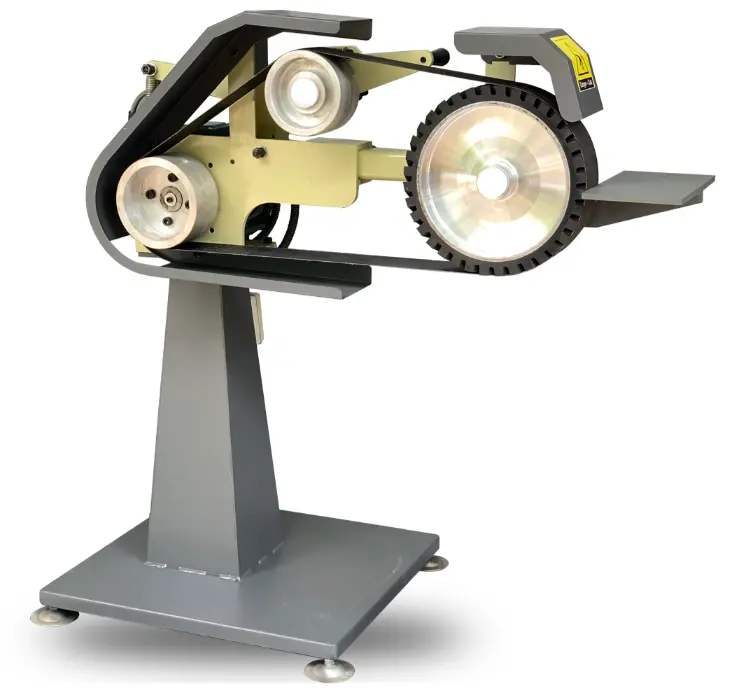
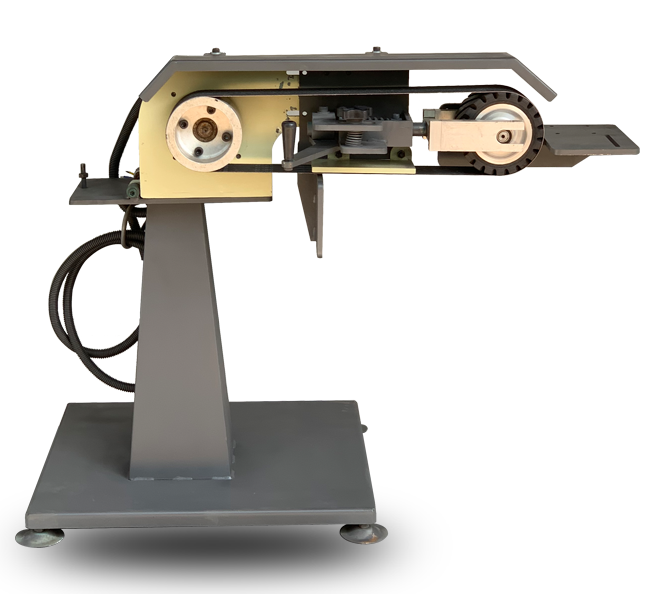
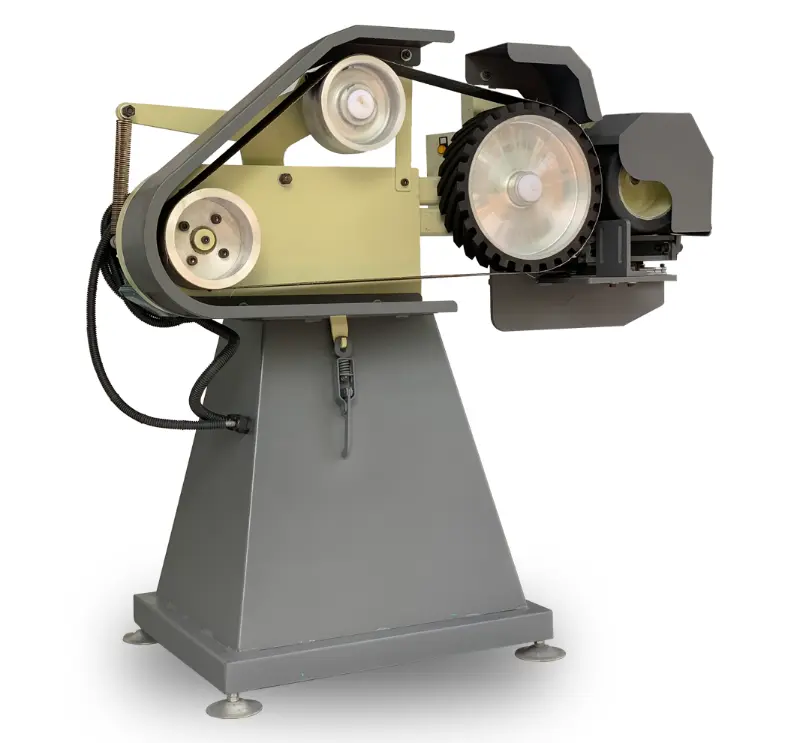
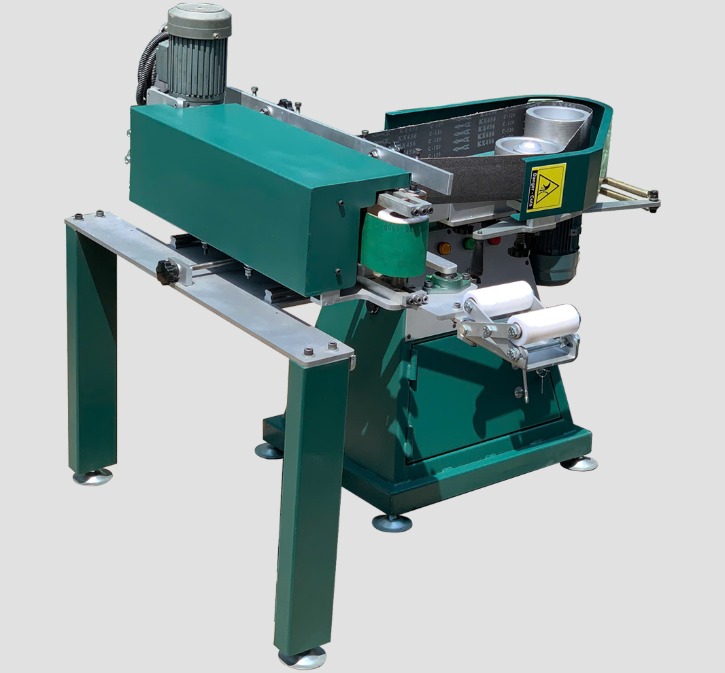
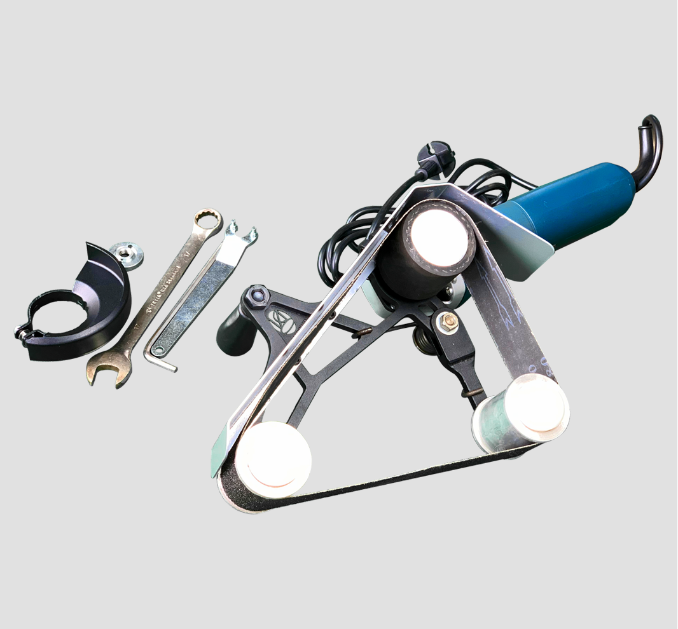
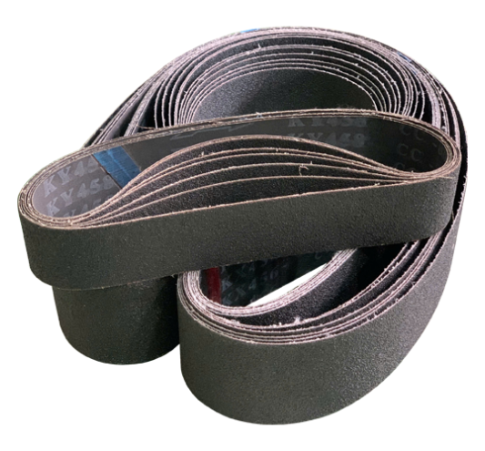
An angle grinder is a removal tool. It is superb at taking metal off quickly in a place that is awkward to reach, and poor at producing a flat, consistent surface or repeating the same finish across a batch. The moment the job becomes a surface rather than a spot, the belt grinder takes over. A belt running over a flat platen holds the work flat by construction, spreads heat across a much longer abrasive, and produces a directional scratch pattern that can be repeated on the next part and the hundredth part.
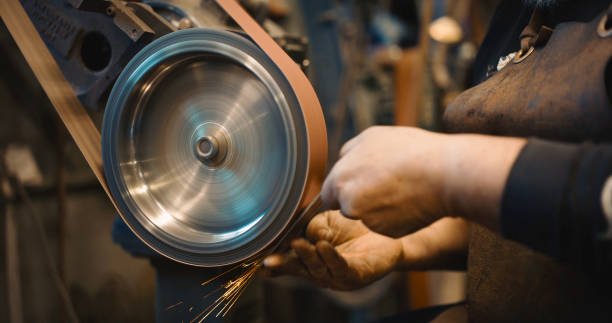
Belt Grinder
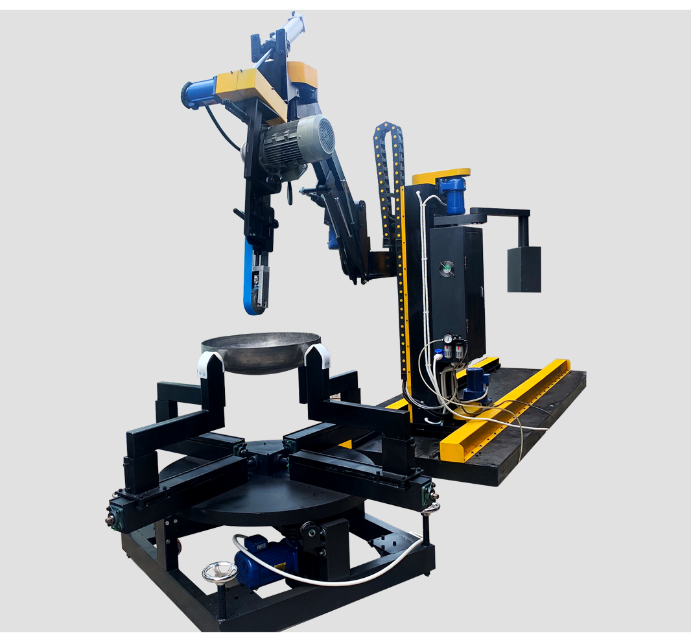
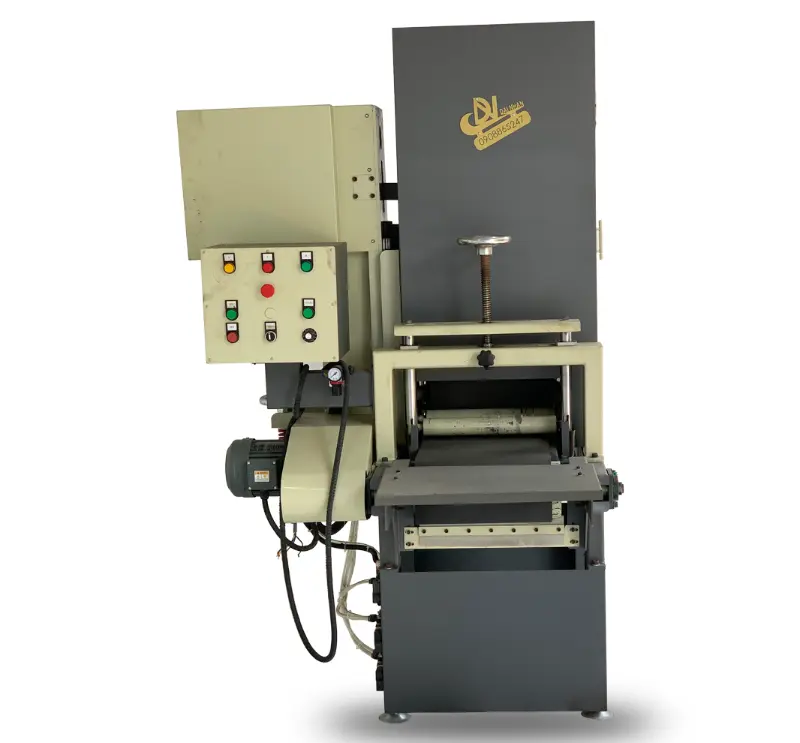
At production volume the distinction becomes an equipment decision. Weld dressing and deburring on a fabrication line runs on an industrial belt grinder for metal rather than on a row of hand held grinders, because the belt holds the finish consistent across parts and across operators. Plate work goes to a plate grinder for the same reason. The angle grinder never goes away, but it moves from being the process to being the tool that fixes the corners the process cannot reach.
Conclusion
How to grind steel comes down to four habits. Hold the disc at 15 to 30 degrees, never flat. Let the disc cut under light pressure instead of forcing it. Keep it moving in long passes. Watch for colour and stop before blue. Choose a grinding wheel for removal, a flap disc for blending, and a fine disc only for the last pass. Get those right and the angle grinder does exactly what it is good at, and you will know the moment a job needs a belt instead.
If the grinding in your shop has become a surface finish that has to repeat across hundreds of parts, Dai Nhan Machinery builds belt grinding and plate finishing equipment for production metalworking. Browse the range on Our Machines page, or tell our engineering team what you are grinding and how many a shift and we will suggest a setup.
Read more: Can You Use a Belt Sander on Metal?


BOLA BAG's BLOG YOU MAY ALSO BE INTERESTED IN
Can a Grinder Cut Steel? Where It Works and Where It Doesn’t
The B2B Blueprint for Ordering OEM ODM Custom Made Sanding Belts
Strategic Sourcing: Partnering with an Export-Standard Grinding Discs Supplier