





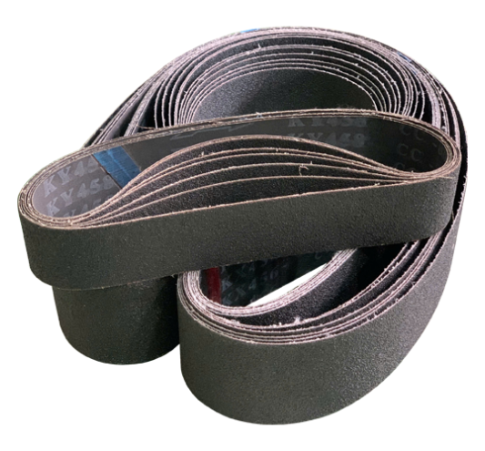
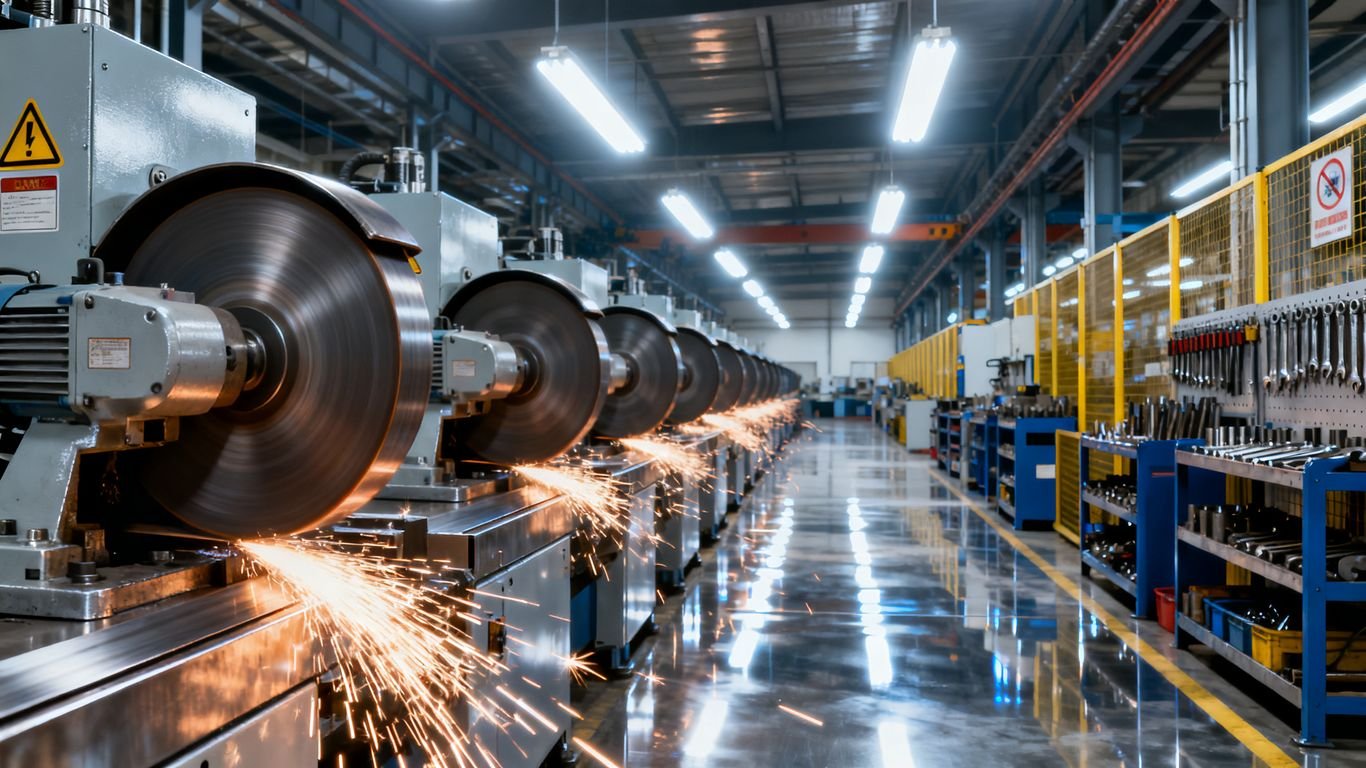
A structural steel fabricator running three shifts can burn through several thousand cutting and grinding discs in a month. A shipyard or pressure vessel shop consumes them faster. At that scale, abrasives stop behaving like a purchasing line item and start behaving like a utility: nobody notices it until it stops, and when it stops, everything stops with it.
The distributors who serve these accounts operate under a constraint most industrial supply businesses do not face. Abrasive discs are heavy, bulky relative to value, safety-critical, subject to shelf life, and demanded in unpredictable bursts tied to project schedules that change weekly. Holding enough stock to guarantee availability ties up capital in a product that ages. Holding too little means a fabricator’s line goes idle over a consumable worth a few dollars.
This article looks at how the distribution layer actually solves that problem — the forecasting, inventory, logistics, and technical practices that let high-volume shops operate without ever thinking about where the next carton comes from.
The Demand Problem
Abrasive consumption in a fabrication shop is not smooth. It is driven by project mix, and project mix changes.
A month of heavy plate work with extensive weld preparation consumes grinding discs at several times the rate of a month spent on light assembly. A single large tank contract can shift consumption of a specific specification by an order of magnitude for six weeks and then stop entirely. Material changes matter too — a shift from carbon steel to stainless changes not just volume but specification, since contamination-free products become mandatory.
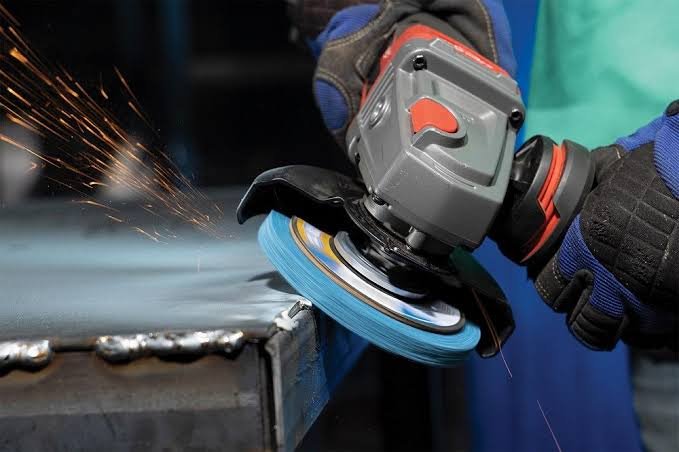
Abrasive consumption in a fabrication shop is not smooth
Layered on top is operator variability. Two welders doing identical work can differ by thirty percent in disc consumption depending on technique, machine condition, and how long they persist with a worn disc. Shops rarely track this, which means their own internal forecasts are approximate at best.
The result is that a fabricator’s stated forecast is usually a projection of last quarter with an adjustment for optimism. Distributors who plan inventory against customer forecasts alone get burned in both directions. The ones who perform well plan against consumption patterns they observe directly.
Inventory Strategy: Depth Where It Matters
The instinctive answer to volatile demand is to hold more of everything. It is also the fastest route to a warehouse full of slow-moving stock and no cash.
Sophisticated grinding wheel wholesalers segment their range rather than treating it uniformly. In most fabrication-focused catalogs, a small handful of specifications — typically 115mm and 125mm cutting discs, 125mm and 180mm grinding discs, in the two or three most common bond grades — account for the overwhelming majority of unit movement. These are stocked deep, with safety stock calculated against demand variability rather than average consumption.
The long tail behaves differently. Unusual diameters, specialty bonds, contamination-free products for specific alloys, and low-volume specifications are held thin or sourced to order, with lead times communicated honestly rather than optimistically.
The segmentation decision should be driven by variability, not just volume. A moderate-volume item with erratic demand may need proportionally more safety stock than a high-volume item that moves predictably. Standard inventory theory applies here as it does anywhere; what makes abrasives distinctive is the shelf-life constraint that penalizes over-stocking more sharply than in most product categories.
Shelf life is the discipline that separates competent distribution from careless distribution. Resin-bonded wheels degrade — phenolic bonds absorb moisture and cure characteristics change with age. Most manufacturers mark an expiry date, commonly three years from production. A distributor holding stock without rigorous first-in-first-out rotation will eventually ship product close to or past expiry, and a fabricator who discovers expired discs in a delivery will remember it far longer than any price concession.
Practical requirements: production date visible on every carton, warehouse layout that makes FIFO physical rather than procedural, systematic aging reports, and a policy on how much remaining life must exist at the point of shipment. Six months minimum is a reasonable floor; twelve is better for accounts that hold their own buffer stock.
Storage conditions matter too. Abrasives should be kept dry, at stable temperature, flat and supported rather than leaning, and away from any source of impact. A warehouse that stacks cartons badly is damaging product it will later ship.
Vendor-Managed Inventory and Consumption-Based Replenishment
The most effective arrangements for high-volume fabricators move the inventory decision away from the customer entirely.
Under vendor-managed inventory, the distributor takes responsibility for maintaining agreed stock levels at the customer’s site. Bins are surveyed on a fixed cycle — weekly for heavy consumers — and replenished to par. The fabricator issues no purchase orders for routine consumption; they are invoiced on usage or on a periodic cycle.
The advantages compound. The distributor sees real consumption data rather than forecasts, which improves their own planning materially. The fabricator eliminates administrative overhead and stockout risk simultaneously. Both sides get visibility into which specifications are actually being used, which frequently reveals that the shop has been buying products nobody uses and running short on ones they do.
Consignment stock takes this further: product sits at the customer’s site but remains the distributor’s property until consumed. This is capital-intensive for the distributor and requires genuine trust, but for large accounts it is often the arrangement that wins and holds the business.
Neither model works without accurate on-site data. Bin systems need to be respected — if operators take cartons from the back of the rack or squirrel away private stashes, the survey data becomes fiction. The distributors who run these programs well spend real effort on the shop-floor discipline side, not just the logistics side.
Upstream Supply: The Constraint Behind the Constraint
A distributor can only be as reliable as the manufacturing behind them, which is why serious distribution businesses invest heavily in supplier relationships.
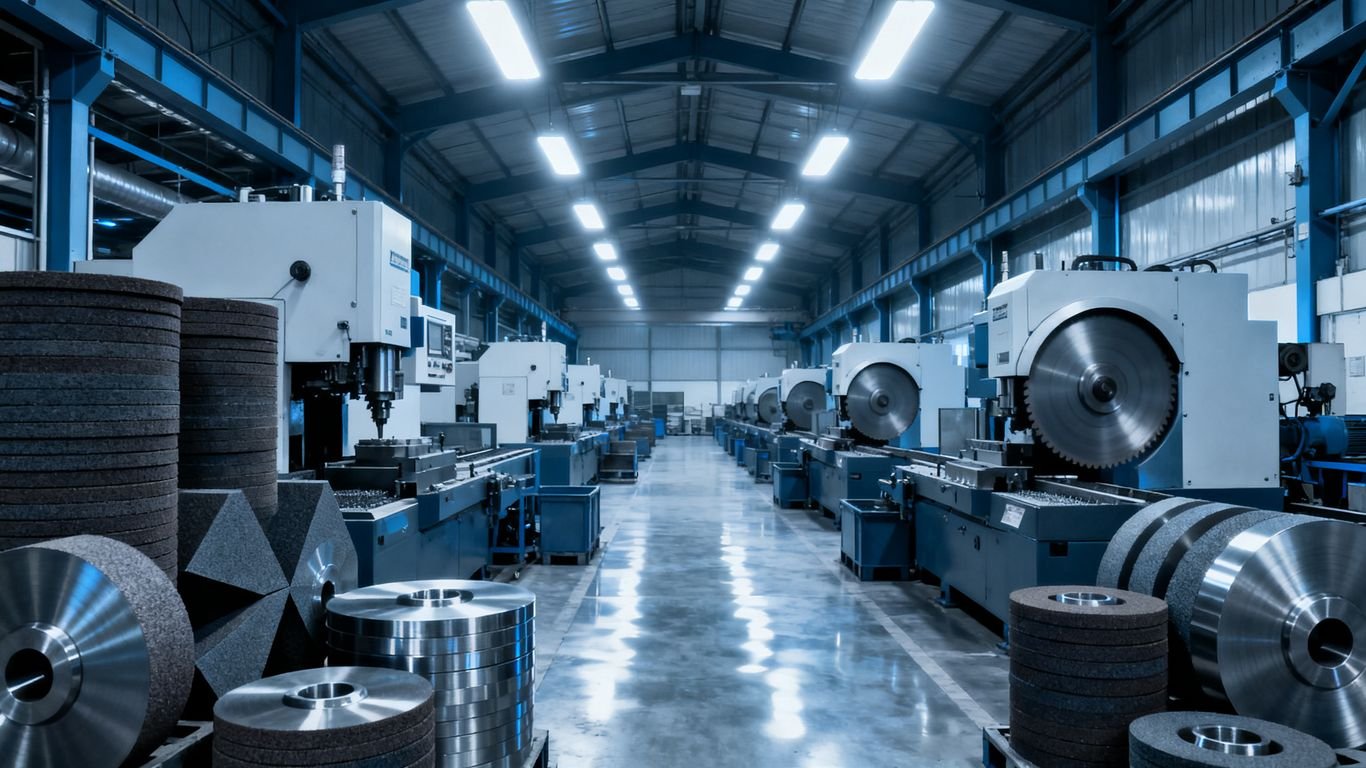
Wholesale Grinding Wheels
Ocean freight from Asian production centers runs six to ten weeks door to door, before customs. Add production lead time and a routine replenishment cycle stretches to three or four months. That lag is the fundamental reason distribution exists — somebody has to absorb it, and it is not going to be the fabricator waiting for a disc.
Managing it requires several things at once. Rolling forecasts to the factory, updated monthly, so production can be scheduled rather than reactive. Blanket orders with call-off schedules, which secure capacity and pricing while allowing timing flexibility. Multi-source qualification for high-volume specifications, so a single factory disruption does not empty the shelves. In-transit visibility, so a delayed vessel triggers action rather than surprise.
The strongest distributors maintain direct relationships with abrasive grinding wheel manufacturers rather than buying through intermediaries. The difference shows up under pressure: when capacity is tight, factories allocate to the customers they know, whose forecasts have historically been accurate, and who pay on time. A distributor two steps removed from production has no such standing.
This is also where quality control enters distribution. A distributor who imports wholesale grinding wheels at container scale carries real responsibility for what they put into circulation, including regulatory responsibility in the importing market. Batch-level inspection on arrival, verification of speed markings and expiry dates, retained samples per lot, and a functioning traceability system are not optional refinements. If a wheel fails in service and injures someone, the paper trail matters enormously — and the distributor is frequently the entity with the clearest legal exposure in the destination market.
Logistics and Service Design
For a fabricator, availability is not a warehouse metric. It is whether the disc is in the operator’s hand when needed.
- Delivery frequency should match consumption rate. Daily or every-other-day delivery to major accounts is normal in dense industrial regions. Weekly is workable for moderate consumers with proper on-site buffer.
- Emergency response capability matters disproportionately to how often it is used. The ability to get product to a shop within hours when a project changes is what fabricators remember at contract renewal, even if they invoke it three times a year.
- Kitting and staging — pre-packing discs by job, work cell, or crew — saves shop-floor time and reduces the informal hoarding that distorts consumption data.
- Regional stocking shortens the last leg. Distributors serving wide geographies increasingly run hub-and-spoke networks with forward stock at the spokes for fast-moving items only.
Data as an Operating Advantage
The distributors who perform best at high volume increasingly run on consumption data rather than intuition, and the data comes from the replenishment programs described above.
Once a distributor is surveying bins weekly across dozens of accounts, they hold something no individual fabricator has: a real consumption baseline across comparable shops. That enables genuinely useful analysis. Which specifications actually move, as opposed to which ones customers believe they need. How consumption per tonne of steel processed varies between shops doing similar work — a comparison that frequently reveals a thirty or forty percent spread and identifies exactly which sites have a technique or equipment problem. Which accounts are trending upward, giving early warning of a demand surge before the emergency order arrives.
It also improves upstream forecasting substantially. A distributor forecasting to a factory from aggregated real consumption is far more accurate than one forecasting from customer projections, and factories reward forecast accuracy with better allocation during tight periods. The feedback loop compounds: better data produces better forecasts, better forecasts produce better supply, better supply produces more replenishment programs, and those programs produce more data.
Seasonality matters too. Construction-linked fabrication follows weather and project cycles in most regions; shipyard and maintenance work follows different rhythms entirely. Distributors serving a mixed customer base can smooth production commitments across those cycles in a way that any single fabricator cannot.
Technical Service as a Differentiator
Product availability is table stakes. The distributors who hold high-volume accounts through price pressure do so on technical contribution.
That means walking the shop floor and observing actual use. A crew grinding with a cutting disc, applying wrong-angle pressure, or persisting with discs well past their useful point represents recoverable cost that no price negotiation can match. Specification consolidation is similarly valuable — many shops carry twice the specifications they need, having accumulated products over years without review.
It also means running honest comparative trials. A distributor willing to measure cost per unit of material removed rather than cost per disc, and to report a result that favors a competitor’s product, builds a kind of credibility that is very difficult to displace.
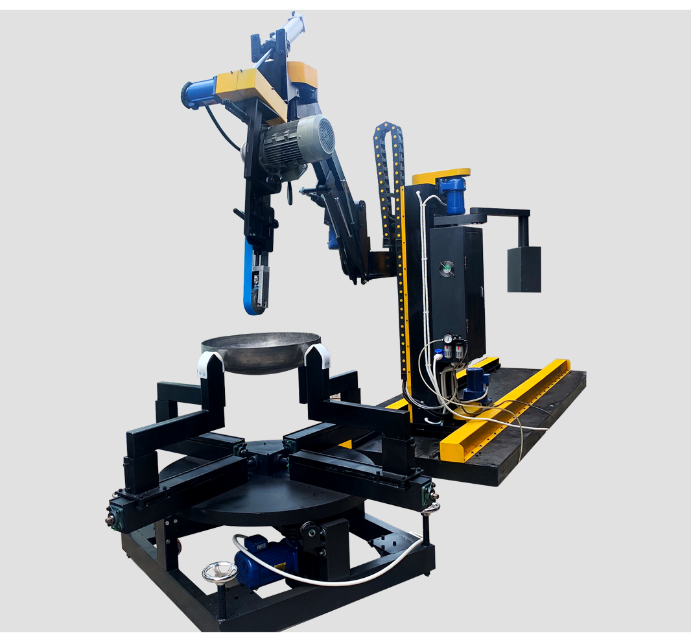
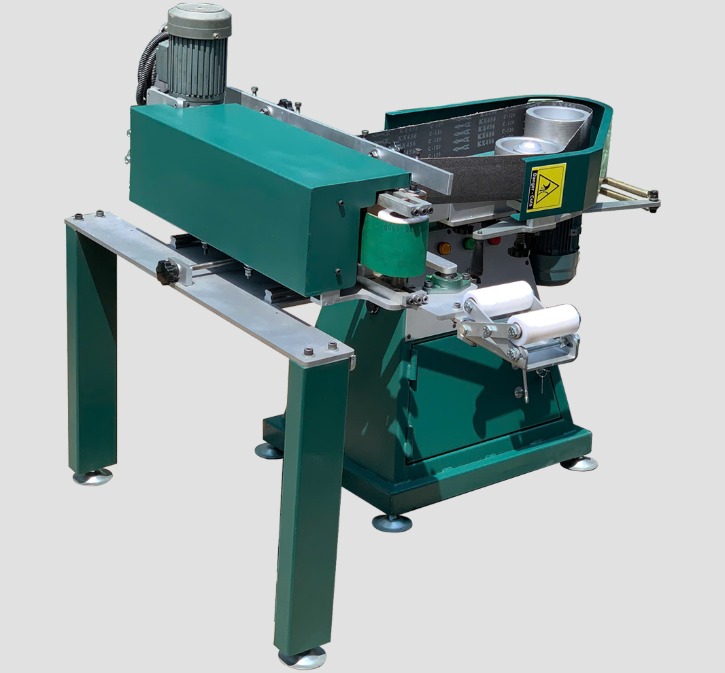
And it means understanding the machine side. Disc performance depends on tool condition, speed, guard configuration, and operator technique. A grinder running below rated speed, or a worn spindle bearing introducing vibration, will make good abrasives look bad. Distributors who can diagnose that are solving the customer’s actual problem rather than selling against a symptom. Similarly, a shop struggling with consistency on tube, plate, or vessel work may need dedicated finishing machinery rather than better handheld consumables — recognizing that boundary is part of genuine technical service.
The best relationships between a fabricator and a grinding discs supplier or distribution partner look less like purchasing and more like an outsourced consumables function: someone who knows the shop, watches consumption, flags waste, and takes the problem off the production manager’s desk entirely.
What High-Volume Buyers Should Ask For
If you run a shop consuming abrasives at volume, the distributor conversation is worth structuring deliberately. Ask about their stocking depth on your specific top specifications, not their catalog breadth. Ask how they manage shelf life and what minimum remaining life they guarantee at delivery. Ask whether they buy direct from manufacturers and can name them. Ask what their incoming inspection process looks like and whether they retain samples. Ask what their emergency response actually is, in hours. Ask whether they will run a documented cost-per-removal trial rather than quoting unit prices.
The answers separate genuine distribution partners from order-takers quickly — and the difference is worth far more over a year than any percentage point on unit price.
Equip the Line Behind the Consumables
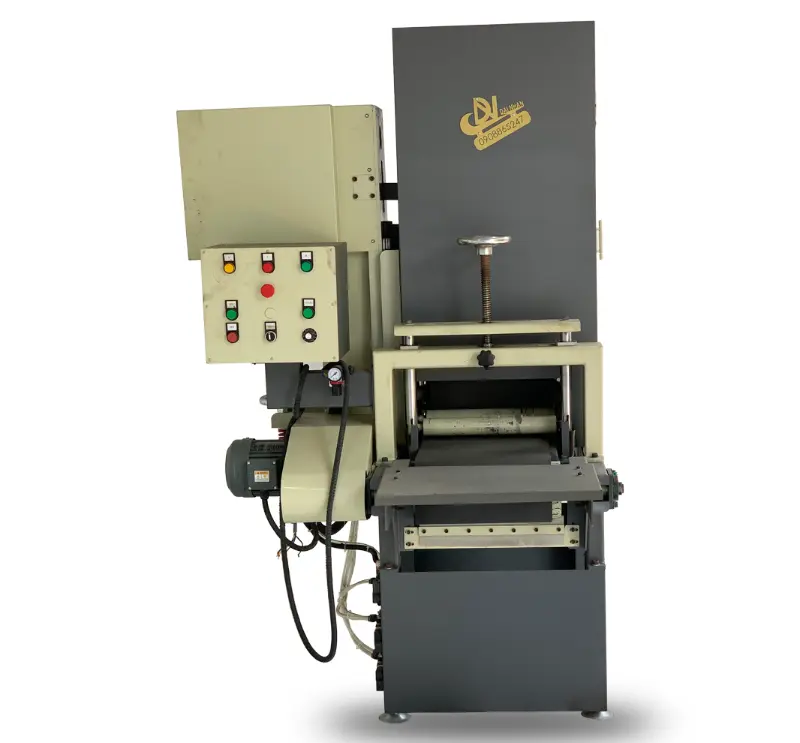
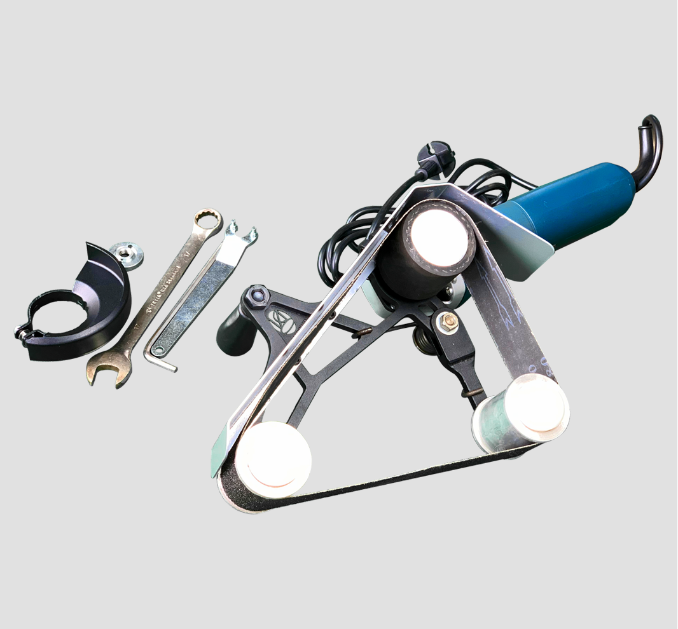
Consumables are only half the finishing equation. Dai Nhan Machinery is Vietnam’s direct manufacturer of the industrial belt grinders and surface finishing systems that determine how efficiently those consumables actually work — tube and pipe polishing machines, tank and vessel grinders, dual-belt stand grinders, 3-wheel and 4-wheel deburring stations, plate grinding machines, handheld belt grinders, and custom-made sanding belts.
Built entirely in-house at our Cu Chi facility with one hundred percent of CNC engineering under our own roof, our machines are engineered for zero-vibration stability under continuous shift load — for slag removal, weld blending, hairline finishing, and mirror polishing across stainless, aluminum, carbon steel, and hardened alloys.
Read more: How Industrial Abrasive Grinding Wheel Manufacturers Optimize Grain Bonding for Hardened Steels


BOLA BAG's BLOG YOU MAY ALSO BE INTERESTED IN
Can a Grinder Cut Steel? Where It Works and Where It Doesn’t
How to Grind Steel Cleanly: Angle, Pressure, Heat, and the Disc That Does the Work
The B2B Blueprint for Ordering OEM ODM Custom Made Sanding Belts