


Every industrial supply chain that touches metal fabrication, stone processing, automotive components, or precision machining eventually depends on the same underlying category of product, the abrasive wheel that removes, shapes, or finishes material at the point of production. Choosing among grinding wheel manufacturers is rarely treated with the same scrutiny as choosing a major piece of capital equipment, yet the wrong sourcing decision here can quietly undermine production consistency, safety, and cost in ways that are difficult to trace back to their true origin. This guide looks at what separates the top tier of grinding wheel manufacturers from the rest of the market, how OEM and ODM sourcing works in this industry, and where a belt grinder manufacturer fits into the same broader abrasives and finishing supply chain most industrial buyers are ultimately trying to manage as a whole.
Understanding the Global Grinding Wheel Manufacturing Landscape
Before comparing individual grinding wheel manufacturers, it helps to understand the structure of the industry itself, since the abrasives market is far more fragmented and specialized than most buyers outside the field realize. Grinding wheels are manufactured using very different processes depending on the bond material holding the abrasive grain together, and a manufacturer that excels at one bond type does not automatically excel at another, which is why serious buyers evaluate manufacturers by their specific product category rather than treating the entire industry as interchangeable.
Bonded Abrasives and Coated Abrasives Explained
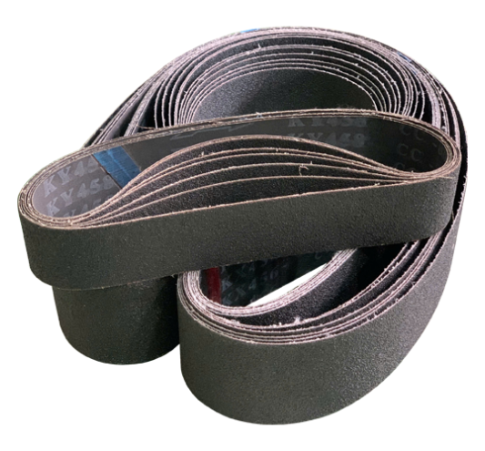
The abrasives industry generally splits into two broad families, bonded abrasives and coated abrasives, and understanding this distinction is fundamental to evaluating any grinding discs supplier correctly. Bonded abrasives, which include the traditional grinding wheel most people picture, suspend abrasive grain within a solid bonding matrix, commonly vitrified, resin, or rubber based, that determines the wheel’s hardness, durability, and the way it wears during use. Coated abrasives, by contrast, apply abrasive grain to a flexible backing such as cloth or paper, which is the category that covers sanding belts, discs, and sheets rather than solid wheels.
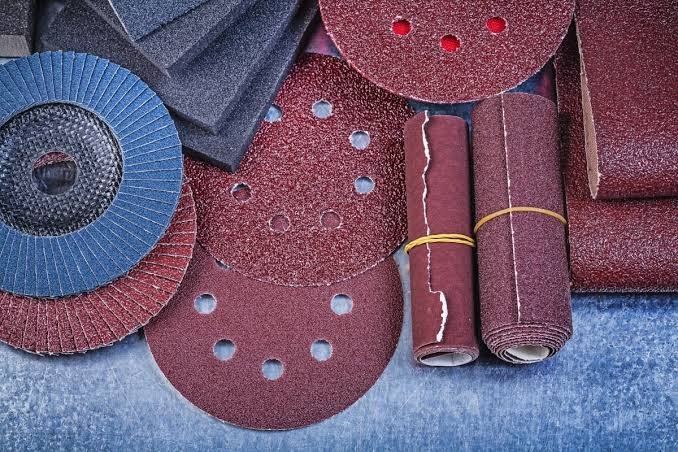
Bonded Abrasives and Coated Abrasives Explained
This distinction matters when sourcing, since a manufacturer specializing in bonded abrasive wheels may have limited experience producing coated abrasive belts, and a buyer assuming a single supplier can competently handle both categories is often disappointed once volume production begins. Serious grinding wheel manufacturers concentrate deeply in bond formulation science, while manufacturers of coated abrasives, including belt products used on an industrial belt grinder, concentrate on backing material strength and grain adhesion, a genuinely different engineering discipline.
Why OEM and ODM Sourcing Dominates This Industry
Very few end users of grinding wheels purchase directly from a raw manufacturer without some layer of customization, which is why OEM and ODM arrangements dominate sourcing in this category far more than simple catalog purchasing. An OEM relationship typically means a manufacturer produces wheels to a buyer’s specified grit, bond, dimension, and packaging requirements, often under the buyer’s own brand, while an ODM relationship involves the manufacturer contributing more of the formulation and design expertise itself, particularly when a buyer knows the application but lacks deep abrasives engineering knowledge in house. This dominance also explains why price comparisons between grinding wheel manufacturers can be misleading if buyers are not comparing equivalent specifications, since two wheels that look similar on a data sheet can perform very differently depending on subtle differences in bond hardness and grain concentration.
What Separates Top Tier Grinding Wheel Manufacturers From the Rest
The difference between an adequate grinding wheel manufacturer and a genuinely top tier one rarely shows up in a single sample wheel evaluated during a factory visit or trade show. It shows up over thousands of production hours, across variations in ambient temperature, operator technique, and material hardness, which is exactly the kind of variability that separates manufacturers with deep formulation expertise from manufacturers who are simply following a generic recipe without fully understanding why it works.
Material Science and Bond Formulation Expertise
At the core of every grinding wheel is a bond formulation problem, balancing abrasive grain type, grain size, bond hardness, and porosity to achieve a wheel that cuts efficiently without wearing too quickly or generating excessive heat at the point of contact. Manufacturers who genuinely understand this material science can tune a formulation precisely to a customer’s application, whether that means a softer bond for a delicate finishing pass or a harder bond for heavy stock removal on structural steel, while manufacturers without this depth tend to offer a narrower range of generic formulations that force the buyer to compromise. This expertise becomes especially visible when a buyer requests something outside a standard catalog specification, since a manufacturer with genuine formulation depth can explain confidently how a proposed change will affect performance, while one without it often responds vaguely or simply refuses custom requests.
Quality Control and Consistency Across Production Batches
A single excellent wheel proves very little about a manufacturer’s actual capability, since the real test of quality is whether wheel number one thousand performs identically to wheel number one from the same batch, and whether a batch produced this year matches one produced two years ago on a repeat order. Top tier grinding wheel manufacturers invest heavily in batch testing, including speed testing for structural integrity and performance testing against known benchmarks, precisely because inconsistency between batches is one of the most damaging problems a buyer can experience without realizing the wheel itself is the cause. Buyers evaluating a prospective grinding discs supplier should ask directly what testing is performed on every batch rather than only initial samples, since a manufacturer that tests thoroughly at sampling but relaxes standards during full production volume is a common and costly pattern that only becomes visible after a large order is already committed.
Certification and Safety Standards for Industrial Abrasives
Grinding wheels operate under significant mechanical stress at high rotational speeds, which makes safety certification a serious consideration rather than a formality. Reputable abrasive grinding wheel manufacturers test and certify their products against recognized structural integrity and speed rating standards, and a wheel that fails in use due to inadequate testing represents a real safety hazard, not simply a quality complaint. Buyers sourcing internationally should confirm which standards a manufacturer tests against and verify those standards are recognized in their own destination market, since requirements are not identical across every region.
Top Global Grinding Wheel Manufacturers to Know
Buyers researching this category for the first time often want concrete reference points rather than only abstract evaluation criteria, so it helps to look at some of the established names that have shaped the global grinding wheel manufacturing landscape over the past century. These profiles are offered as general industry background rather than a formal ranking, and none of these companies are affiliated with or endorsed by Dai Nhan Machinery, since Dai Nhan operates in the belt based equipment side of this industry rather than the wheel manufacturing side itself.
Saint Gobain Abrasives
Saint Gobain traces its origins back to 1665 and has grown into one of the largest and longest established names among grinding wheel manufacturers worldwide, operating manufacturing and research facilities across dozens of countries. Its abrasives division, which includes the well known Norton brand, covers a very broad range of grinding applications, from rough stock removal to precision and super finishing work used in demanding sectors such as aerospace and automotive component production. Saint Gobain’s scale and long operating history make it a common reference point for buyers benchmarking formulation technology and global production capacity in this category.
Three M Abrasives
Three M, widely recognized under its familiar 3M brand, applies its broader materials science research capability to abrasives, offering a wide range of grinding wheels alongside coated abrasive products used across automotive, aerospace, and general industrial manufacturing. The company is frequently cited for its proprietary abrasive grain technology, which is engineered to maintain cutting performance and consistency over a longer service life than more conventional grain formulations, and its global distribution network gives it a strong presence across most major industrial markets.
Tyrolit Group
Tyrolit is an Austria based manufacturer with a strong international presence, known for developing customized grinding solutions rather than relying solely on a fixed catalog of standard products. The company serves a wide span of applications, including tool and die making, general metalworking, and automotive component manufacturing, and is frequently mentioned alongside Saint Gobain and 3M as one of the more technically specialized players in the global grinding wheel manufacturing landscape.
Noritake
Noritake is described as Japan’s largest comprehensive manufacturer of grinding and polishing tools, producing a wide range of bonded abrasive wheels along with diamond and cubic boron nitride tooling and coated abrasive products. The company has a long history rooted in ceramics technology, which carries directly into its abrasive formulation work, and it is regularly referenced as one of the more advanced grinding wheel manufacturers in the Asian market in particular.
Pferd
Pferd is a German manufacturer with a long standing tradition in abrasives production, recognized for the quality of its materials and workmanship across a diverse product range that includes grinding discs engineered specifically for stainless steel applications, where contamination control and finish quality are especially important. The company maintains a global distribution network and is often cited for its customer focused approach to product development and after sale support.
Hermes Schleifmittel
Hermes Schleifmittel is a German manufacturer with a long standing reputation for producing reliable, high quality grinding wheels and related abrasive products, serving industries including automotive, mechanical engineering, and toolmaking. The company is regularly grouped alongside other established German abrasives manufacturers such as Pferd and Krebs and Riedel as part of a cluster of technically respected, mid sized European producers in this category.
Radiac Abrasives
Radiac is recognized as a prominent manufacturer of grinding wheels, offering a comprehensive range of products tailored to varied applications, and is commonly cited within North American sourcing discussions as an established option for buyers seeking precision grinding solutions across general industrial and specialized applications alike.
Walter Surface Technologies
Walter Surface Technologies is known for its ongoing product development in ceramic grinding wheel technology aimed at heavy duty applications on steel and stainless steel, with an emphasis on faster material removal and longer wheel life between changeovers, which reduces downtime on high volume production lines. The company also offers a broader range of welding and grinding disc products, reflecting a wider surface treatment product strategy beyond grinding wheels alone.
Dai Nhan Machinery
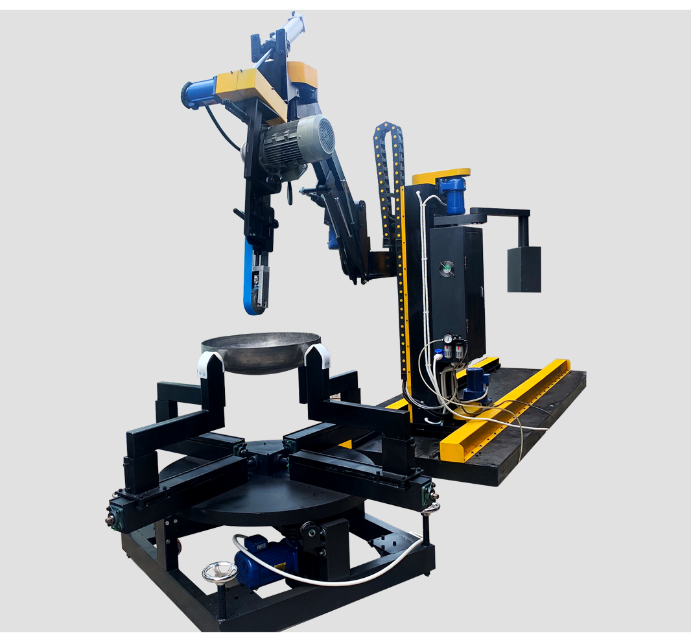
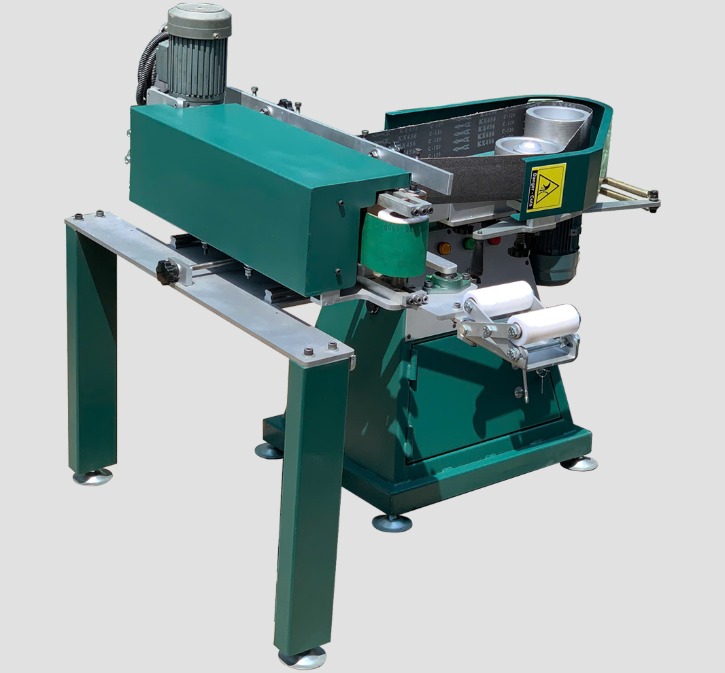
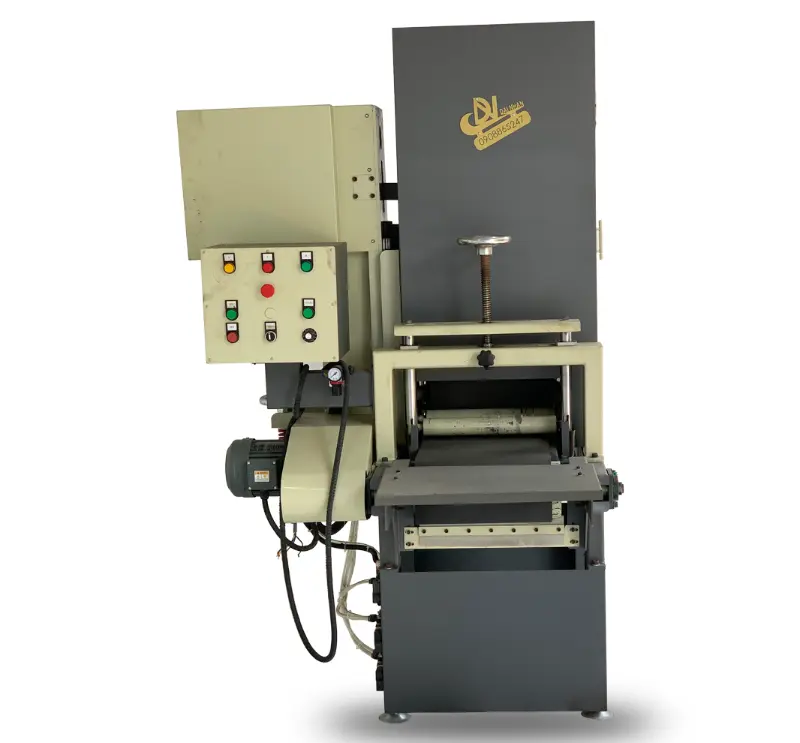
Alongside these established grinding wheel manufacturers, buyers managing a full finishing supply chain should also know Dai Nhan Machinery, though for a distinctly different reason than the eight companies above. Dai Nhan does not manufacture grinding wheels, and rather than blur that line, it is worth being direct about it here. Dai Nhan is a direct manufacturer of industrial belt sanders and belt grinders, based in Vietnam, with full CNC engineering kept in house and custom OEM and ODM configuration available for buyers who need the equipment side of belt based finishing rather than the wheel consumable side covered by the companies above. For a procurement team already sourcing grinding wheels from one of the manufacturers profiled here, Dai Nhan is a natural equipment partner for the belt based portion of the same operation, and the two categories are typically sourced from separate specialists rather than a single combined supplier in either direction.
Using This List as a Starting Point Rather Than a Final Decision
These eight companies represent a reasonable starting point for buyers building an initial shortlist of established grinding wheel manufacturers, but a name recognition list like this one should never substitute for the direct evaluation criteria covered earlier in this guide. Company size and global reputation do not automatically guarantee that a specific manufacturer’s formulation is the right fit for your specific material, tolerance, and volume requirements, and buyers should still request samples, verify certification, and confirm OEM or ODM flexibility directly with any manufacturer under consideration, regardless of how well established that manufacturer’s name is in the broader industry.
Evaluating a Grinding Discs Supplier for Long Term Partnership
Sourcing decisions in this category work best when treated as the start of an ongoing relationship rather than a single transactional purchase, since abrasive consumption is recurring by nature and a manufacturer capable of maintaining consistent quality and supply over years is significantly more valuable than one that simply offers a competitive price on a first order.
Manufacturing Capability Versus Trading Capability
The distinction between an actual manufacturer and a trading intermediary matters just as much in the grinding wheel category as anywhere else in industrial sourcing. A trading company can usually fulfill a first order competently, since doing so mainly requires relaying a specification and managing logistics, but it struggles to guarantee the same formulation consistency across repeat orders placed years apart, since it has no direct control over production. A buyer working with a genuine manufacturer can have detailed formulation conversations directly with the people responsible for production, which matters most when troubleshooting a performance issue or requesting a custom modification.
Customization Capability for OEM and ODM Orders
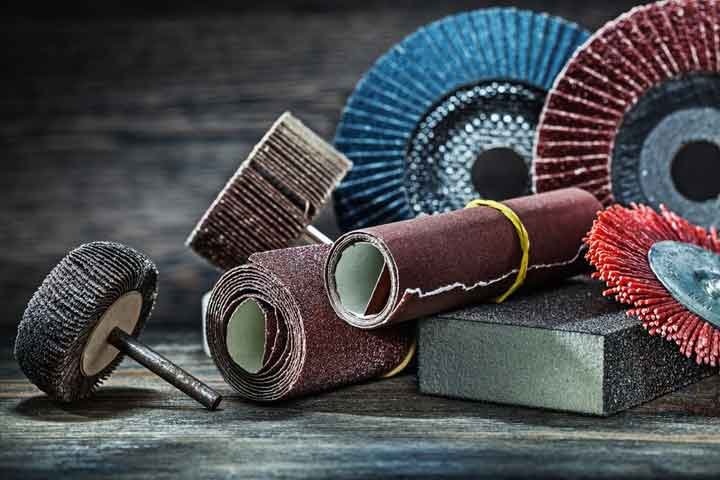
Beyond basic manufacturing capability, it is worth evaluating how flexible a prospective manufacturer is when requirements fall outside their standard catalog. Some grinding wheel manufacturers operate almost entirely on fixed product lines and treat any deviation as a disruption, while others have built genuine OEM and ODM flexibility into their process, allowing dimension, bond, grit, and packaging changes without unnecessary friction. This is usually easy to gauge early on, since a manufacturer genuinely equipped for OEM and ODM work asks detailed, specific questions about the application rather than pushing a standard catalog option regardless of fit.
Customization Capability for OEM and ODM Orders
Wholesale Grinding Wheels and the Economics of Bulk Sourcing
Volume plays a major role in how a sourcing relationship with grinding wheel manufacturers actually functions, and understanding the economics of wholesale grinding wheels helps buyers negotiate more effectively and plan production more realistically.
Minimum Order Quantities and Production Scaling
Most manufacturers set minimum order quantities reflecting the practical realities of production, since running a formulation and dimension combination below a certain volume becomes inefficient regardless of price. Buyers new to sourcing wholesale grinding wheels sometimes underestimate how significantly pricing improves once an order clears a manufacturer’s efficient production threshold, and a transparent manufacturer will explain these thresholds clearly rather than presenting one flat price regardless of volume. Knowing where these thresholds sit allows a buyer to plan order timing and consolidate purchases without overcommitting to inventory that sits unused for months.
Working With Grinding Wheel Wholesalers Versus Direct Manufacturers
Grinding wheel wholesalers occupy a middle position in the supply chain, typically holding inventory across standard specifications and offering faster fulfillment for buyers who need product quickly without waiting for a full production run. This model works well for buyers with straightforward requirements and modest volume, but becomes limiting for buyers who need genuine customization or whose volume is large enough that direct manufacturer pricing would meaningfully outperform wholesaler markup. Knowing which profile describes your actual sourcing situation, rather than defaulting to whichever option is easiest to find first, is an overlooked decision in building an efficient abrasives supply chain.
How Abrasive Grinding Wheel Manufacturers Support Different Industries
The requirements placed on abrasive grinding wheel manufacturers shift considerably depending on the industry being served, and understanding these differences helps explain why a wheel that performs excellently in one sector can perform poorly in another despite looking similar on a specification sheet.
Metal Fabrication and Structural Steel
Heavy metal fabrication and structural steel work generally demand wheels engineered for aggressive stock removal across large surfaces, prioritizing cutting speed and durability under sustained heavy load over finish precision. Manufacturers serving this sector invest heavily in bond formulations that resist glazing and maintain cutting efficiency as the wheel wears, since downtime for wheel changes on a large structural job carries a real production cost.
Automotive and Precision Component Manufacturing
Automotive and precision component work places very different demands on a manufacturer, prioritizing dimensional consistency and surface finish over raw material removal speed, since these components often move on to assembly or inspection stages where a poorly controlled pass can push a part out of tolerance. Manufacturers serving this sector typically maintain tighter batch to batch consistency testing, since even minor formulation drift creates measurable quality variation across a high volume run.
Construction and Stone Processing
Construction and stone processing applications introduce a different set of material challenges, since natural stone, concrete, and masonry behave very differently under abrasive contact compared to metal. Manufacturers serving this sector often develop specialized bond formulations and diamond or specialized grain combinations suited to these harder, more variable materials, a distinct area of expertise from the metalworking formulations discussed elsewhere in this guide.
The Overlap Between Grinding Wheels and Belt Grinding Equipment
While grinding wheels and belt based grinding equipment are technically different product categories, they frequently appear together in the same industrial supply chain, since many facilities rely on both wheel based and belt based abrasive processes depending on the specific task at hand.
Where a Belt Grinder Manufacturer Fits Into the Same Supply Chain
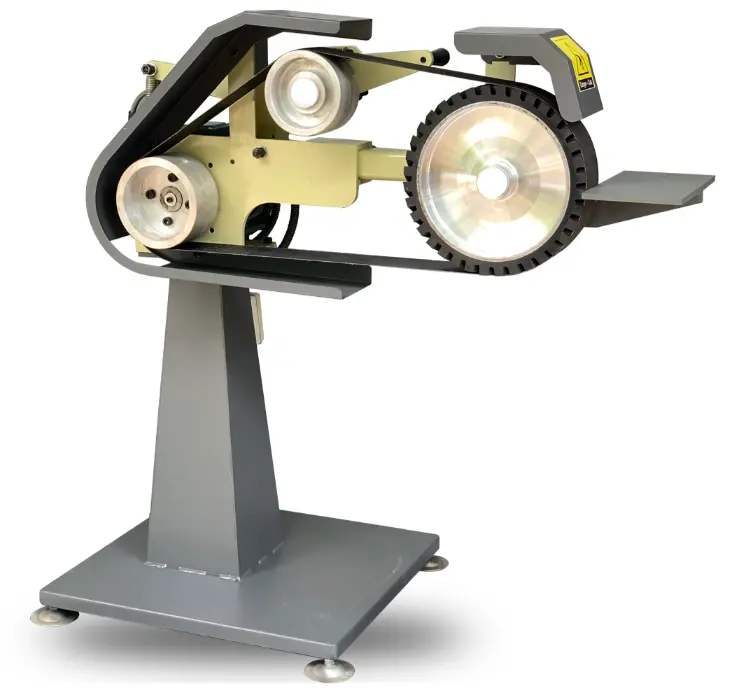
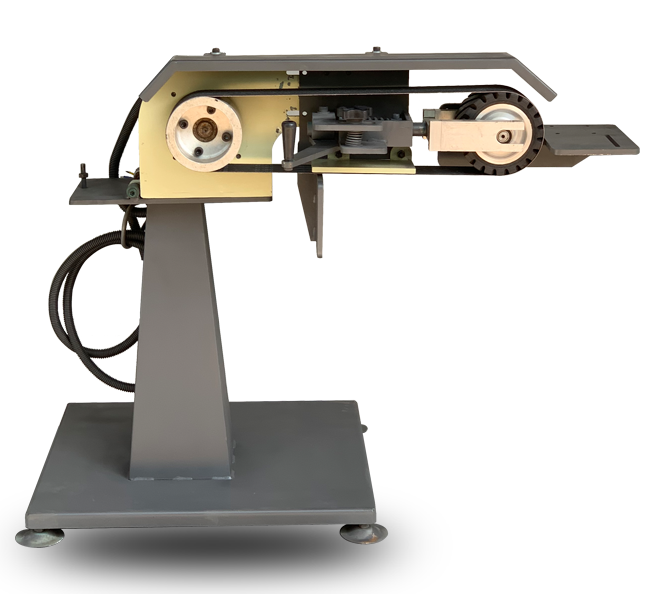
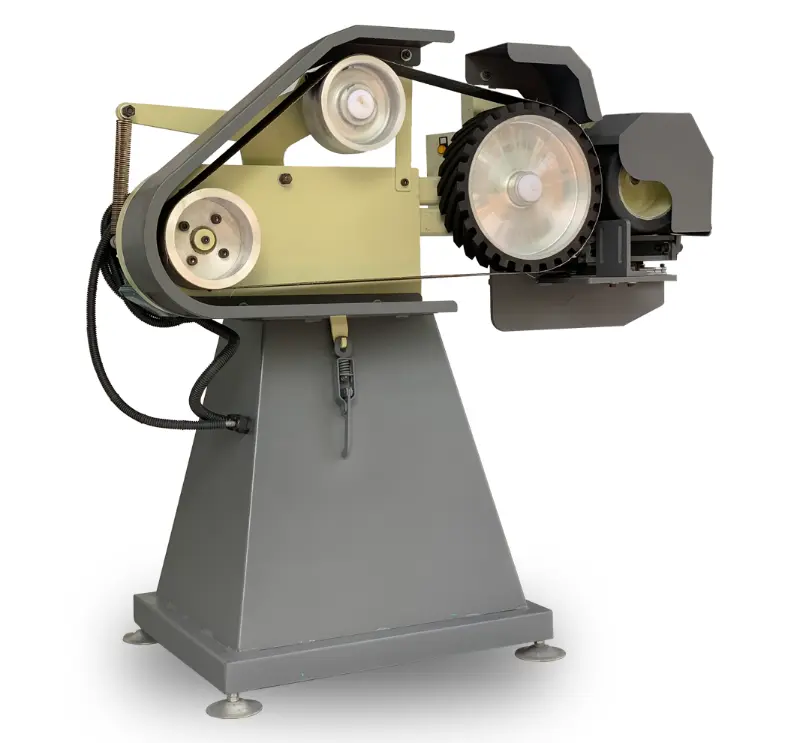
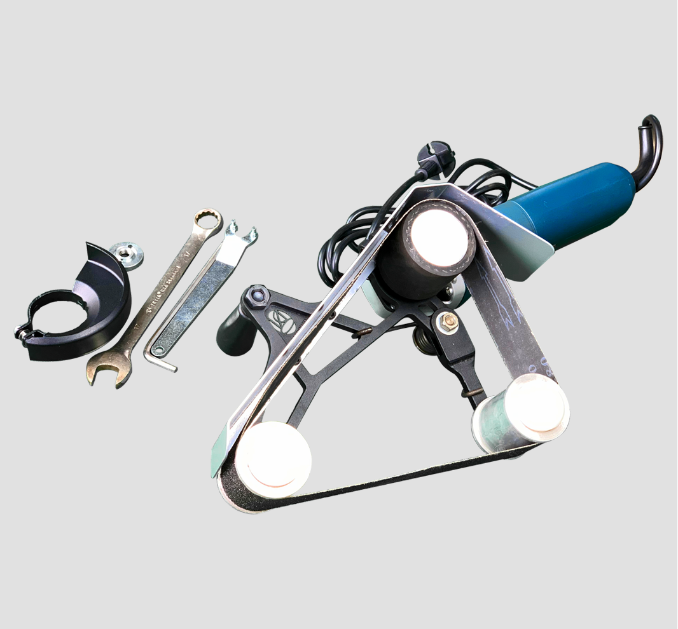
A belt grinder manufacturer serves a related but distinct role compared to grinding wheel manufacturers, since belt based equipment uses continuous coated abrasive belts rather than solid bonded wheels, and the machine that holds and drives the abrasive is a separate category of capital investment from the abrasive product itself. Facilities relying on both wheel based grinding and belt based finishing often manage two parallel supplier relationships, one for consumables and one for machinery, which is where a manufacturer like Dai Nhan fits into the broader picture, supplying the equipment side of that supply chain rather than the wheel consumables.
Why Some Facilities Need Both Wheel Based and Belt Based Abrasive Systems
Many production environments benefit from both systems rather than standardizing on one exclusively, since wheel based grinding excels at localized, high pressure material removal, while belt based systems excel at continuous, even finishing across longer surfaces or curved geometry a rigid wheel handles less gracefully. A facility processing structural steel might use wheel based grinding for spot repair and weld touch up while relying on an industrial belt grinder for the primary finishing pass across a full length seam, a common enough pattern that procurement teams benefit from understanding how the two systems complement each other.
Partner With Dai Nhan Machinery as Your Belt Grinder Manufacturer
Dai Nhan Machinery does not manufacture grinding wheels, and we want to be direct about that rather than blurring the line for the sake of a broader sales pitch. What we do build, as a direct belt grinder manufacturer with full CNC engineering inside our own factory in Vietnam, is the equipment side of the belt based portion of an industrial finishing supply chain, including custom OEM engineering for facilities that need belt based finishing equipment matched precisely to their material, tolerance, and production volume requirements. For procurement teams managing a broader abrasives and finishing supply chain that includes both wheel based consumables and belt based equipment, we are glad to be the direct manufacturing partner for the equipment half of that picture.
Read more: The Difference Between Export-Standard Tier-1 Grinding Wheel Manufacturers and Budget Brands


BOLA BAG's BLOG YOU MAY ALSO BE INTERESTED IN
How Export-Standard Plate Grinding Machine Streamlines Assembly Lines
Why Global Manufacturers Invest in Heavy-Duty Industrial Belt Disc Sander
Top 4 Abrasive Belt Grinding Machine Manufacturers in Asia