


In the highly competitive and rapidly expanding industrial machinery market, scaling your product portfolio through white-labeling is a proven strategy for sustainable growth. For industrial distributors, tool brands, and equipment retailers, white-labeling allows you to offer premium, high-quality equipment under your own brand name without the massive capital expenditure required for research, development, and establishing ground-up manufacturing facilities.
However, the success of your white-label product line hinges entirely on one critical decision: choosing the right original equipment manufacturer (OEM). If you are looking to add heavy-duty surface finishing equipment to your catalog, partnering with the right belt sander supplier is the most important supply chain decision you will make. Your brand’s reputation will be directly tied to the reliability, precision, and durability of the machines they produce.
The Strategic Advantage of White-Labeling
Before diving into technical specifications, it is important to understand why sourcing from an established OEM is so advantageous. Building an industrial-grade machine from scratch requires years of prototype iteration, tooling costs, and rigorous compliance testing. By the time a product reaches the market, trends or competitor offerings may have already shifted.
Partnering with an established belt sander machine manufacturer bypasses this friction. It allows your company to focus on what you do best—marketing, sales, and distribution—while leveraging the OEM’s existing engineering infrastructure. You gain immediate access to tested, proven designs that can be introduced to your sales channels in a matter of months, rather than years. But to capture this advantage, the manufacturer you choose must be capable of delivering a product that truly aligns with your brand’s quality standards.
Advanced Manufacturing Capabilities and True Customization
A true OEM partner should be much more than a simple assembly plant churning out generic equipment. They must possess robust, in-house engineering capabilities. When white-labeling, you rarely want a carbon copy of a generic machine that five other competing brands are already selling.
Look for a supplier that offers custom belt grinder and sander options. A high-tier manufacturer will sit down with your team and allow you to alter specific mechanical and aesthetic elements. This includes:
-
Drive Systems: Integrating Variable Frequency Drives (VFDs) so your end-users can precisely control belt speeds for different metal alloys.
-
Electrical Configurations: Adapting motors to single-phase or three-phase power, depending on your target market’s standard infrastructure.
-
Aesthetics and Branding: Custom paint colors, premium powder coating, and permanent logo integration (such as cast badges or laser-etched plates) that make the machine undeniably yours.
A Diverse and Specialized Product Portfolio
Industrial clients have incredibly diverse operational needs. A fabricator working on heavy structural I-beams requires a completely different finishing solution than a workshop specializing in medical-grade titanium implants. Your supplier should offer a broad range of machinery to help you scale your product line over time without needing to source from multiple factories.
A strong OEM portfolio should include:
-
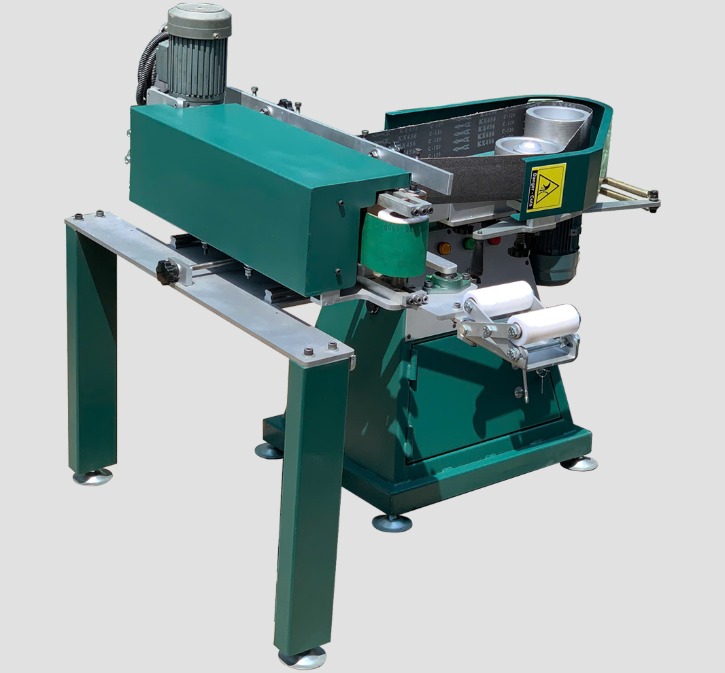
Industrial belt sander for metal: Built for high-torque, heavy stock removal, and rapid weld blending.
-
Industrial belt and disc sander: Combination units that offer multi-functional capabilities for shops that need both linear grinding and flat chamfering.
-
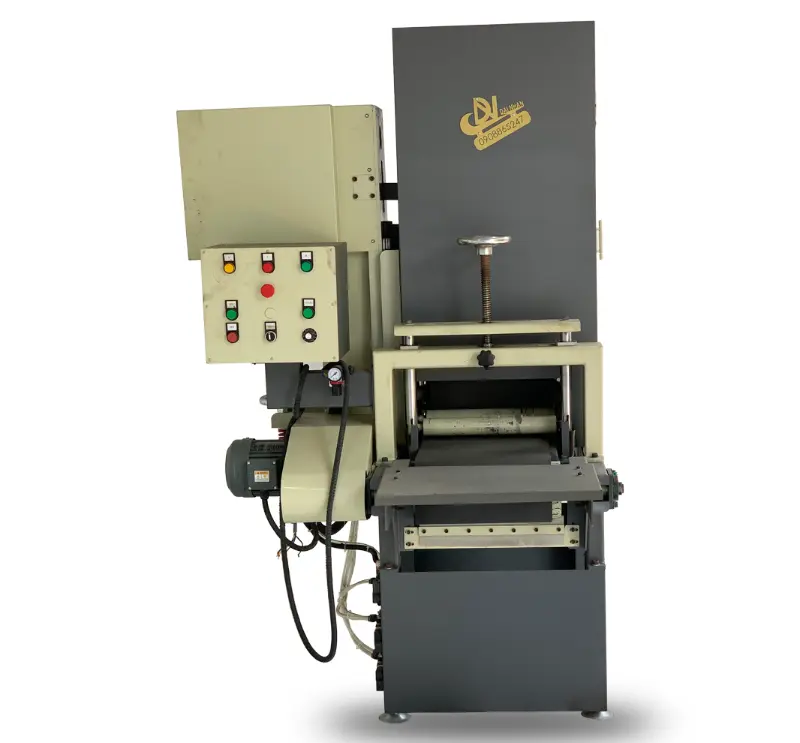
Wide belt sander for metal finishing: Large-scale, enclosed machines designed to handle wide sheet metal, remove laser-cutting slag, and apply a uniform linear grain finish.
-
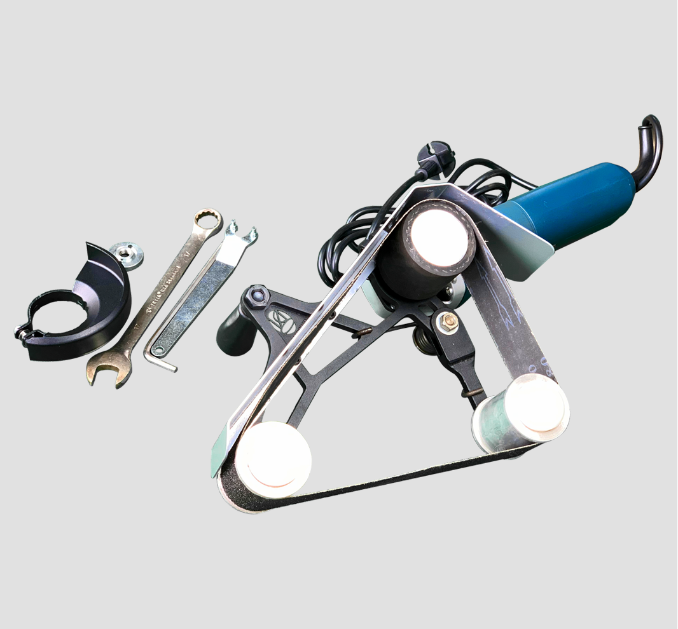
Industrial bench sander: Compact, highly durable units engineered for smaller workshops, tight spaces, or dedicated deburring stations.
A supplier with a diverse catalog proves they understand the full spectrum of material processing and can support your brand as you expand into new, specialized market segments.
Expertise in Metalworking and Material Dynamics
Finishing metal is a violently different process than sanding wood. Metal fabrication requires immense rigidity, high-torque motors, and advanced dust or spark extraction systems to mitigate fire hazards.
Your ideal OEM partner must possess deep, specialized technical expertise in creating a belt sander for metal fabrication. The machines must be engineered to withstand the intense friction, heat, and structural stress generated during heavy grinding.

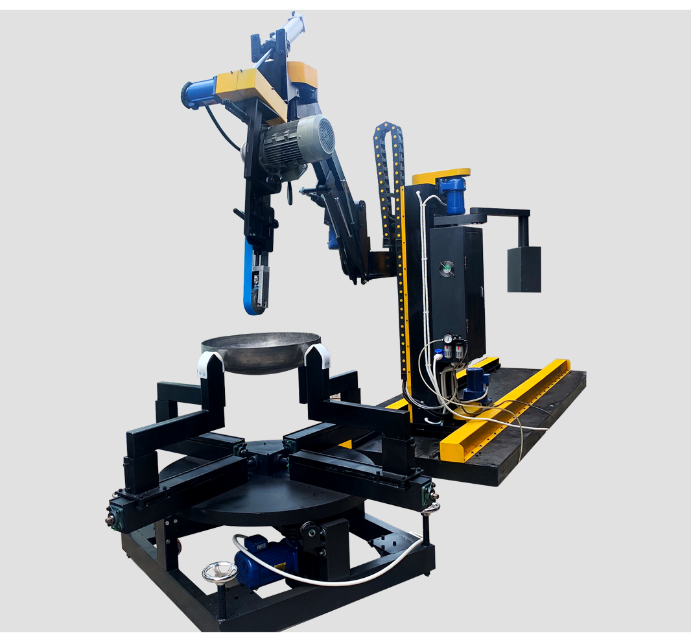
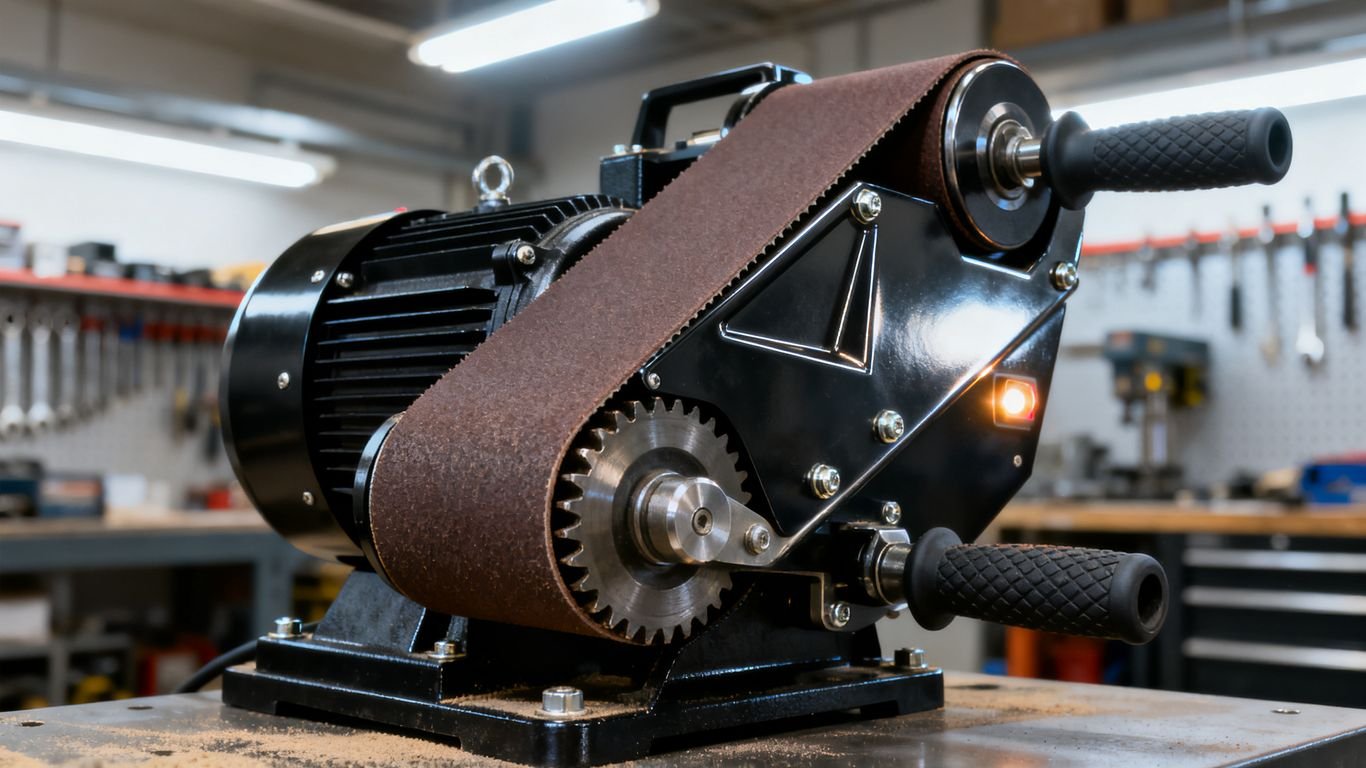
Belt Grinder
Rigid Build Quality and Heavy-Duty Components
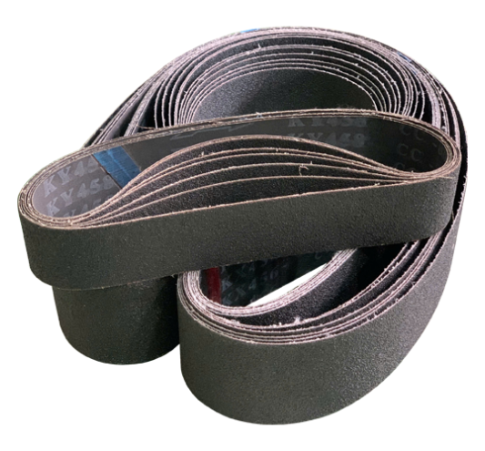
In industrial environments, machinery is treated as a long-term capital investment expected to last for a decade or more under grueling multi-shift conditions. Weak frames lead to micro-vibrations. Vibration is the enemy of metalworking—it ruins the precision of the finish, causes operator fatigue, and wears out expensive abrasive belts prematurely.
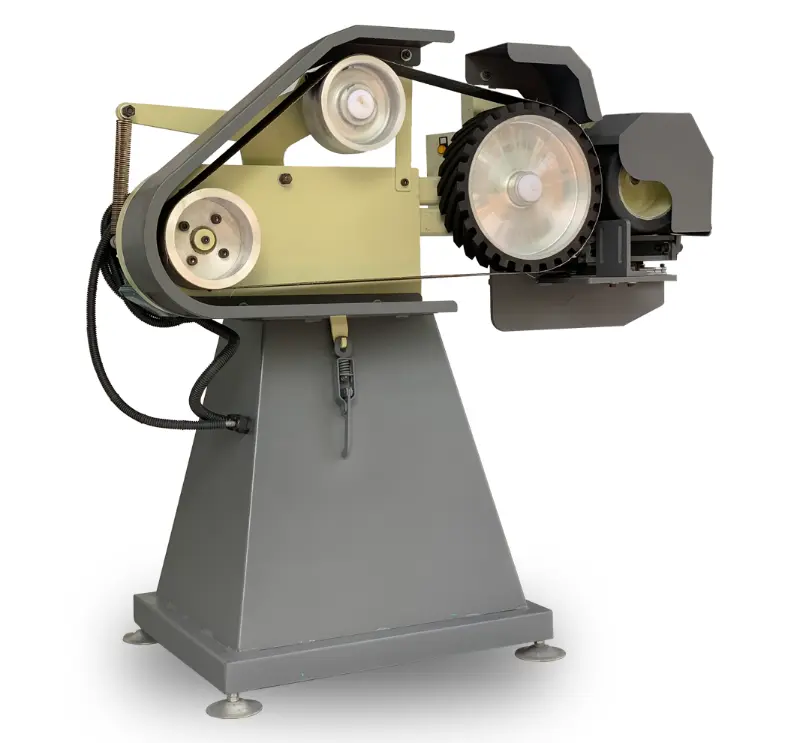
When evaluating a steel belt grinder or an industrial belt grinder for metal, look closely at the structural materials. High-quality machinery utilizes heavy cast iron bases or thick, welded structural steel frames to dampen vibration.
Furthermore, audit the internal components they use:
-
Are the drive and tracking wheels made of solid billet aluminum or steel, rather than cheap die-cast metals?
-
Are the bearings fully sealed against fine, highly abrasive metal dust?
-
Are the motors TEFC (Totally Enclosed, Fan-Cooled) and rated for continuous industrial duty cycles?
A premium industrial belt sander machine must be over-engineered to run shift after shift without breaking down.
Versatility in Machine Configurations
As you build your brand, you will encounter clients with specific spatial constraints and unique workflow preferences. A great supplier will offer diverse form factors to solve these floor-space puzzles.
-
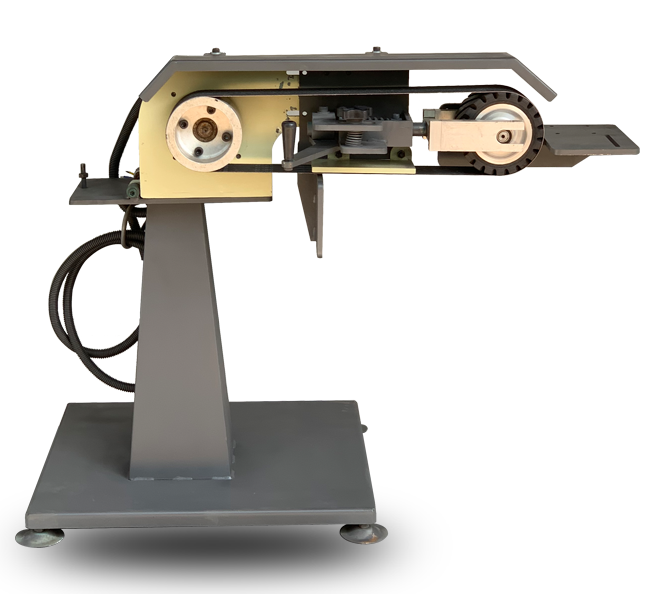
Vertical belt grinding machine: Many operators prefer a vertical belt grinder because it allows them to work at eye level for precision tasks while taking up a fraction of the floor space required by a horizontal setup.
-
Adjustable Articulation: The best machines feature articulating frames that can tilt from a horizontal flat-grinding position to a vertical position, allowing a single machine to adapt to various tasks.
-
Multi-Station Capability: Some setups, like a belt disc sander for metal work, allow two operators to utilize the machine simultaneously, vastly improving workshop throughput.
By securing a supplier that masters both horizontal configurations and classic vertical setups, you position your brand as a comprehensive, solutions-oriented provider.
Quality Control, Testing Protocols, and Supply Chain
Your brand’s reputation relies heavily on batch consistency. It doesn’t matter if the first prototype is flawless if the 100th unit off the assembly line has a misaligned drive shaft.
When vetting a belt sander supplier, ask about their standard operating procedures for Quality Assurance (QA). Do they run dynamic balancing tests on all drive wheels? Do they perform motor load tests and heat-dissipation checks before crating the machines?
Additionally, evaluate their supply chain resilience. An OEM with a disorganized supply chain will hit you with sudden lead-time delays, leaving you out of stock and forcing your customers to buy from your competitors. A reliable metalworking belt grinder manufacturer maintains stable raw material sourcing and predictable production timelines.
After-Sales Support, Documentation, and Spare Parts
A machine is only as good as its uptime. Even the most robust industrial belt grinder will eventually require maintenance. Drive wheels wear down, tracking mechanisms require tuning, and switches need replacing.
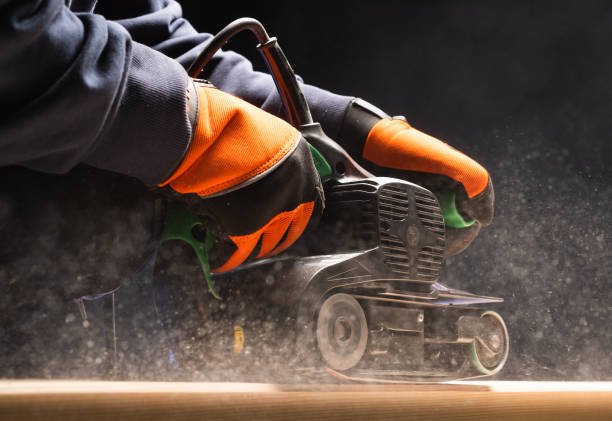
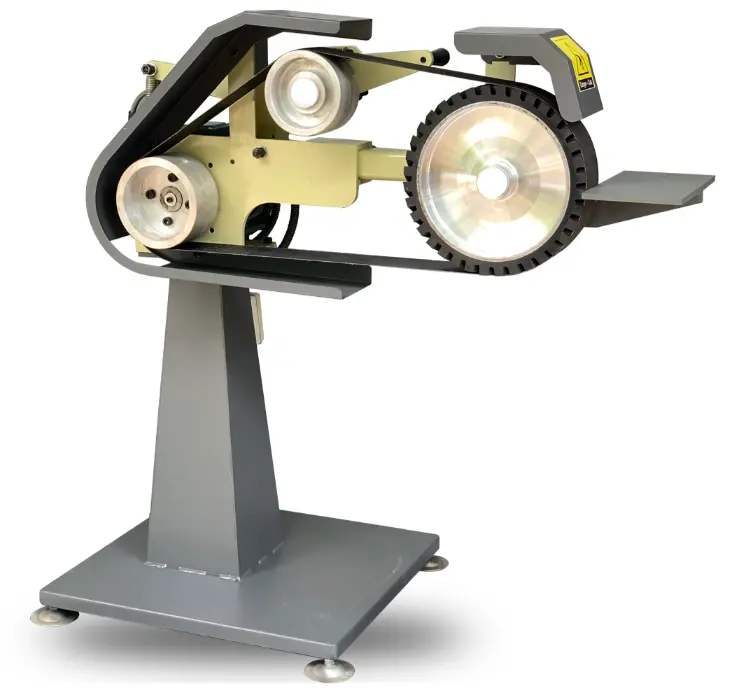
Belt Sander
A world-class OEM partner doesn’t just ship crates and disappear; they provide comprehensive after-sales support. This includes supplying you with highly detailed, branded technical manuals, exploded-view schematics for easy troubleshooting, and a guaranteed, fast-shipping pipeline for replacement parts. If your OEM goes dark when a customer needs a replacement platen or tracking wheel, it is your brand that will suffer the negative reviews.
Build Your Brand with OEM Manufacturer Dai Nhan Machinery
Expanding your product line with heavy-duty surface finishing machinery shouldn’t come with a mountain of research and development headaches. You need an established, deeply experienced partner who can transform your engineering requirements into market-ready, premium equipment.
At Dai Nhan Machinery, we serve as a dedicated, world-class belt sander supplier and OEM manufacturing partner for industrial brands across the globe. We do not build hobbyist tools; we build industrial-grade machinery designed specifically to thrive in high-intensity metal fabrication environments.
Take the next step in scaling your inventory. Contact the Dai Nhan Machinery OEM development team today to discuss your technical specifications, request an equipment consultation, or receive a customized manufacturing quote. Let our engineering excellence become your brand’s ultimate competitive edge.
Read more: How to Select the Right Industrial Belt Sander for Metal Fabrication


BOLA BAG's BLOG YOU MAY ALSO BE INTERESTED IN
What Are Belt Sanders Best For? The Five Jobs Where Nothing Else Comes Close
How Industrial Abrasive Grinding Wheel Manufacturers Optimize Grain Bonding for Hardened Steels
Maximizing Efficiency with an Industrial Belt Grinder for Large-Scale Projects