


Selecting the right industrial belt grinder for metal is a critical step in achieving consistent deburring, polishing, and surface finishing results. Whether you’re fabricating stainless steel components, finishing aluminum parts, or processing carbon steel for industrial applications, the right machine can significantly improve productivity, surface quality, and operating efficiency. However, with a wide range of belt grinder types, abrasive belt configurations, and automation options available, choosing the best solution can be challenging.
This guide explains the key factors to consider when selecting an industrial belt grinder for metal, from material compatibility and grinding performance to production capacity and automation features. By understanding your finishing requirements and comparing the available machine options, you can invest in equipment that delivers reliable performance, minimizes downtime, and supports long-term manufacturing efficiency.
Understanding Industrial Belt Grinders for Metal
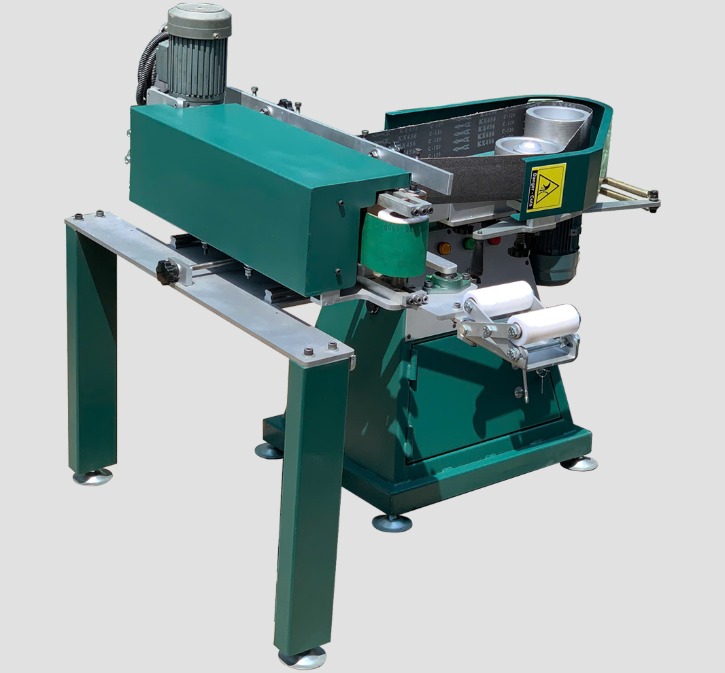
When you’re working with metal, especially in fabrication or manufacturing, having the right tools makes all the difference. Investing in a dedicated industrial belt grinder for metal is a big part of that. These machines aren’t your average power tools; they are built for serious industrial work, like cleaning up rough edges, smoothing out heavy welds, or getting a flawless polished finish on structural parts.
Distinguishing Grinders from Sanders
It’s easy to get belt grinders and belt sanders mixed up, but they serve completely different purposes. Standard belt sanders for metal work are usually lighter-duty machines, often used for light surface blending or contexts where you’re just trying to smooth things out without altering the metal’s shape.
True industrial grinders, on the other hand, are engineered for aggressive material removal. They feature significantly more powerful motors and are built to handle the intense heat and friction of grinding down hardened steel, shaping raw edges, or hogging off weld material. Think of a grinder as the heavy-duty workhorse of the shop floor.
Key Features of Industrial Belt Grinders
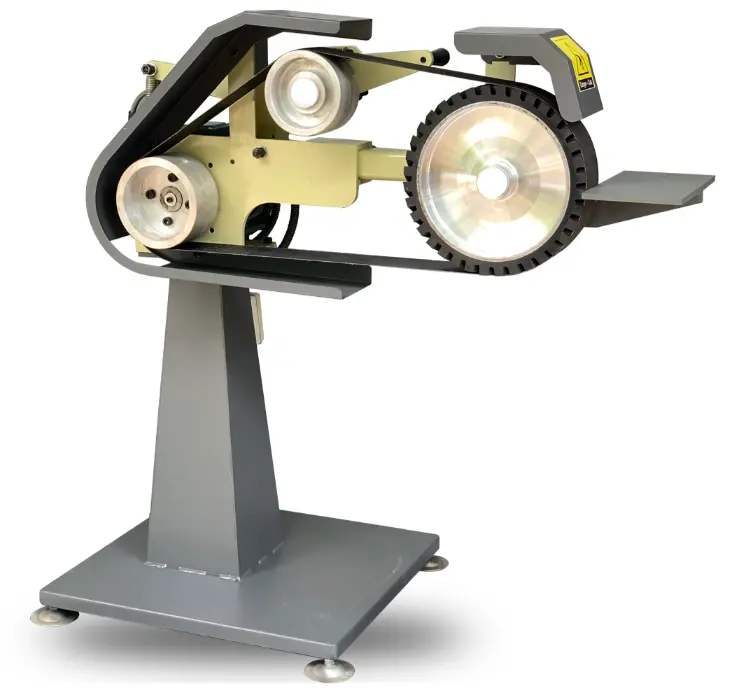
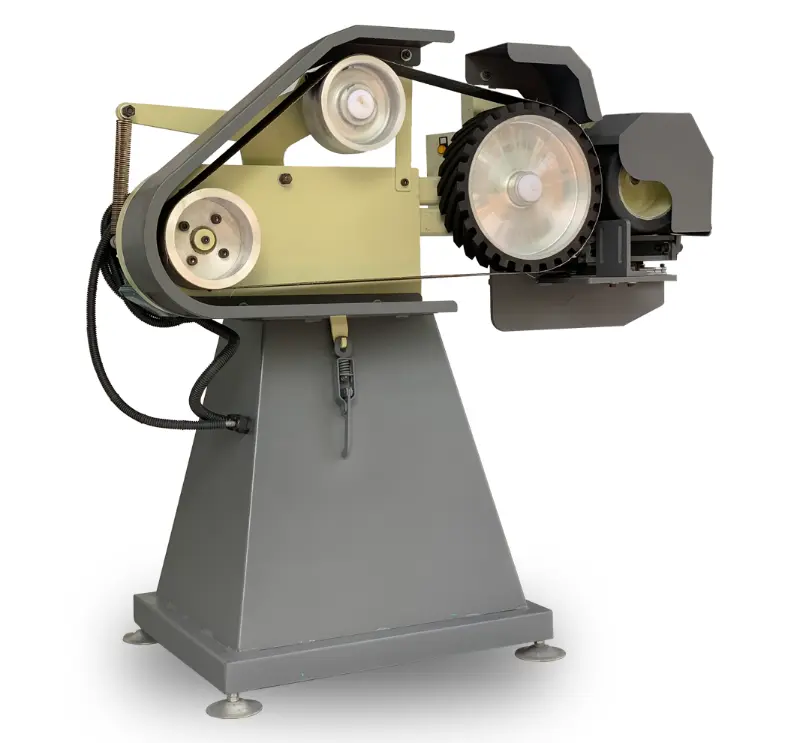
What makes a premium industrial belt grinder stand out? It heavily comes down to structural integrity. You’ll find robust construction—often with heavy steel frames—to keep the machine completely steady during high-pressure operation. The motors are high-torque to ensure they don’t bog down when you lean into a cut.
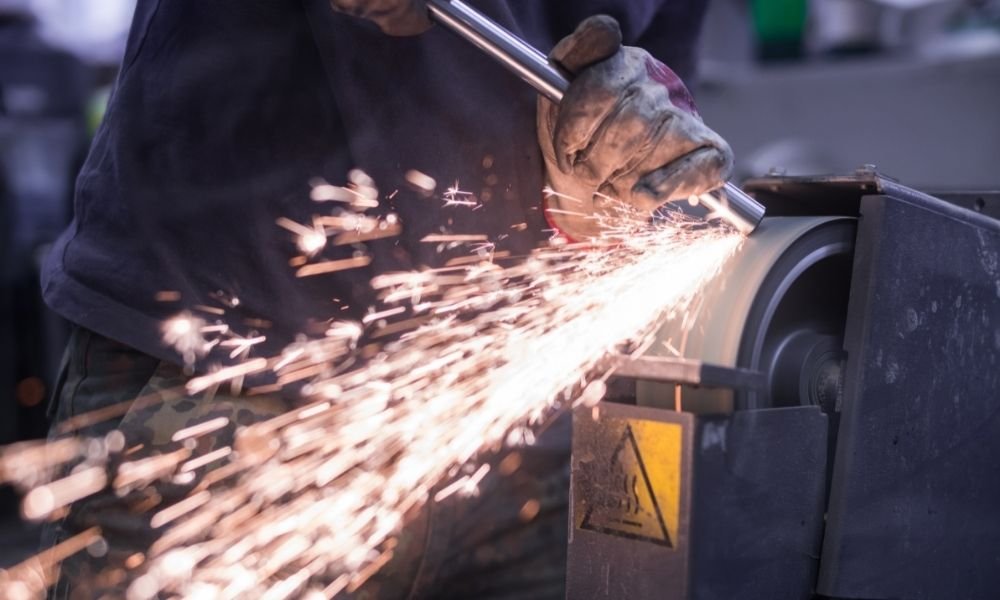
Key Features of Industrial Belt Grinders
Adjustability is also crucial. Being able to quickly change the angle of the work table or the grinder head lets you tackle a massive variety of parts without a fuss. As a specialized belt grinder manufacturer, we build our machines with this exact flexibility in mind, focusing on long-term durability for demanding industrial applications.
Power and Speed Considerations
When picking a unit, the motor’s horsepower (HP) and the surface feet per minute (SFPM) of the belt are your defining metrics. More horsepower means you can grind faster and handle tougher alloys without stalling the system.
Belt speed changes how quickly you strip material and affects your final surface finish. Some setups offer variable speed controls, which are fantastic if you switch between tasks—slower speeds prevent heat buildup during delicate polishing, while high speeds are perfect for rapid stock removal. Our custom belt grinder setups and finishing systems are engineered with these optimized power-to-speed ratios to match specific production goals.
Choosing the right machine means mapping it directly to your primary tasks. For heavy deburring or weld removal, you need raw grunt and a rigid frame. For fine polishing, you’ll want precise speed control and specialized contact wheels. It’s all about matching the machine’s capabilities to your shop’s daily output.
Applications of Industrial Belt Grinders in Metalworking
Industrial belt grinders are foundational to any serious metal shop, streamlining several stages of production to ensure parts meet strict quality standards.
Deburring and Edge Finishing
One of the most common uses for a high-performance grinder is removing sharp edges, flash, and burrs left behind by laser cutting, shearing, or stamping. This isn’t just about aesthetics; it’s a vital safety step and ensures components align perfectly during final assembly. For complex parts or high-volume batches, a reliable metalworking setup can cut processing times in half.
Weld Grinding and Seam Removal
When fabricating structural frames or joining plate metal, welds often need to be ground completely flush. Belt grinders excel here, allowing operators to rapidly flat-grind weld seams and eliminate splatter. This is especially important if the metal is heading to powder coating or requires a clean, seamless look. Our heavy-duty belt grinder for steel fabrication is built to handle this continuous, high-heat pressure while maintaining flat, consistent grinds.
Surface Preparation and Polishing
Beyond aggressive material removal, these machines are excellent for surface conditioning. This can range from cleaning up scaly, raw castings to achieving a brilliant mirror finish on sensitive alloys. By stepping through progressive abrasive grits, you can move seamlessly from rough shaping to fine texturing.
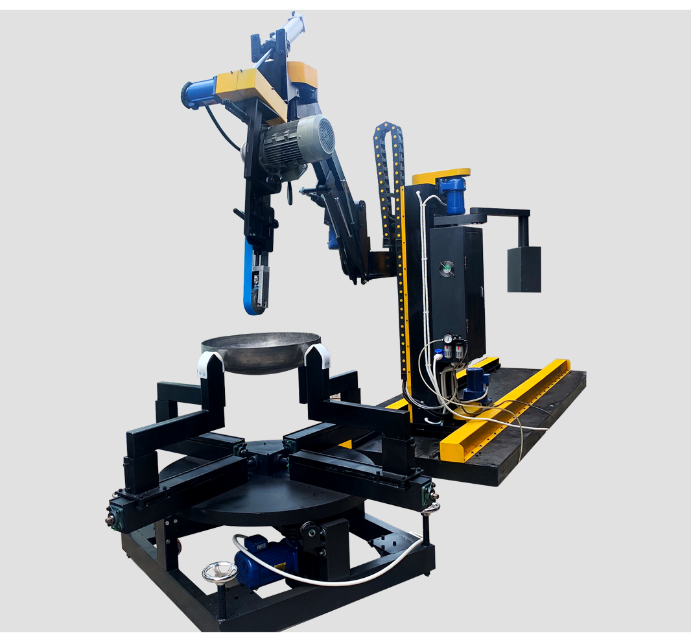
For highly specialized tasks like tube and pipe processing, deploying a dedicated round pipe polishing machine or a specialized stainless steel tube polishing machine ensures perfectly uniform finishes across curved geometries without flat spots.
The sheer versatility of a premium belt grinder means it easily adapts to every phase of production. Opting for equipment built for precision, like the machinery engineered by Dai Nhan Machinery, translates directly into a smoother workflow and superior product quality.
Selecting the Right Industrial Belt Grinder Model
When you’re sourcing a metalworking belt grinder for continuous commercial use, you can’t just rely on consumer-grade options. You need an industrial platform designed to run multiple shifts without losing accuracy.
Belt Size and Availability
The width and length of the abrasive belt dictate your contact area and how cool the belt runs. The industry favorite for versatile metalwork is the 2″ x 72″ belt platform. It’s an excellent standard because it’s universally available in almost every abrasive grain imaginable—from ceramic alumina for heavy stock removal to fine scotch-brite media for finishes.
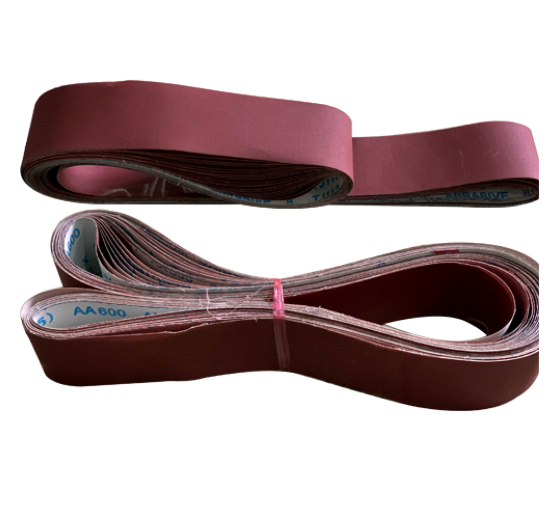
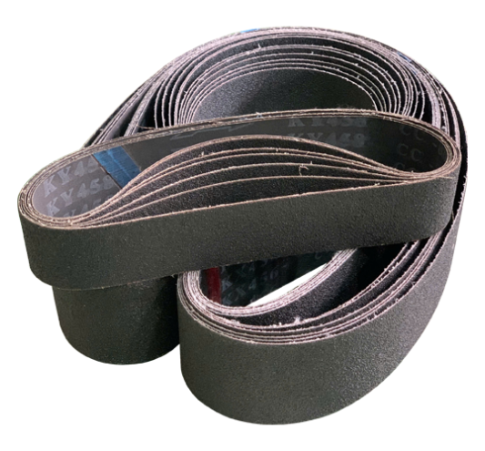
JB5/TJ113 Custom Made Sanding Belts – P600 Grit – Dai Nhan Machinery
For high-volume operations running a belt grinder for metal fabrication, standardizing your shop on widely available belt sizes prevents costly supply chain downtime. If you routinely work on massive surface areas or large plates, wider belt variations are worth considering, but the 2″ x 72″ remains an incredibly versatile baseline.
Motor Power and Drive System
This is where the real work happens. For true industrial environments, look for motors starting at a minimum of 1.5 to 2 HP. Many industrial platforms utilize direct-drive or heavy-duty V-belt configurations. V-belt drive systems are highly valued because they isolate the motor bearings from the direct dust and structural shocks of heavy grinding, while giving you the flexibility to easily adjust pulley ratios to fine-tune your torque profile.
Construction and Durability
In an industrial setting, mass is your friend. You want a heavy, rigid frame made from thick steel plate or cast iron. Heavy assemblies naturally dampen structural harmonics and eliminate vibration.
The Precision Factor: Less vibration doesn’t just save the operator’s hands from fatigue—it keeps the belt tracking perfectly true under heavy load, ensuring incredibly flat grinds and extending the life of your expensive ceramic abrasives.
| Feature | Specification |
|---|---|
| Frame Construction | Heavy-duty steel |
| Base Material | Cast iron or heavy-gauge steel |
| Grinder Head Mount | Secure, adjustable locking mechanism |
| Work Table Support | Sturdy, adjustable support |
When looking over a machine, check the build quality carefully. Look for clean, deep welds, precise tracking mechanisms, and robust hardware that won’t strip out after a few belt changes. A rigid chassis ensures the wheels stay perfectly parallel even when an operator applies maximum leverage.
Essential Features for Metal Grinding and Polishing
The difference between a frustrating tool and a highly productive machine lies in the details of its adjustment and tracking features.
Adjustable Grinder Head and Work Table
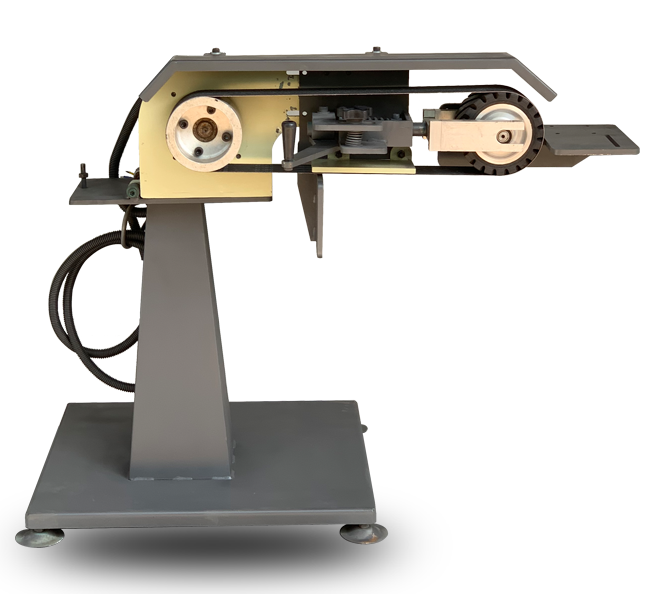
Workpieces come in all shapes and sizes, so your grinder needs to adapt instantly. Look for systems that feature a multi-position or tilting tracking head.
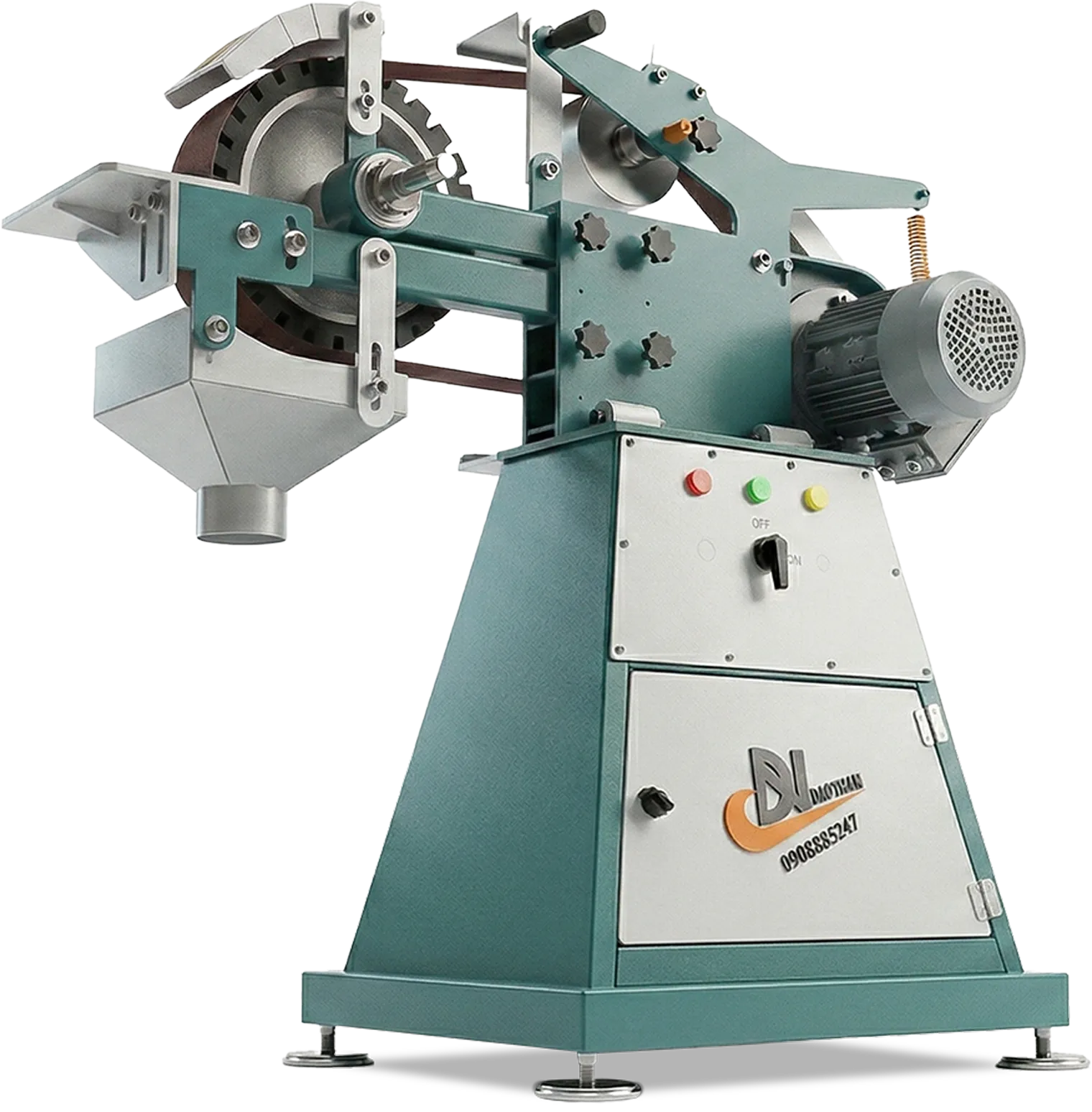
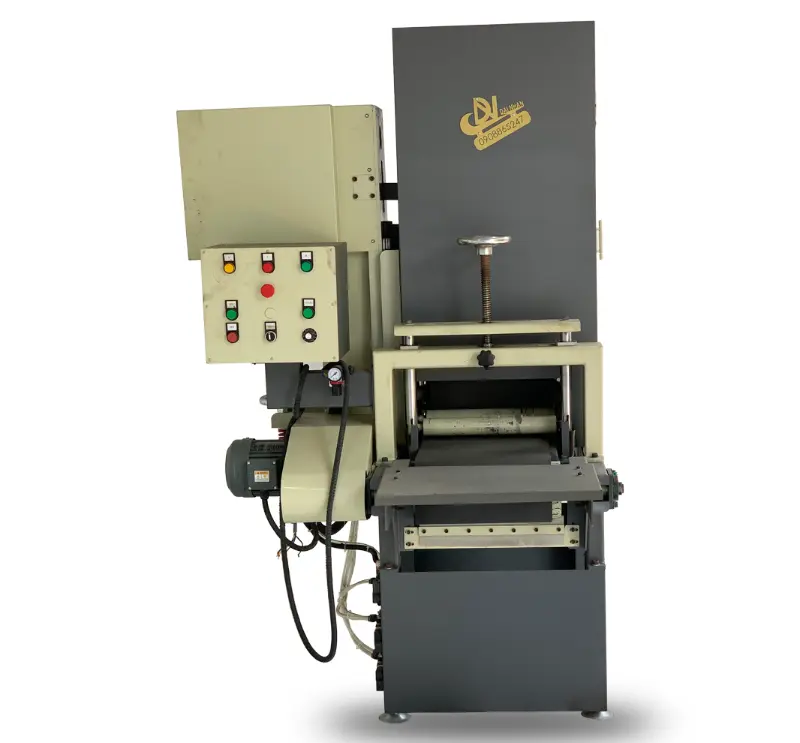
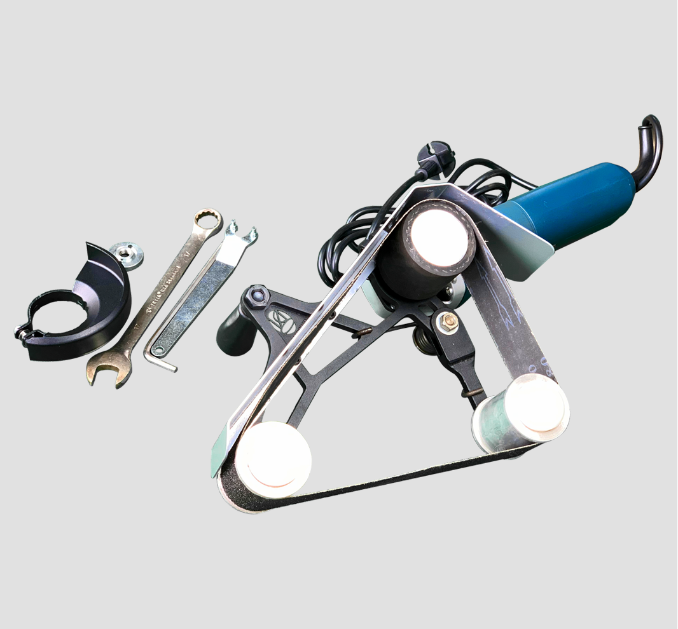
Multi-Purpose 3-Wheel Cylindrical Sanding Belt Grinder Manufacturer – Dai Nhan Machinery
Whether your workflow calls for a horizontal flat platen setup or a vertical belt grinder orientation for comfortable contour work, quick-adjust mechanisms allow you to switch modes in seconds using basic shop tools. The work table should similarly tilt precisely from 90 to 45 degrees to support accurate beveling and chamfering.
Contact Wheel and Platen Design
Your choice of backing material completely alters how the abrasive belt cuts:
-
Serrated Rubber Contact Wheels (e.g., 8″ or 10″): These provide high unit pressure, making them fantastic for aggressive deburring and rapid stock removal.
-
Flat Steel Platens: Essential for generating crisp, perfectly flat edges and square geometries.
-
Slack-Belt Tracking (Platen Removed): Allows the belt to wrap naturally around curved surfaces, making it the ideal choice for blending contours and smooth polishing.
Belt Tracking and Tensioning Systems
A drifting belt ruins workpieces and destroys tracking wheels. Look for single-knob, micro-adjust tracking systems that allow you to true the belt while it’s running. Furthermore, quick-release tensioning levers—often backed by gas struts or heavy compression springs—ensure optimum belt tension automatically and make belt changes a five-second task rather than a maintenance chore.
Evaluating Durability and Long-Term Value
When auditing your equipment budget, look past the initial purchase price and calculate the total cost of ownership over its operational lifespan. Choosing platforms built with precision CNC engineering minimizes long-term maintenance costs and maximizes uptime.
Material Construction and Build Quality
To ensure long-term value, evaluate the primary components of your machinery against heavy industrial requirements:
-
Chassis: Standard machinery often uses stamped sheet metal which deforms under stress. Demand heavy plate steel or solid cast iron to ensure structural rigidity.
-
Bearings: Avoid light-duty sealed bearings. Look for double-shielded, heavy-duty industrial bearings designed to withstand constant grinding forces and fine particulate intrusion.
-
Tracking Mechanisms: Plastic or light alloy knobs wear out quickly. Choose solid steel or hard-anodized aluminum tracking components that handle frequent adjustments without stripping.
-
Adjustment Systems: Skip loose pins and crude brackets. Look for precision-machined slides and toolless clamping levers that maintain strict tolerances over thousands of cycles.
Maintenance Requirements and Consumables
A machine that is difficult to service eventually gets neglected. Ensure that grease points, tracking adjustments, and wear items are completely accessible. For example, high-end finishing machinery is designed with open access to wear components so operators can sweep out metal dust and swap contact wheels without tearing down the entire chassis.
Manufacturer Reputation and Support
Partnering with established abrasive belt grinding machine manufacturers ensures you have access to technical support, factory wear parts, and custom tooling options as your production demands change. If your facility expands into high-speed automation or requires a dedicated pipe polishing machine line, working with a manufacturer that understands industrial scaling gives you a distinct competitive advantage.
Safety and Operational Considerations
Because industrial grinding throws off high-velocity metal sparks and fine dust, operator safety features must be fully integrated into the machine design.
-
Spark Containment: Adjustable spark guards and heavy steel shrouds redirect debris away from the operator.
-
Dust Extraction Integration: Look for integrated exhaust ports that bolt directly to your shop’s central dust collector or heavy-duty spark traps to safely capture fine metal particulates.
-
Ergonomics: Smooth tracking and vibration-isolated bases dramatically reduce operator fatigue during long shifts, keeping your team sharp and reducing workplace incidents.
Upgrade Your OEM Production Line with Dai Nhan Machinery
Achieving flawless surface finishes and efficient material removal requires machinery engineered for the toughest industrial environments. Dai Nhan Machinery specializes in manufacturing high-performance, zero-vibration metalworking equipment designed to maximize your shop’s productivity and precision.
Whether you need a versatile industrial belt grinder, a rugged vertical grinding station, or a custom-engineered tube and pipe polishing system, our team delivers robust solutions tailored to your exact manufacturing requirements.
Ready to transform your metal finishing workflow? Explore our full catalog of heavy-duty equipment and custom configurations today at Dai Nhan Machinery.
Conclusion
Picking the right industrial belt grinder for metal really boils down to knowing what you need it for. Think about the size of the jobs you do, how much power you need, and how tough the machine needs to be. Features like an adjustable head and a good work table make a big difference in how easy and effective your work is. Don’t forget about safety and how you’ll collect dust. Investing in a well-built grinder from a reputable maker, even if it costs a bit more upfront, usually pays off in the long run with fewer headaches and better results. It’s all about finding that sweet spot between performance, durability, and your budget to keep your metal finishing jobs running smoothly.
Read more: Top 4 Abrasive Belt Grinding Machine Manufacturers in Asia


BOLA BAG's BLOG YOU MAY ALSO BE INTERESTED IN
How to Evaluate a Grinding Discs Supplier for Long Term Industrial Production Consistency
How to Evaluate an Industrial Belt Sander for Sale for OEM/ODM Scale and Procurement
The B2B Blueprint for Ordering OEM ODM Custom Made Sanding Belts