


Glue three oak boards into a tabletop and the joints never line up perfectly. There is always a ridge somewhere, often less than a millimetre high, and a belt sander can flatten it in two minutes or dig a trench beside it in two seconds. The tool is the same in both cases; the technique is not. Most advice on how to sand with a belt sander treats every job the same way, but a wide panel, a narrow edge, a painted door and a curved part each need their own approach. This guide starts with three habits that apply to everything, then walks through five common jobs one at a time.
Three Habits That Apply to Every Job
Every job further down builds on the same three habits, whatever the wood or the belt. They are also the core of how to use a belt sander step by step, and skipping any one of them shows up in the finish.
Keep the Sander Moving the Whole Time
A belt sander removes wood so quickly that holding it still for a second leaves a dip you will see under any finish. Start the machine before it touches the surface, lower it flat while it is already moving, and lift it off before you switch it off.
Let the Weight of the Sander Do the Cutting
Pushing down slows the belt, makes heat, burns the wood and clogs the grit. Your hands should guide the sander, not press it. If a job feels slow, a coarser belt is the answer, not more force.
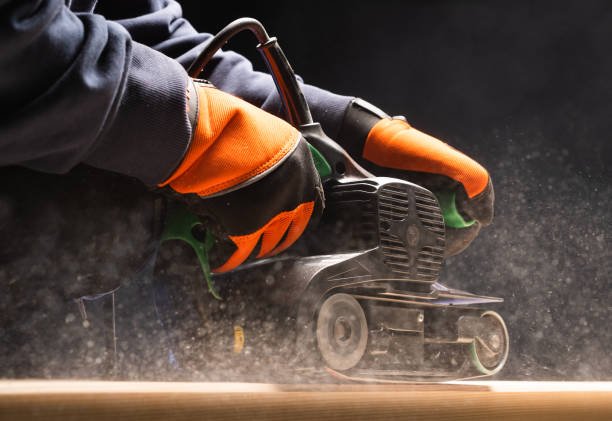
Belt Sander
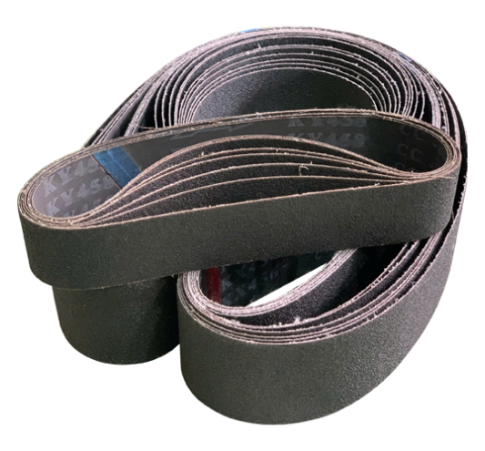
A 40 or 60 grit belt is for heavy flattening and stripping, 80 or 100 removes the deep scratches the coarse belt left, and 120 is usually the last belt before a finishing sander takes over. Skipping from 40 straight to 120 saves no time, because the fine belt spends ages chasing scratches it was never meant to remove.
Finish Along the Direction of the Wood Grain
Whatever angle the first passes take, the last ones should follow the wood grain. Scratches that run along the fibres hide well, while scratches across them show up clearly once stain goes on.
How to Sand With a Belt Sander on Five Common Jobs
Flattening a Glued Up Tabletop or Wide Panel
Draw loose pencil squiggles across the whole surface. Start with a coarse belt and sand at about 45 degrees to the grain, overlapping each pass by half the belt width. Then sand at 45 degrees from the other direction. When the pencil is gone everywhere at the same time, the surface is flat. Draw fresh lines, switch to a finer belt and sand along the grain only, until those lines disappear too.
Sanding a Narrow Edge
A belt sander balanced on a 20 mm edge tips from side to side and rounds the corners. The fix is to make the edge wider. Clamp the board between two scrap boards with all three top edges level, or clamp two matching parts face to face, and sand them as one wide surface.
Taking Old Paint or Varnish Off a Flat Door
Use a coarse belt, keep the sander moving fast and expect to stop often to clean the belt, because softened paint clogs grit quickly. Belts with a stearate coating resist this better. In older buildings, test the paint for lead before sanding it, since sanding turns lead paint into dust you breathe. Switch to a finer belt once you reach bare wood.
Shaping Curves With the Sander Fixed Upside Down
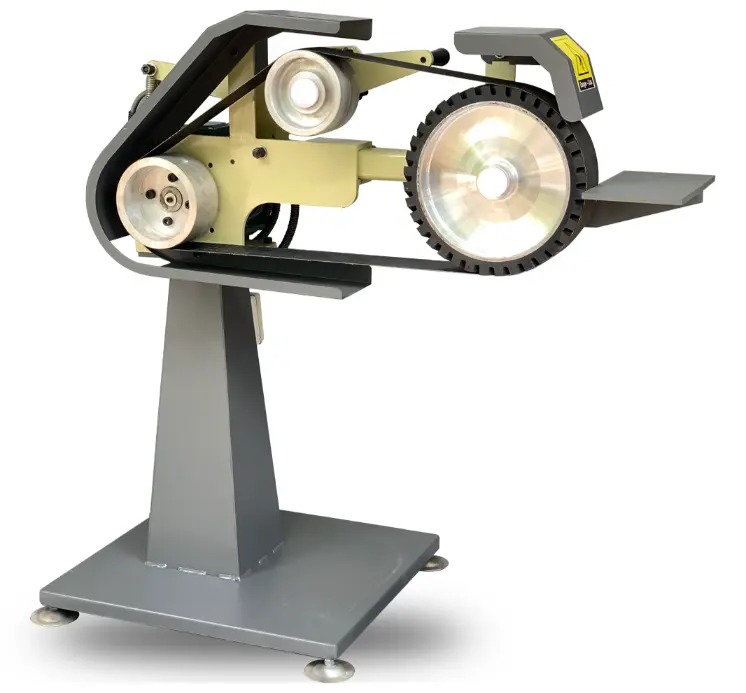
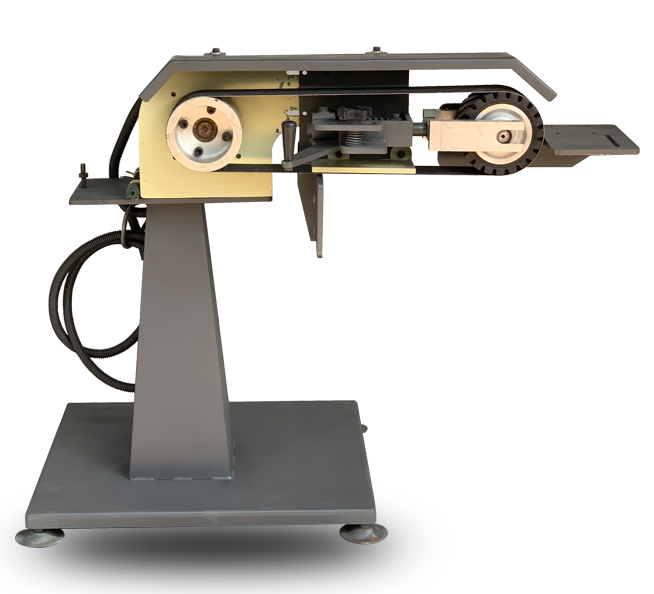
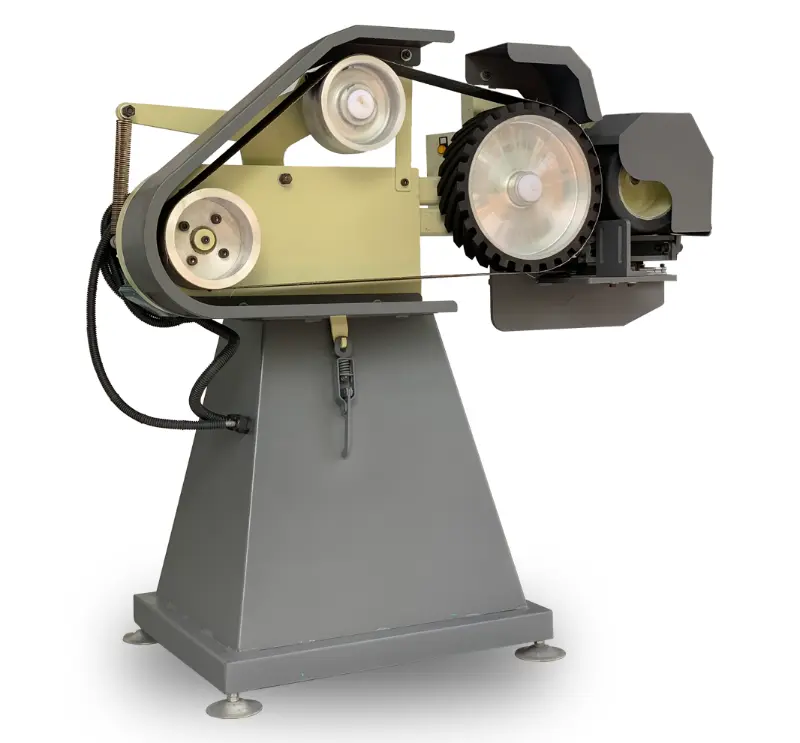
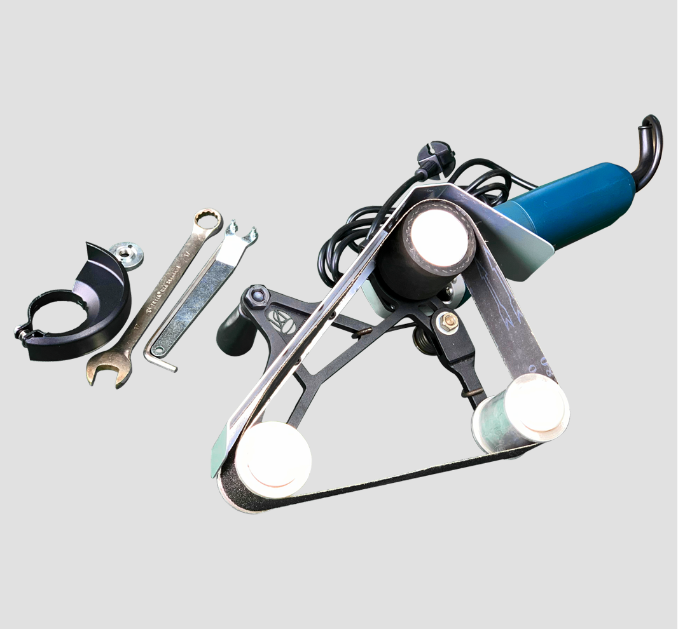
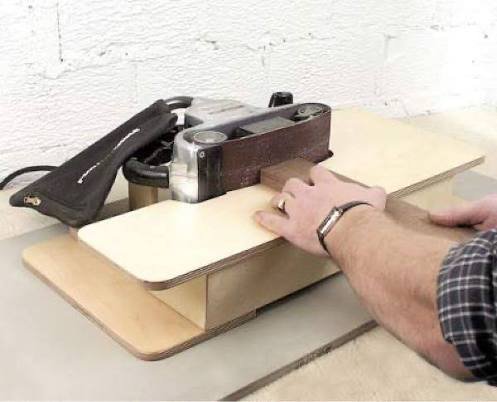
Some handheld sanders can be mounted belt up in a stand made by the manufacturer, which turns them into a small bench machine. Outside curves and rounded corners are then shaped by moving the part across the flat of the belt, and gentle inside curves can be worked on the front roller. Keep fingers well away from the belt and use a push block on small parts.
Smoothing End Grain Without Burning or Splintering It
End grain is hard and burns easily. Use light pressure, keep the sander moving across the whole end, and clean the belt as soon as it darkens. Sand from each corner toward the middle so the belt never rolls off an edge and tears out a splinter.
Mistakes That Leave Dips and Burn Marks
Almost every ruined surface comes from one of two small errors, and both are easy to correct once you know what to look for.
Use a Belt Sander Properly at the Ends of a Board
When the sander runs past the end of a board, half of the plate hangs in the air and the front of the machine dips. The result is a rounded end that rocks on a flat table. Keep at least two thirds of the sander on the wood at all times, and stop each pass just short of the end, finishing the ends with shorter strokes.
Stopping in One Place for Too Long
A pause to check progress or reposition your hands is enough to cut a shallow hollow or leave a dark burn mark. Lift the sander clear before you stop moving it, every time, until it becomes a habit.
When Hand Sanding Jobs Turn Into Production Work
A handheld belt sander is perfect for one tabletop or a set of doors. It is a poor fit for sanding the same part hundreds of times a day, where each operator’s pressure and speed show up as different results on every piece.
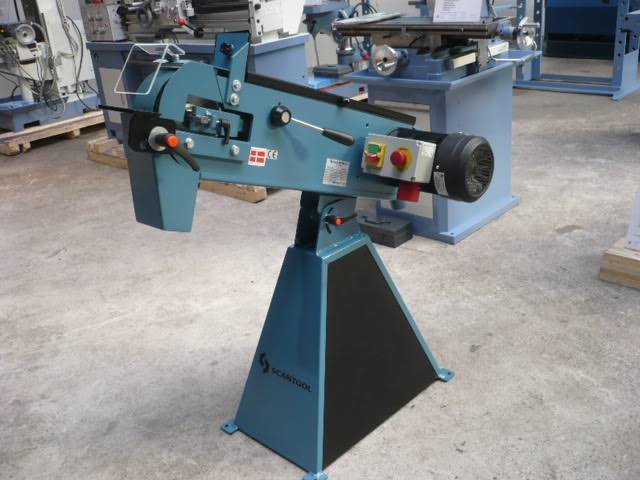
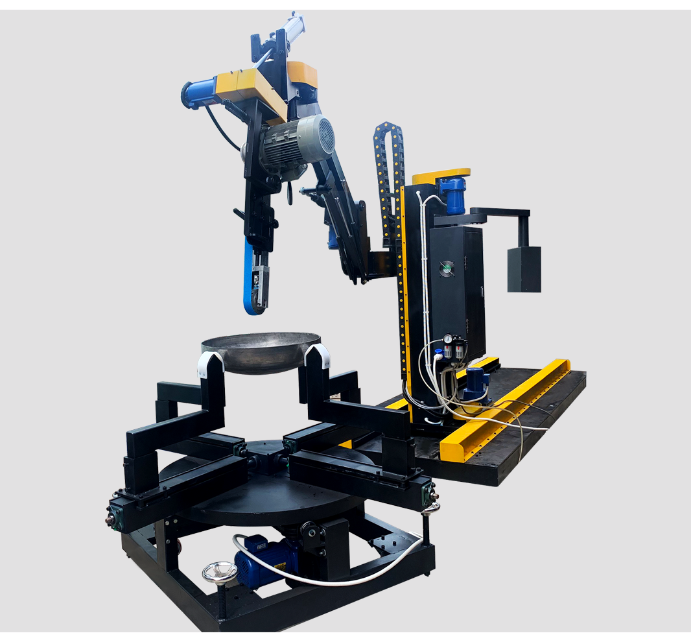
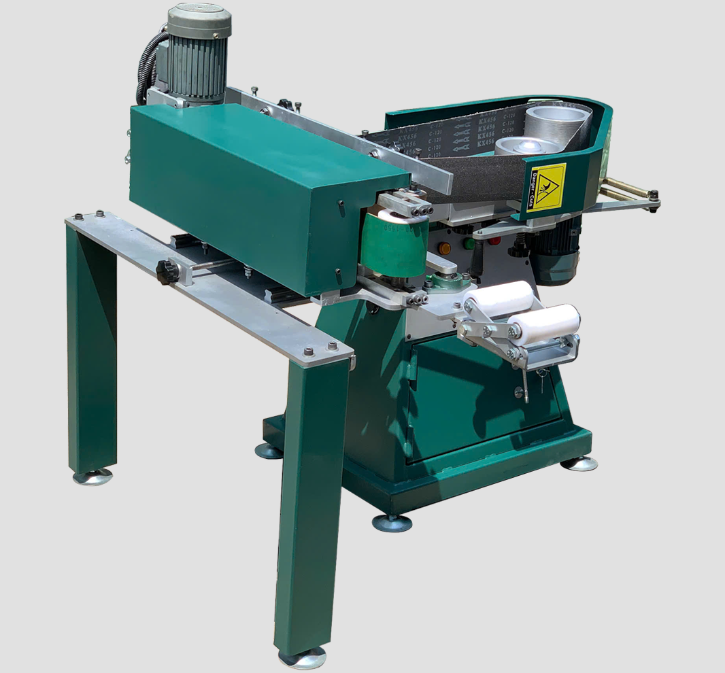
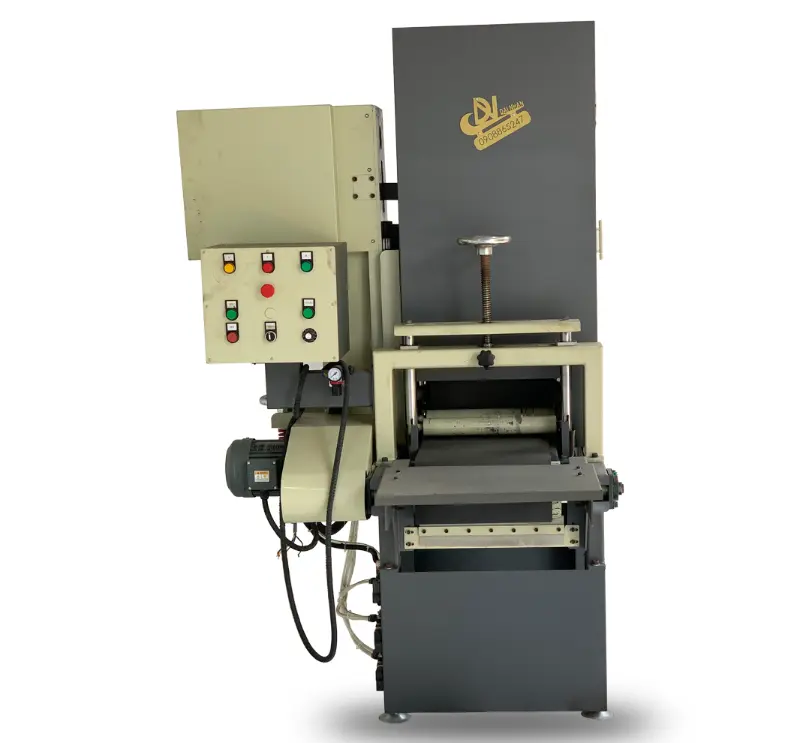
Industrial Belt Sander
That is the point where factories move to fixed machines with guides, conveyors and set belt speeds. Choosing an industrial belt sander machine is less about power than about repeating the same pass on every part, so each piece comes out looking the same.
Conclusion
Knowing how to sand with a belt sander well is mostly a matter of matching the technique to the job. Keep the machine moving, let its weight do the cutting and finish along the grain. Cross the grain diagonally to flatten panels, clamp scrap alongside narrow edges, move fast and test for lead on old paint, mount the sander in a stand for curves, and work end grain lightly from the corners inward. Most dips and burns come from pausing in one spot or running off the ends.
If your finishing work has grown past what one person with a handheld sander can keep consistent, Dai Nhan Machinery builds industrial belt sanders and grinders in Vietnam for production metalworking, set up so every part leaves the machine with the same finish. Browse the range on Our Machines, or tell our engineering team what you sand and how many parts a shift and we will suggest a setup.
Read more: What Are Belt Sanders Best For? The Five Jobs Where Nothing Else Comes Close


BOLA BAG's BLOG YOU MAY ALSO BE INTERESTED IN
Top 4 Abrasive Belt Grinding Machine Manufacturers in Asia
How Long Do Belt Sander Belts Last? Why It Varies by Sander
How to Make a Wheel Polishing Machine: Design, Build, and Safety Fundamentals